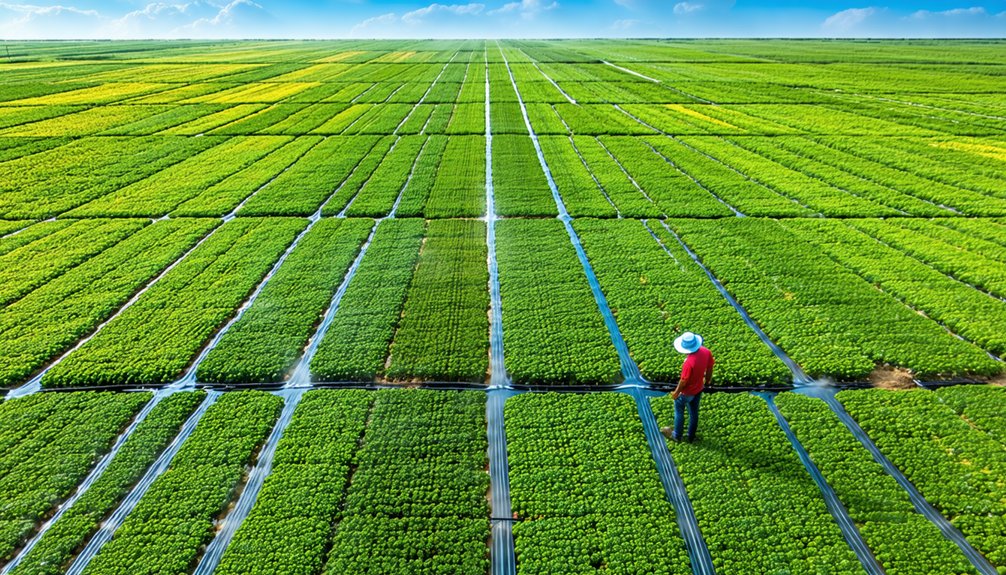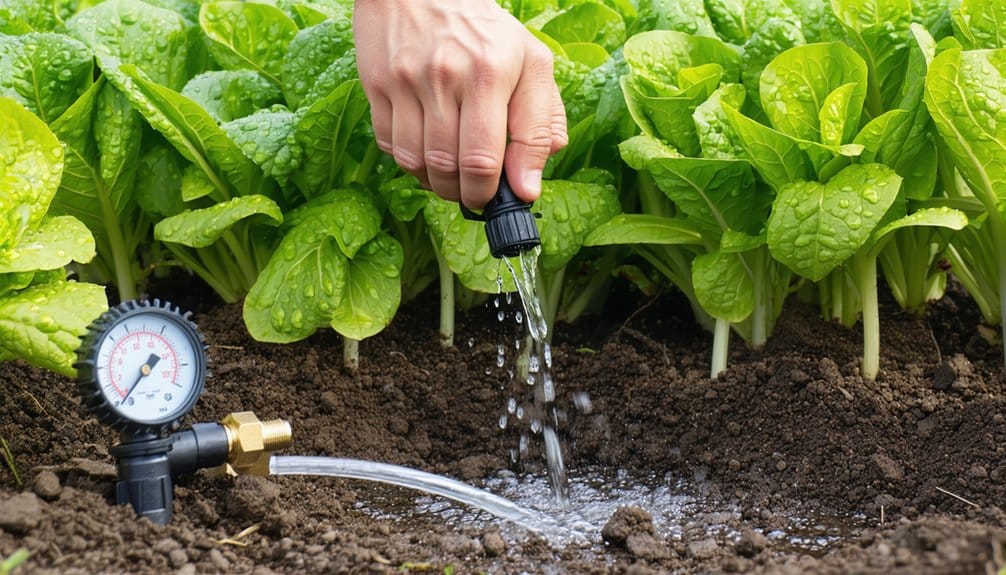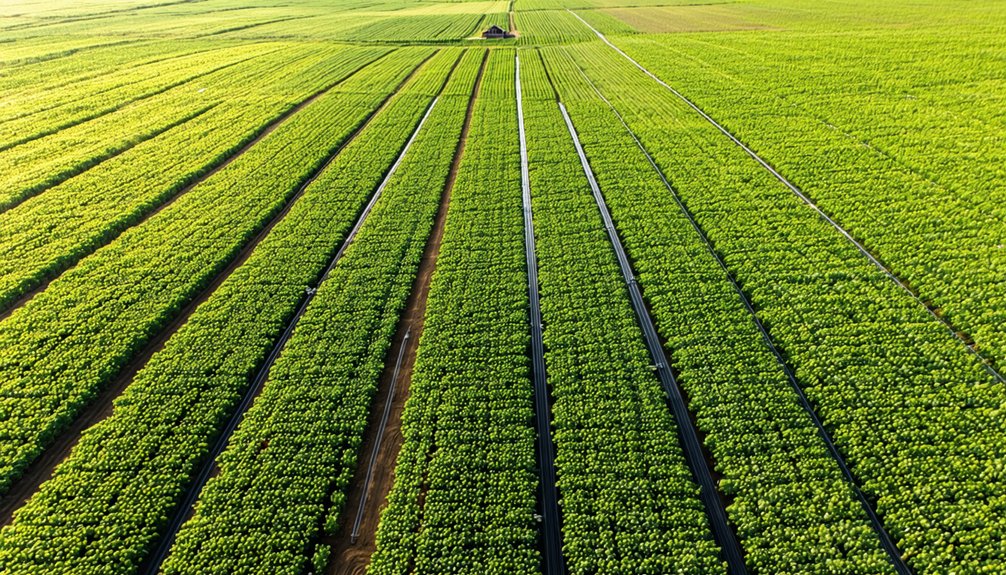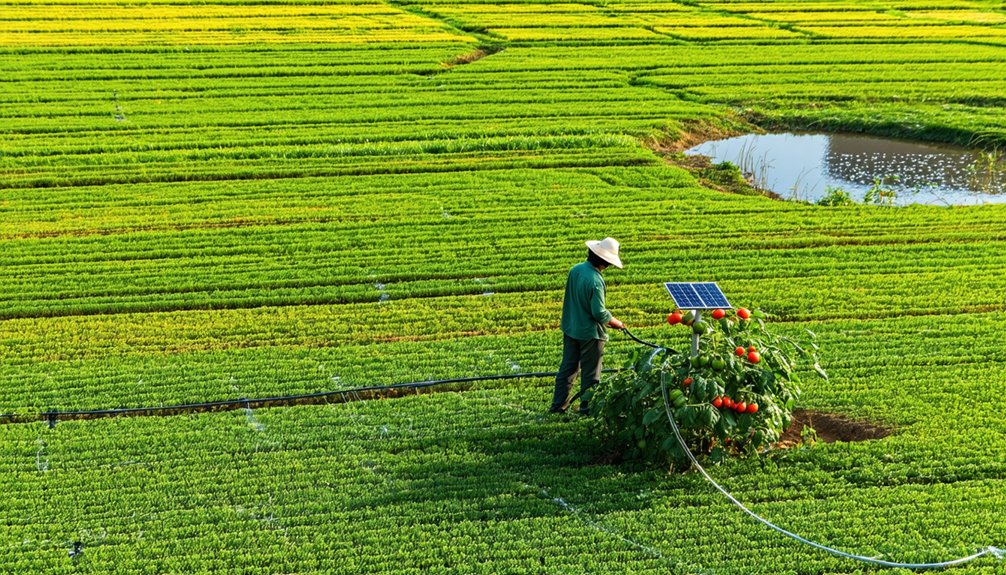

Surface irrigation is a fundamental practice in agriculture that can significantly impact crop yields and water efficiency. By exploring different methods like furrow, basin, and border irrigation, you can tailor your approach to specific soil types and crop needs. Understanding the challenges and best practices is crucial for optimizing water use. As you consider these factors, you might wonder how recent innovations can further enhance your irrigation strategies.
What Is Surface Irrigation?
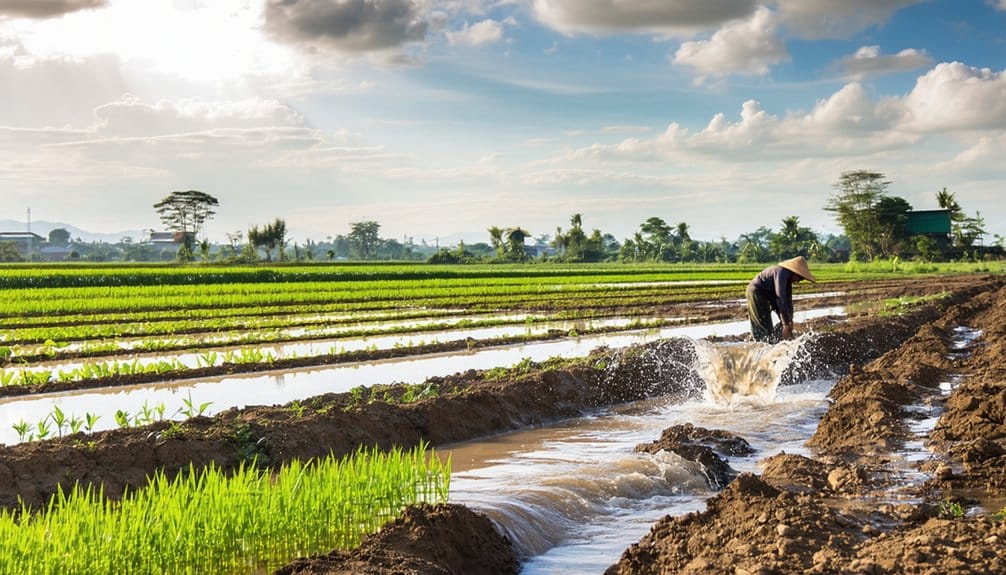
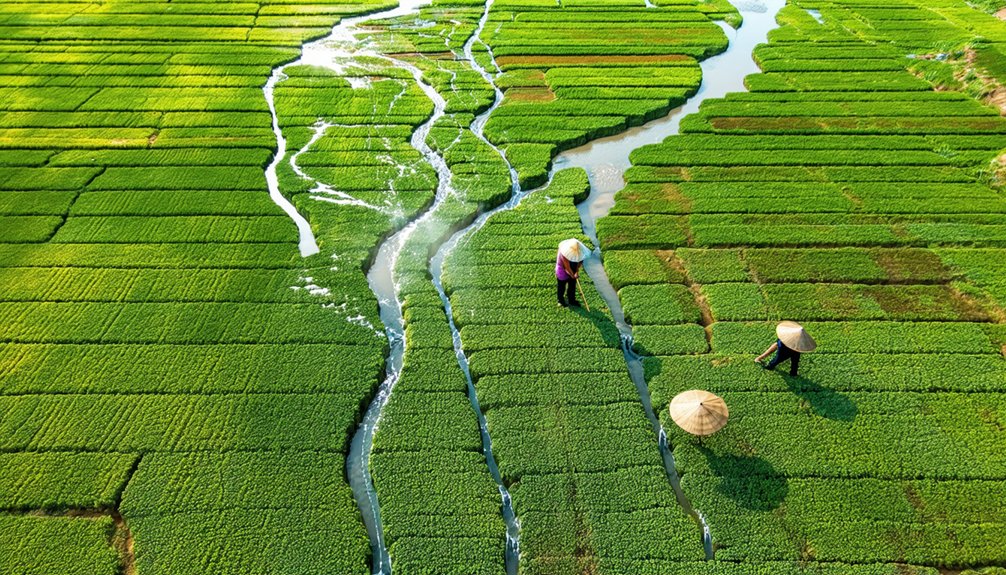
Surface irrigation is a method where water flows over the soil surface to irrigate crops, making it one of the oldest and most widely used techniques in agriculture.
You’ll find that this approach allows for efficient water distribution, especially in areas with ample water supply. By utilizing gravity, surface irrigation effectively delivers water to different parts of your field.
When you adopt this method, you can optimize crop yields while minimizing water waste. To achieve the best irrigation practices, it’s essential to consider factors like soil type, topography, and crop needs. Understanding these elements will help you implement surface irrigation successfully, ensuring your crops receive adequate hydration while promoting sustainable farming practices in your operation. Additionally, surface irrigation systems can be tailored to suit various environmental conditions, enhancing their effectiveness in diverse agricultural settings.
Types of Surface Irrigation Methods
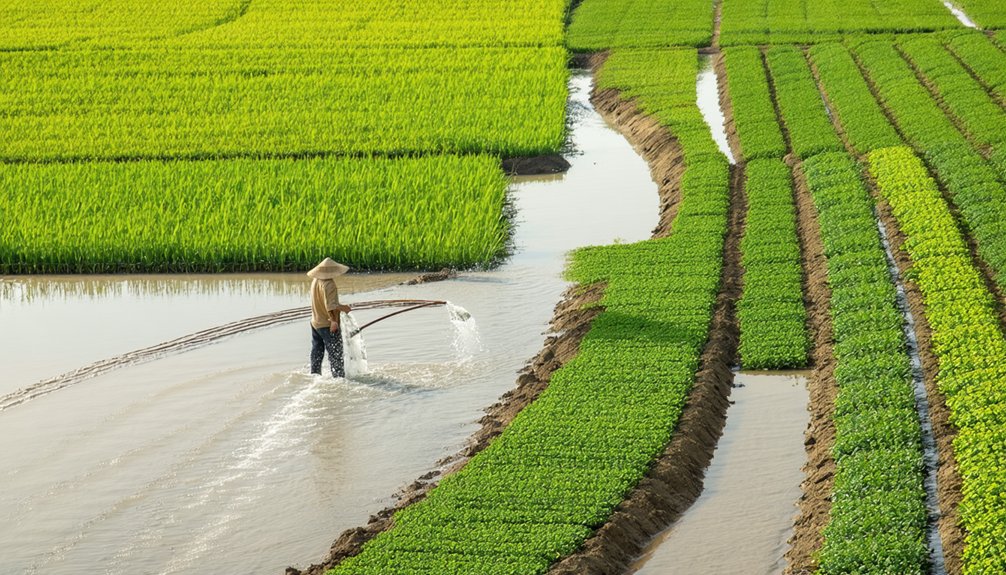
When it comes to surface irrigation, several methods can help you efficiently deliver water to your crops. One popular method is furrow irrigation, where water flows through small channels or furrows between crop rows. This technique allows for targeted water application, reducing waste and promoting sustainable farming practices.
You can also consider basin irrigation, where fields are leveled into small basins that hold water, ensuring even distribution. Another method is flood irrigation, which involves saturating the entire field, though it may not be as efficient as the others. Flood irrigation can be beneficial in certain conditions, but it can also lead to environmental challenges such as soil erosion and waterlogging.
Each method has its advantages and can be selected based on your specific needs, crop type, and water availability, ultimately enhancing your irrigation strategy for better crop yields.
Border Irrigation
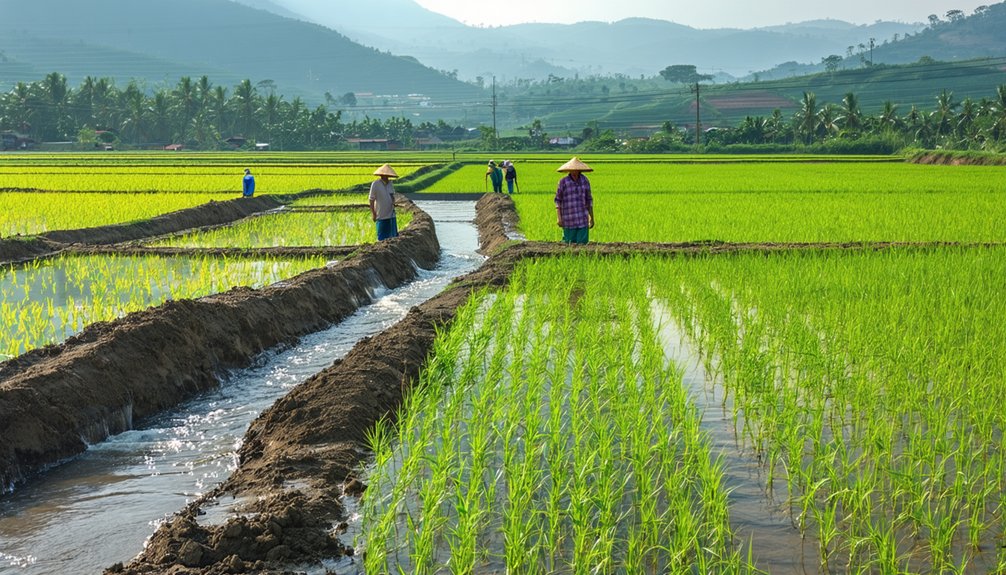
Border irrigation is an effective method for delivering water to crops by dividing the field into long, narrow strips, or borders. You’ll find this technique particularly useful for flat or gently sloping land.
Water flows down the borders, soaking into the soil and reaching the plant roots. To set it up, you’ll need to determine the right width and length for your borders, ensuring they allow for efficient water distribution. Additionally, incorporating side roll irrigation techniques can enhance water efficiency and reduce labor costs.
It’s essential to manage the flow rate carefully to prevent erosion and ensure even coverage. Regular maintenance, like clearing debris and checking for compaction, keeps your system functioning well.
Furrow Irrigation
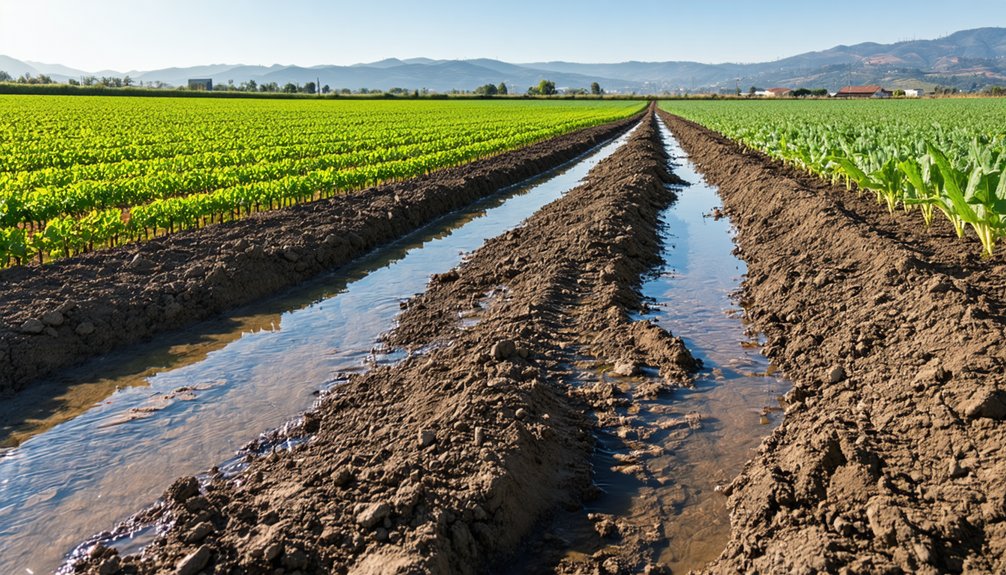
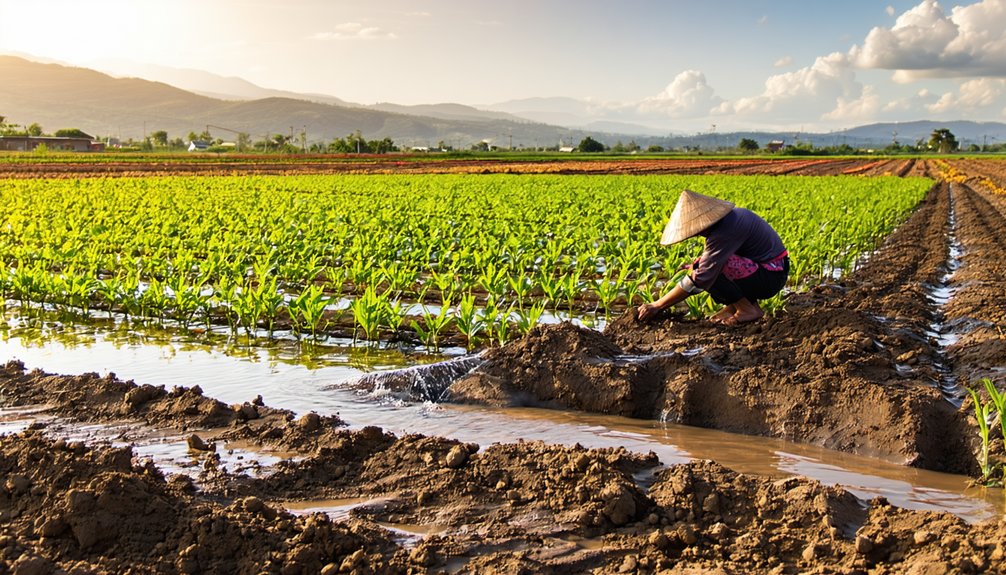
Furrow irrigation is a practical method for delivering water directly to the root zones of your crops by creating narrow channels or furrows between rows. This system allows water to flow down the furrows, soaking into the soil and reaching plant roots effectively.
You’ll want to ensure your furrows are properly spaced and leveled to promote uniform water distribution. Monitoring the water flow is essential; too much can lead to erosion, while too little may not satisfy your plants’ needs.
Implementing this method requires minimal equipment and can improve water use efficiency. Additionally, you can combine it with mulching to reduce evaporation and weed growth.
Basin Irrigation
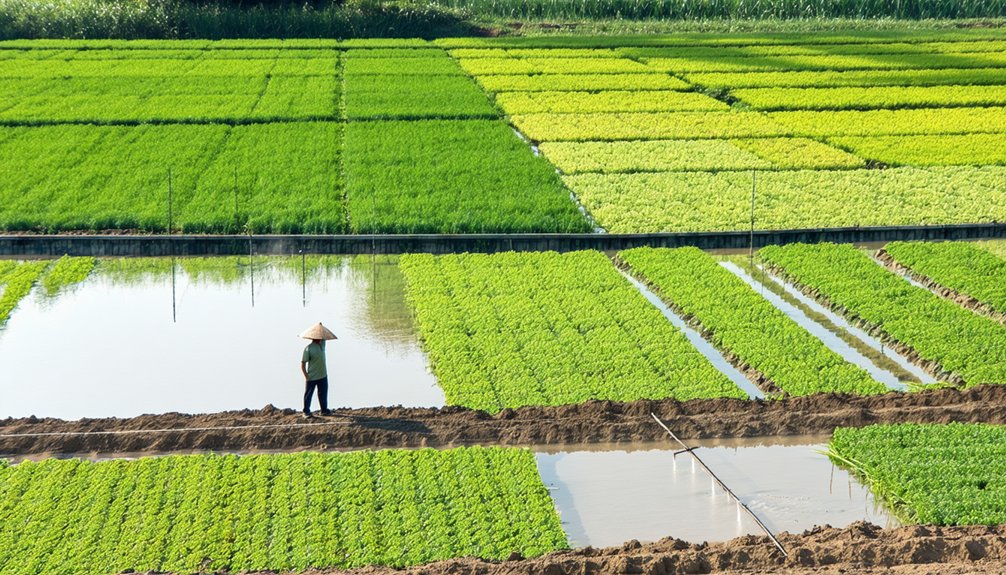
Basin irrigation is a straightforward and effective method that captures water in small, leveled basins around your crops. You’ll create these basins by forming small earthen dikes, which help retain water during irrigation. This technique allows water to pool and saturate the soil gradually, ensuring your plants receive the moisture they need.
To implement basin irrigation successfully, you’ll want to design basins based on your crop layout and soil type. It’s crucial to maintain uniform basin size and depth for even water distribution.
Regular maintenance is necessary to prevent erosion and ensure proper water flow. By carefully managing water levels, you’ll promote healthy root development and optimize growing conditions for your crops.
Benefits of Surface Irrigation
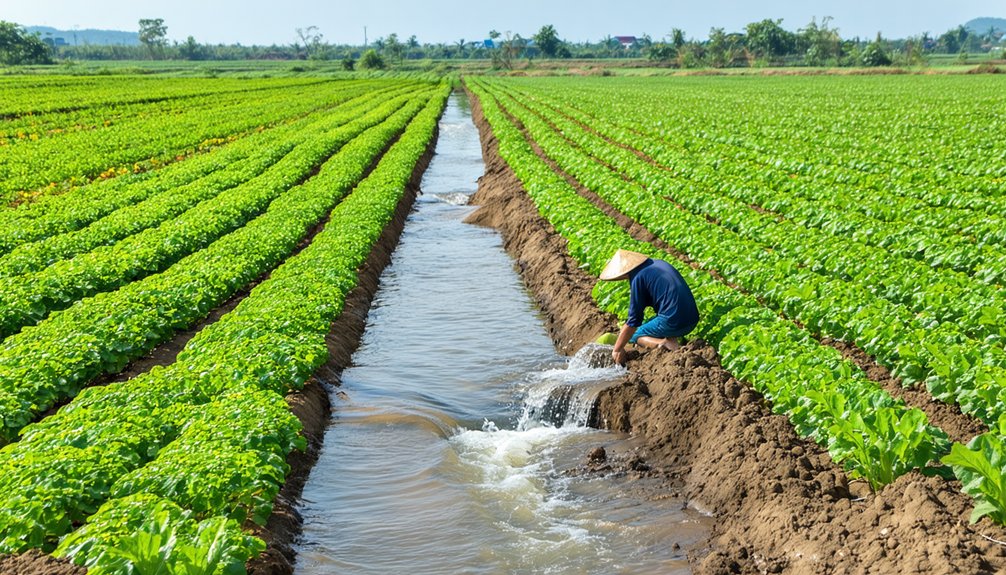
When you consider surface irrigation, you’ll notice its significant water conservation benefits, which can help you use resources more efficiently.
Plus, it’s often more cost-effective for farmers compared to other methods.
These advantages make it an appealing choice for sustainable farming practices.
Water Conservation Benefits
While some irrigation methods waste precious water resources, surface irrigation stands out for its ability to conserve water effectively. By allowing water to flow over the soil surface, it maximizes absorption and minimizes runoff.
You’ll find that this method efficiently distributes water directly to the root zones of plants, reducing evaporation losses. Additionally, surface irrigation promotes soil moisture retention, which means you won’t need to water as frequently.
This approach also encourages healthier soil ecosystems, as it helps maintain moisture levels that support beneficial microorganisms. In turn, this can lead to improved crop yields with less water.
Ultimately, adopting surface irrigation not only helps you conserve water but also contributes to sustainable agricultural practices.
Cost-Effectiveness for Farmers
Surface irrigation proves to be a cost-effective solution for farmers, especially when you consider its low initial investment and maintenance requirements. By using existing land contours, you can minimize the need for expensive infrastructure.
This method also reduces labor costs since it often requires less manual intervention compared to other systems.
Moreover, with proper management, you’ll likely see improved crop yields, leading to higher profits. The efficiency in water usage helps lower water bills, especially in arid regions where every drop counts.
Additionally, surface irrigation can enhance soil health, promoting better root growth and nutrient absorption.
Challenges of Surface Irrigation
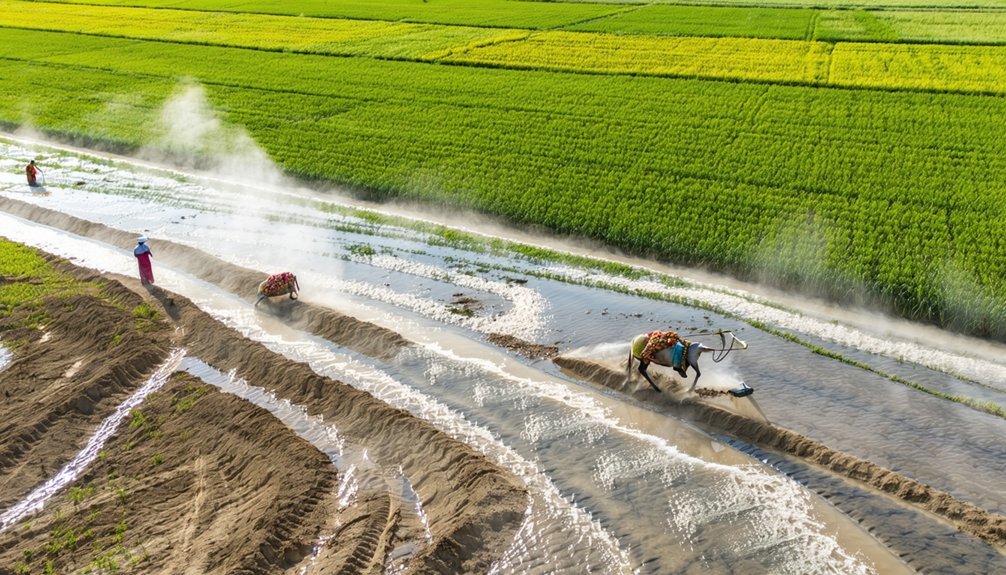
While surface irrigation has its perks, you’ll encounter some significant challenges.
Water distribution inefficiencies can lead to uneven crop growth, and the risk of soil erosion can threaten your land’s sustainability.
Understanding these issues is crucial to effectively managing your irrigation practices.
Water Distribution Inefficiencies
As farmers implement surface irrigation, they often encounter significant water distribution inefficiencies that can hinder crop yield and waste valuable resources. Uneven water application can lead to over-saturation in some areas while leaving others dry, causing stress to plants.
Factors like slope, soil type, and field shape can exacerbate these issues. You might notice that water runs off quickly in some spots or accumulates in others, further complicating uniform distribution. Additionally, sediment buildup can clog channels, affecting flow rates.
Regular maintenance and proper design are crucial to minimizing these inefficiencies. By evaluating your irrigation layout and adapting techniques to your specific conditions, you can enhance water distribution, ultimately improving both crop health and resource management.
Soil Erosion Risks
Inevitably, when implementing surface irrigation, you face the challenge of soil erosion, which can undermine your efforts and reduce land productivity. As water flows across your fields, it can displace soil particles, especially on sloped areas.
Without proper management, this erosion not only depletes your soil’s nutrients but can also lead to sedimentation in waterways, impacting local ecosystems.
To mitigate these risks, consider implementing contour farming, cover crops, or buffer strips. These practices help stabilize the soil and reduce runoff.
Regularly monitoring your fields for signs of erosion will also allow you to address issues before they escalate. By prioritizing soil health, you can maintain productivity and sustainability in your surface irrigation system.
Best Practices for Effective Surface Irrigation
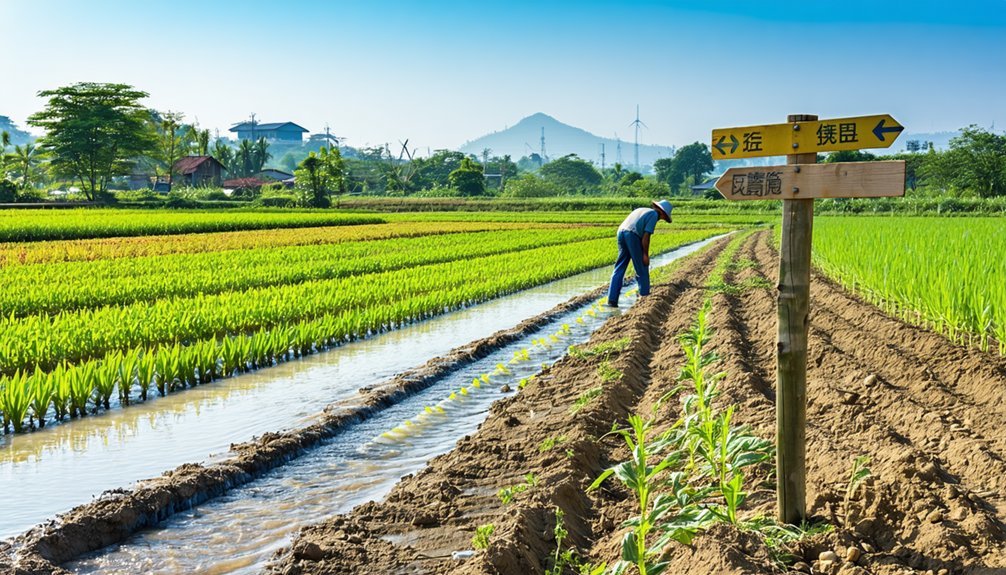
To achieve effective surface irrigation, it’s essential to understand the specific needs of your crops and the characteristics of your soil.
Begin by assessing your field’s slope and soil type to design an efficient layout. Implement a well-planned system of furrows or basins, ensuring they’re spaced according to crop requirements.
Monitor water application rates closely, adjusting them based on weather conditions and crop growth stages. Use mulch or cover crops to reduce evaporation and improve moisture retention.
Regularly check for signs of runoff or erosion, making necessary adjustments to prevent waste. Lastly, keep your irrigation system well-maintained and clean to ensure optimal performance.
Following these best practices will help you maximize water efficiency and promote healthy crop growth.
Soil and Water Management in Surface Irrigation
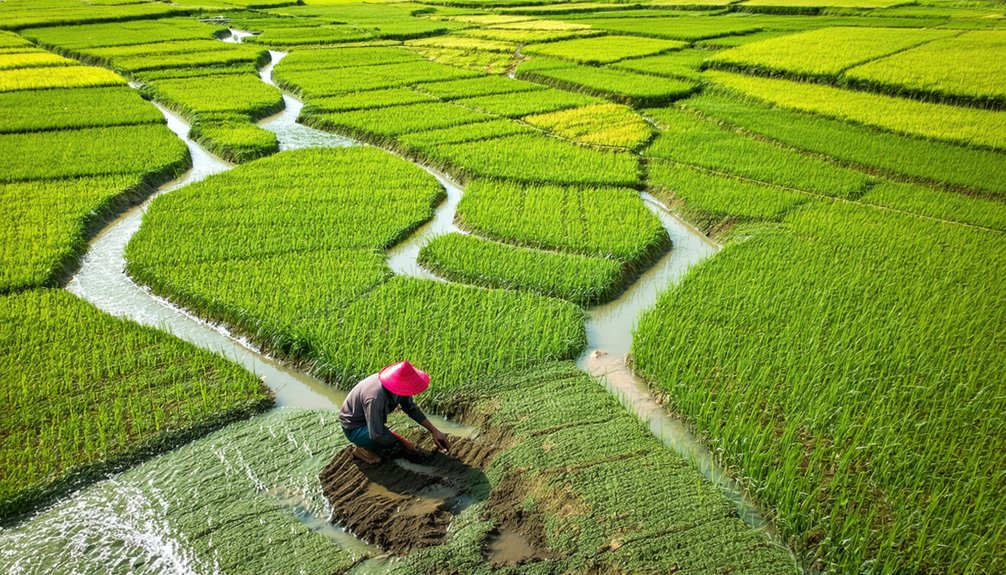
Effective soil and water management is crucial for optimizing surface irrigation. To begin, assess your soil type and structure. Different soils absorb and retain water differently, so knowing your soil’s properties helps you apply the right amount of water.
Regularly monitor moisture levels to prevent over or under-watering. Incorporate practices like mulching and cover cropping to enhance soil health and reduce evaporation.
You should also consider contour farming and furrow designs to facilitate efficient water flow. Using soil moisture sensors can provide real-time data, helping you adjust irrigation schedules accordingly.
Lastly, practice crop rotation and maintain organic matter to improve water retention capabilities. By managing your soil and water effectively, you’ll promote healthier crops and maximize yields.
Innovations in Surface Irrigation Techniques
As you explore innovations in surface irrigation techniques, you’ll discover advanced water management systems that optimize resource use.
Smart irrigation technologies are also making waves, helping you apply water more efficiently.
Plus, integrating eco-friendly practices ensures that your methods support sustainability while maximizing crop yields.
Advanced Water Management Systems
While traditional surface irrigation methods have served farmers well for generations, innovative water management systems are revolutionizing how we approach irrigation.
These advanced systems incorporate techniques like precision leveling and controlled drainage, allowing you to optimize water usage and reduce waste. By implementing soil moisture sensors, you can monitor water levels in real-time, ensuring crops receive just the right amount.
Moreover, improved scheduling and automated distribution systems help you deliver water more efficiently, minimizing labor and maximizing yield.
Utilizing these advancements not only enhances productivity but also promotes sustainability by conserving precious water resources. Embracing these innovations will empower you to make informed decisions, ultimately leading to healthier crops and a more resilient farming operation.
Smart Irrigation Technologies
Smart irrigation technologies are transforming surface irrigation by integrating cutting-edge tools and techniques that enhance water efficiency and crop health.
You can utilize sensors and automated systems to monitor soil moisture levels, ensuring your crops receive the right amount of water at the right time. By implementing drip irrigation or precision sprinklers, you’ll minimize water waste and target specific plant needs.
Mobile apps and data analytics allow you to track weather patterns and adjust your irrigation schedules accordingly. Investing in these smart technologies not only boosts productivity but also contributes to sustainable farming practices.
With real-time data at your fingertips, you’re empowered to make informed decisions that improve both yield and resource management, making your irrigation system more efficient than ever.
Eco-Friendly Practices Integration
Integrating eco-friendly practices into surface irrigation techniques can significantly enhance sustainability in agriculture. You can start by adopting mulching, which reduces evaporation and keeps soil moisture intact.
Implementing cover crops improves soil health and prevents erosion, making your irrigation efforts more effective. Consider using rainwater harvesting systems to supplement your irrigation needs, reducing reliance on groundwater.
Utilizing drip irrigation within surface systems can also minimize water waste while ensuring plants receive adequate moisture. Moreover, keep an eye on soil moisture levels with smart sensors, allowing you to adjust irrigation schedules based on real-time data.
Conclusion
In conclusion, mastering surface irrigation can significantly enhance your agricultural efficiency. By understanding the different methods like border, furrow, and basin irrigation, you can tailor your approach to fit your crops and conditions. Remember to implement best practices, such as monitoring soil moisture and using innovative technologies, to optimize water usage. With the right strategies, you’ll not only improve crop yields but also promote sustainability in your farming practices. Embrace these techniques for a more productive future!