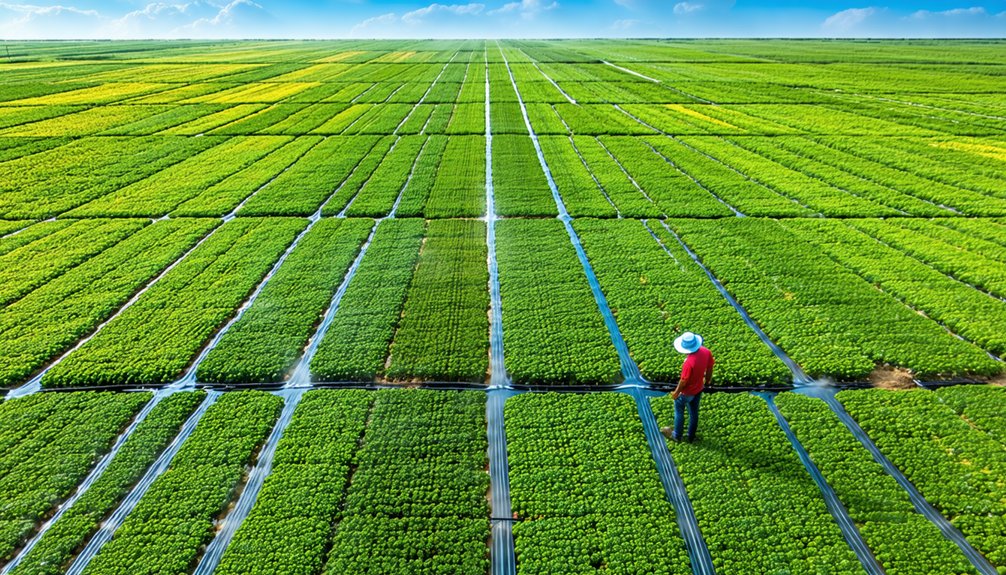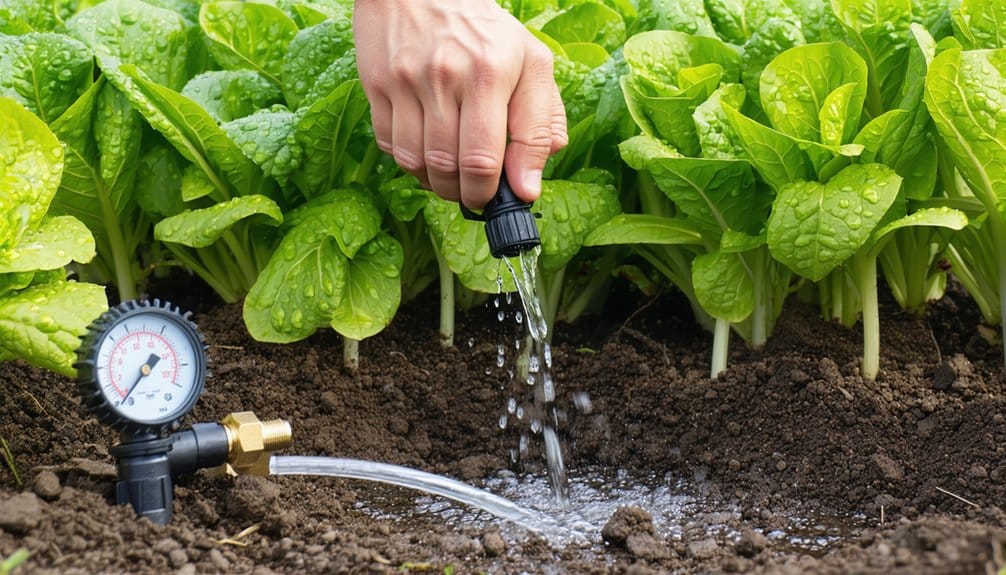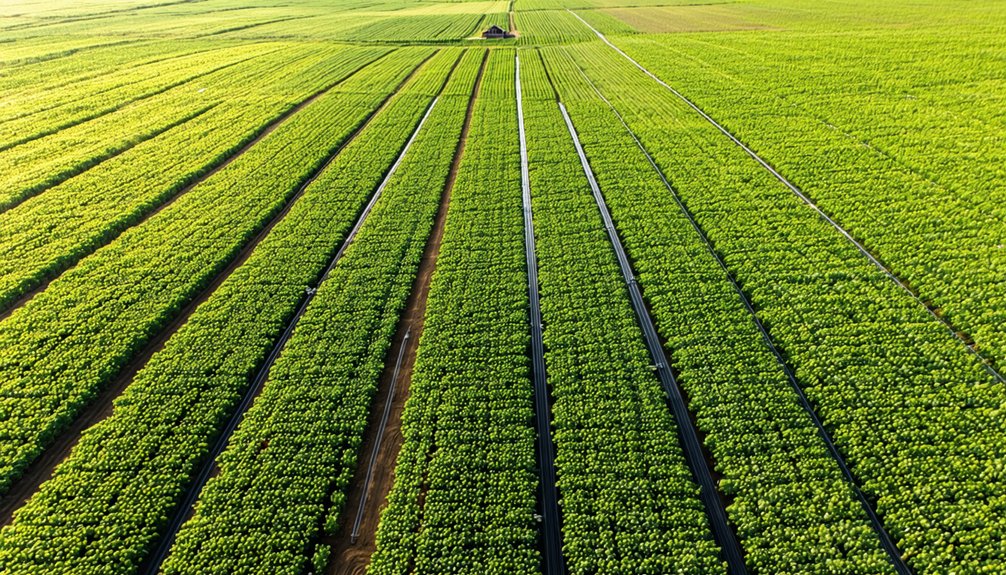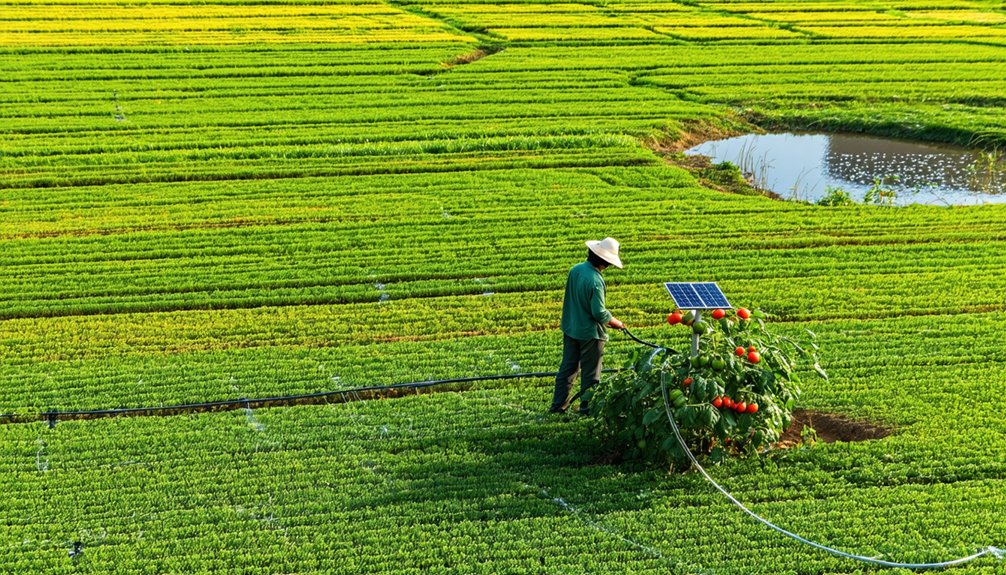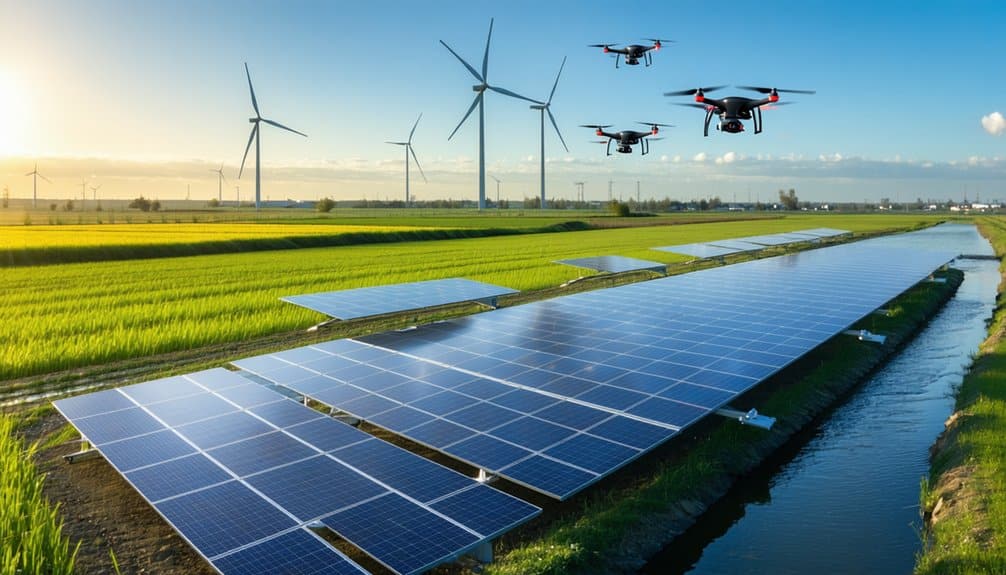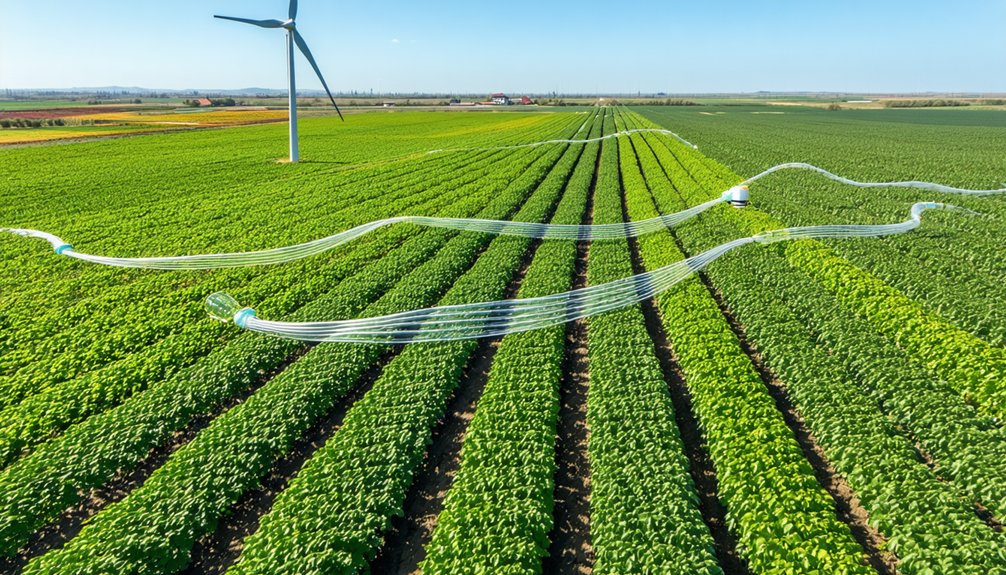
Sustainable irrigation methods are evolving to address the growing demand for efficient water use in agriculture. Innovations such as drip irrigation and smart technologies offer targeted water delivery, reducing waste and improving crop health. Meanwhile, integrating renewable energy and rainwater harvesting presents new opportunities to support resource conservation. Understanding these approaches reveals the potential to balance productivity with environmental stewardship—an essential challenge in modern farming practices.
Key Takeaways
- Drip and subsurface irrigation deliver water directly to roots, minimizing evaporation and improving water use efficiency for sustainable agriculture.
- Smart irrigation uses sensors and AI to optimize watering schedules based on real-time soil and weather data, reducing water waste.
- Rainwater harvesting captures precipitation to provide reliable irrigation, lowering dependence on groundwater and reducing soil erosion.
- Integrating renewable energy like solar-powered pumps enhances irrigation sustainability by reducing greenhouse gas emissions and energy costs.
- Automation in irrigation management optimizes water distribution, lowers operational costs, and supports eco-friendly farming practices.
Drip Irrigation and Its Impact on Water Conservation
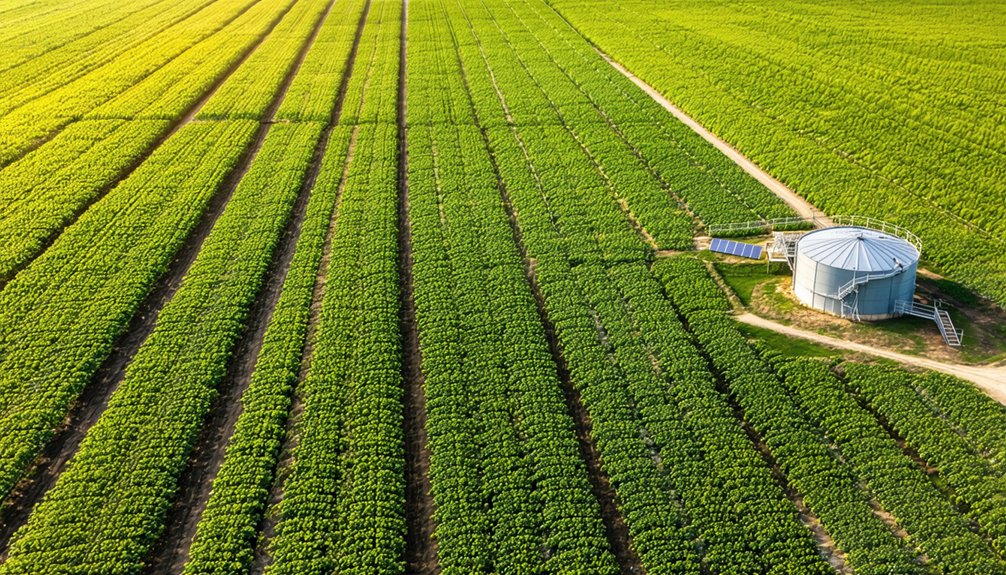
How does drip irrigation contribute to water conservation in agriculture?
Drip irrigation delivers water directly to plant roots through a network of tubes and emitters, minimizing evaporation and runoff. This targeted approach significantly reduces water waste compared to traditional flood or sprinkler irrigation methods.
By applying water slowly and precisely, drip irrigation enhances soil moisture retention, promoting healthier plant growth while conserving water resources. Its efficiency supports sustainable agriculture by enabling farmers to optimize water usage without compromising crop yields.
Moreover, drip irrigation reduces the need for excessive water application, helping to preserve groundwater levels and prevent soil erosion. As a result, this method plays a crucial role in advancing water conservation efforts in agriculture, aligning with broader goals of environmental sustainability and resource management.
Smart Irrigation Technologies for Precision Farming
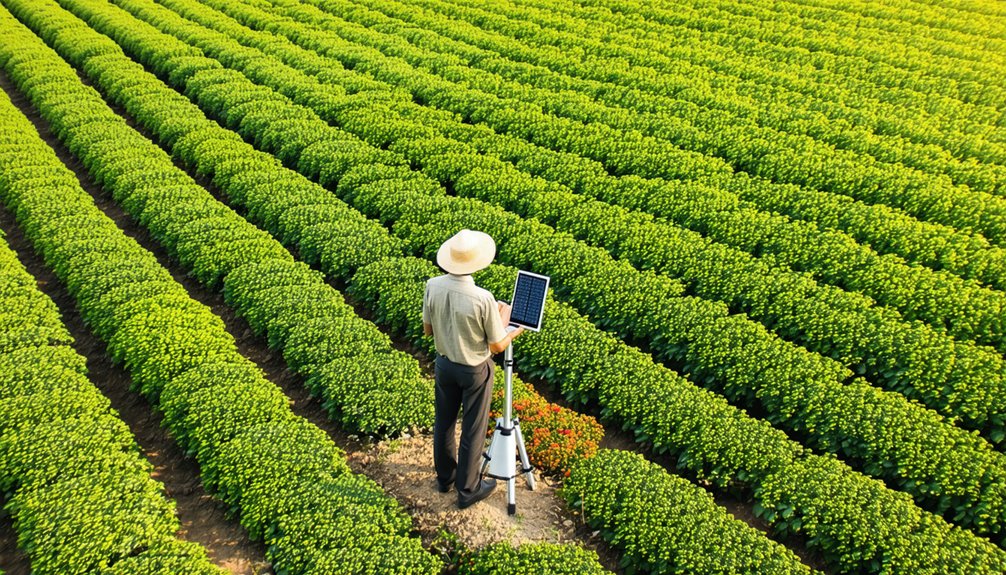
Smart irrigation technologies enhance precision farming by integrating sensor-based water management to optimize moisture levels in real time.
AI-driven irrigation scheduling adjusts water application based on environmental data and crop needs.
Remote monitoring systems provide farmers with continuous oversight, improving efficiency and resource conservation.
Sensor-Based Water Management
Although traditional irrigation methods have long relied on fixed schedules and manual adjustments, sensor-based water management introduces a data-driven approach that optimizes water use in agriculture.
By deploying soil moisture sensors, weather stations, and plant water status monitors, these irrigation techniques enable precise measurement of crop water needs. This precision supports sustainable irrigation by reducing water waste and minimizing environmental impact.
The integration of real-time data allows farmers to implement eco-friendly farming practices that conserve water resources while maintaining crop health. Sensor-based systems also enhance irrigation efficiency by adjusting water delivery according to actual field conditions rather than estimates.
As a result, this technology plays a critical role in advancing sustainable irrigation methods that balance productivity with environmental stewardship, crucial for addressing water scarcity challenges in modern agriculture.
AI-Driven Irrigation Scheduling
When integrated with advanced data analytics, AI-driven irrigation scheduling transforms traditional water management by enabling highly precise and adaptive watering strategies. This technology utilizes machine learning algorithms to analyze variables such as soil moisture, weather forecasts, and crop growth stages, optimizing irrigation timing and volume.
By continuously processing real-time data, AI systems adjust irrigation schedules dynamically, reducing water waste and enhancing crop yield. These intelligent models also predict future water requirements, facilitating proactive resource allocation.
Furthermore, AI-driven scheduling supports sustainability by minimizing energy consumption associated with pumping and distribution. Unlike fixed or sensor-only approaches, this method offers a scalable, data-informed framework that accounts for complex environmental interactions.
Consequently, AI-driven irrigation scheduling represents a significant advancement in precision farming, promoting efficient water use while maintaining agricultural productivity.
Remote Monitoring Systems
Because efficient water management is critical for sustainable agriculture, remote monitoring systems have become essential tools in precision farming. These systems utilize sensors and wireless technology to collect real-time data on soil moisture, weather conditions, and crop health. This information enables farmers to make informed irrigation decisions, reducing water waste and enhancing crop yield. Remote monitoring also allows for timely detection of system malfunctions, preventing over- or under-watering. Integration with mobile applications facilitates easy access and control from any location, optimizing resource use. The following table summarizes key features and benefits of remote monitoring systems in smart irrigation.
| Feature | Benefit |
|---|---|
| Soil moisture sensors | Accurate irrigation scheduling |
| Weather stations | Adjustments based on climate data |
| Wireless connectivity | Real-time remote data access |
| Automated alerts | Immediate response to issues |
| Mobile app integration | Convenient monitoring and control |
Utilizing Rainwater Harvesting in Agriculture
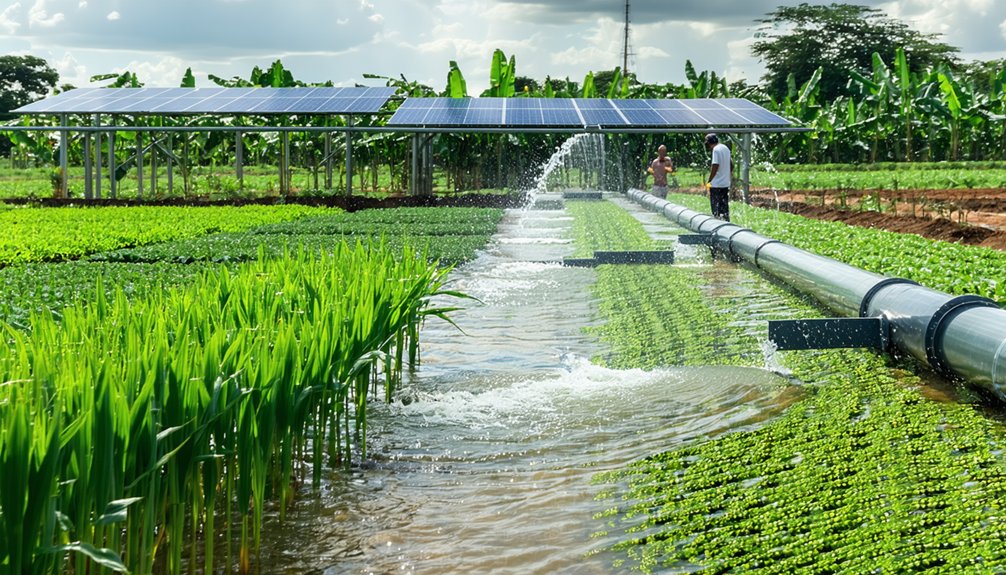
Rainwater harvesting offers a sustainable solution to reduce reliance on conventional water sources and mitigate irrigation costs.
Various techniques, such as rooftop collection systems and surface runoff capture, can be adapted to suit different farm sizes and landscapes.
Implementing these methods enhances water availability while promoting environmental conservation in agriculture.
Benefits of Rainwater Harvesting
How can farmers effectively reduce dependency on conventional water sources while enhancing crop resilience?
Rainwater harvesting offers a sustainable solution by capturing and storing precipitation for agricultural use. This method decreases reliance on groundwater and municipal supplies, conserving these limited resources.
Additionally, rainwater is free of salts and chemicals often found in other sources, promoting healthier soil and plant growth. Utilizing harvested rainwater mitigates the impacts of drought, providing a reliable irrigation supply during dry periods.
It also reduces runoff and soil erosion, preserving land quality. Collectively, these benefits contribute to increased water-use efficiency, cost savings, and environmental protection, positioning rainwater harvesting as a valuable practice for resilient, sustainable farming systems.
Implementation Techniques for Farms
Effective application of rainwater harvesting in agriculture requires strategic planning and appropriate infrastructure. Farms must integrate systems that efficiently collect, store, and distribute rainwater to optimize irrigation practices.
Key implementation techniques include:
- Collection Systems: Installing gutters, channels, and catchment surfaces to capture maximum rainfall from rooftops or land areas.
- Storage Solutions: Utilizing tanks, ponds, or underground reservoirs designed to minimize evaporation and contamination.
- Distribution Networks: Employing gravity-fed or pump-assisted irrigation methods to deliver harvested water directly to crops, ensuring uniform and timely watering.
These techniques enable farms to reduce dependence on groundwater, lower irrigation costs, and improve water use efficiency.
Proper maintenance and monitoring are also essential to sustain system performance and maximize agricultural productivity.
Benefits of Subsurface Irrigation Systems
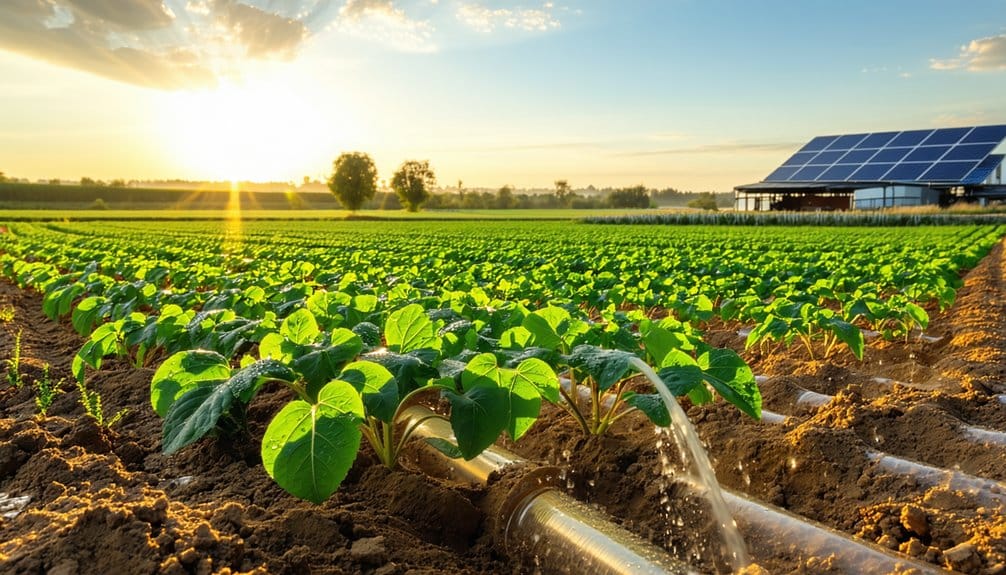
Numerous advantages arise from the adoption of subsurface irrigation systems, making them a sustainable choice for water management in agriculture. These systems deliver water directly to the root zone, minimizing evaporation and runoff, thereby enhancing water use efficiency.
By maintaining optimal soil moisture levels, subsurface irrigation supports consistent crop growth and reduces plant stress. Additionally, this method limits weed growth and surface soil erosion since the soil surface remains dry.
The reduction in water contact with foliage also decreases the risk of certain plant diseases. Furthermore, subsurface irrigation systems can lower labor and energy costs through automation and reduced need for frequent watering.
Collectively, these benefits contribute to improved resource conservation and crop yields, reinforcing subsurface irrigation as a valuable sustainable technology in modern farming practices.
Role of Soil Moisture Sensors in Efficient Water Use
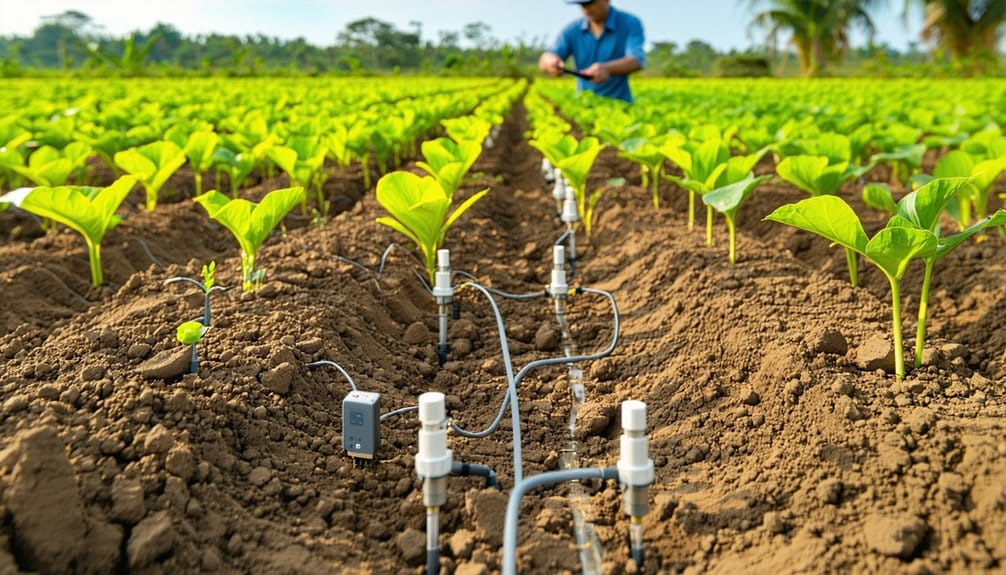
Although water conservation remains a critical challenge in agriculture, soil moisture sensors offer a precise solution by continuously monitoring soil water levels. These devices enable farmers to optimize irrigation schedules based on real-time data, reducing water waste and improving crop health.
The role of soil moisture sensors in efficient water use can be summarized as follows:
- Accurate Measurement: Sensors provide precise readings of moisture content at different soil depths, ensuring irrigation targets root zones effectively.
- Water Savings: By irrigating only when necessary, these sensors minimize overwatering and runoff, conserving water resources.
- Enhanced Crop Yield: Maintaining optimal soil moisture improves plant growth and resilience, leading to higher productivity.
Incorporating soil moisture sensors into irrigation management promotes sustainability by aligning water use with actual crop needs.
Integrating Renewable Energy With Irrigation Systems
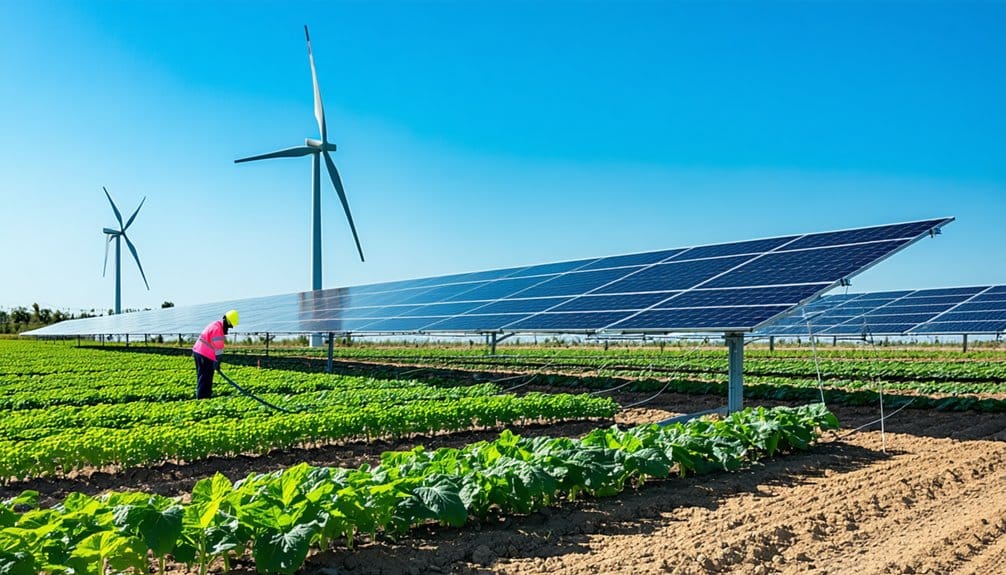
Three key renewable energy sources—solar, wind, and bioenergy—are increasingly integrated into irrigation systems to reduce reliance on conventional power and lower operational costs.
Solar-powered pumps harness sunlight to operate water delivery efficiently, especially in remote areas lacking grid access. Wind turbines convert kinetic energy into electricity, supplementing irrigation needs where wind patterns are favorable.
Bioenergy, derived from agricultural residues or organic waste, fuels generators that support irrigation infrastructure. These renewable integrations enhance sustainability by decreasing greenhouse gas emissions and promoting energy independence.
Additionally, combining renewable energy with automated control systems optimizes water distribution based on real-time demand, further improving resource efficiency.
Consequently, integrating renewable energy into irrigation exemplifies a practical advancement in sustainable agriculture, balancing environmental impact with economic viability.
Conclusion
Innovative sustainable irrigation methods significantly enhance water use efficiency in agriculture. Techniques such as drip and subsurface irrigation reduce wastage by targeting plant roots directly, while smart systems leverage sensors and AI to optimize watering schedules. Incorporating rainwater harvesting and renewable energy further supports eco-friendly practices. Collectively, these approaches contribute to improved crop yields, soil health, and resource conservation, promoting more resilient and sustainable agricultural systems in the face of growing environmental challenges.