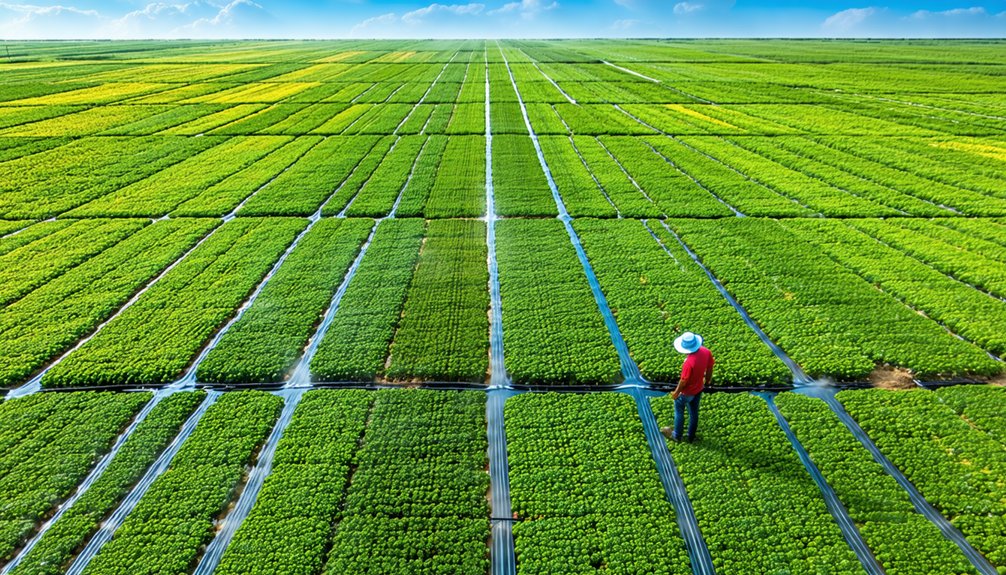

Selecting the right irrigation system is crucial for optimizing crop production and conserving water resources. Various methods offer distinct advantages and challenges depending on soil type, crop needs, and climate conditions. Understanding how each system impacts water efficiency and yield can guide farmers toward better decisions. However, determining which irrigation technique truly maximizes output while minimizing waste requires a closer examination of their performance in real-world scenarios.
Key Takeaways
- Drip irrigation maximizes water use efficiency by delivering water directly to roots, reducing waste and enhancing crop yield.
- Sprinkler systems provide uniform water distribution and can be automated to optimize irrigation timing and reduce labor costs.
- Surface irrigation is cost-effective with modern land leveling techniques, but less precise than drip or sprinkler systems.
- Incorporating soil moisture sensors and automation ensures irrigation matches crop water uptake for optimal growth and minimal loss.
- Selecting irrigation based on soil type, crop needs, and energy efficiency balances cost, maintenance, and sustainability for best yield.
Understanding Different Types of Irrigation Systems
Although irrigation methods vary widely, they all serve the core purpose of delivering water to crops efficiently. Different irrigation techniques offer unique advantages depending on factors such as crop type, soil conditions, and water availability.
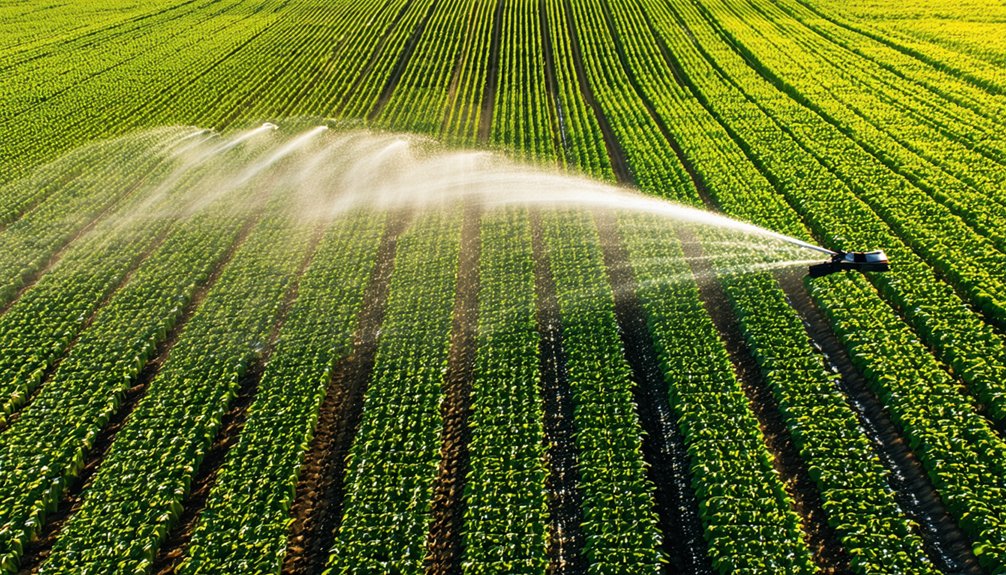
Common types include surface irrigation, where water flows over the soil by gravity; drip irrigation, which delivers water directly to plant roots through emitters; and sprinkler systems that simulate rainfall. Each method aims to optimize water usage while maximizing crop irrigation effectiveness.
An efficient irrigation system minimizes water waste and promotes uniform distribution, essential for healthy crop growth. Understanding these diverse irrigation techniques enables farmers to select suitable approaches tailored to their agricultural needs, ultimately improving water management and crop yield outcomes.
Criteria for Assessing Irrigation Efficiency
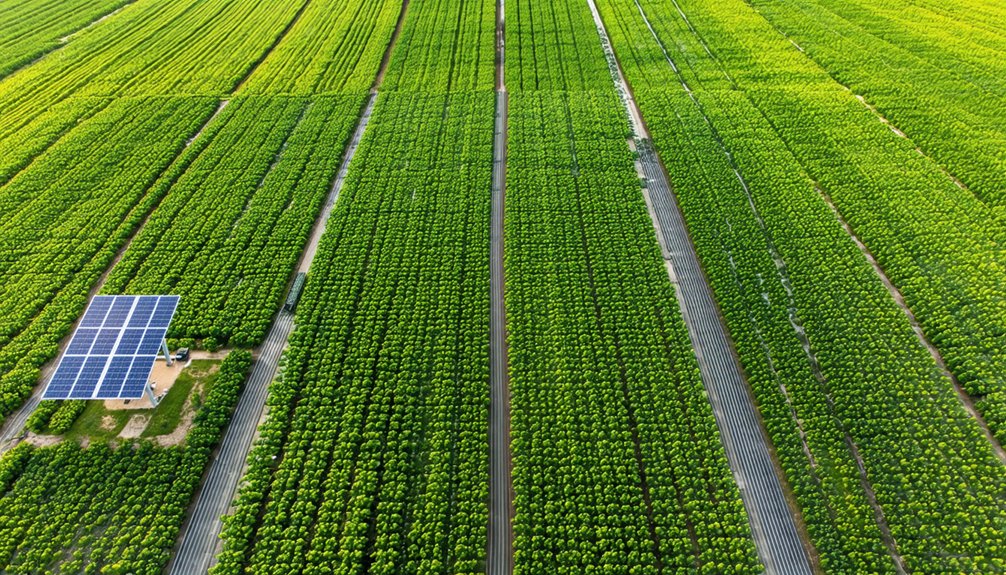
Assessing irrigation efficiency requires examining key criteria such as water usage metrics, energy consumption levels, and crop water uptake.
These factors provide a comprehensive understanding of how effectively water resources are utilized and conserved.
Evaluating these elements helps identify areas for improvement in irrigation practices.
Water Usage Metrics
Several key metrics are used to evaluate the efficiency of irrigation systems by measuring how effectively water is applied and utilized.
In agricultural water management, water use efficiency (WUE) is critical; it quantifies the ratio of crop yield produced to the volume of water applied.
Another important metric is application efficiency, which assesses the uniformity and precision of water delivery to the root zone, minimizing losses from runoff or evaporation.
Distribution uniformity measures how evenly water spreads across the field, directly influencing crop health and yield.
Additionally, the leaching fraction indicates excess water that percolates beyond the root zone, representing inefficiency.
Together, these water usage metrics offer a comprehensive framework for assessing irrigation performance and optimizing water inputs to maximize crop yield sustainably.
Energy Consumption Levels
Beyond water usage metrics, energy consumption levels play a significant role in evaluating irrigation efficiency. Energy use impacts both operational costs and environmental sustainability, making it a critical factor in system selection and management.
Efficient systems minimize electricity or fuel required for water delivery while maintaining adequate pressure and flow. Key considerations include:
- Pump efficiency: High-efficiency pumps reduce energy waste during water transport.
- System design: Optimized layouts lower friction losses, decreasing energy demand.
- Automation: Smart controllers adjust irrigation schedules, preventing unnecessary energy expenditure.
Assessing energy consumption alongside water use provides a comprehensive understanding of system performance. Lower energy requirements correspond to reduced greenhouse gas emissions and cost savings, reinforcing the importance of integrating energy metrics into irrigation efficiency evaluations.
Crop Water Uptake
A fundamental criterion for evaluating irrigation efficiency is the measurement of crop water uptake, which reflects the actual volume of water absorbed and utilized by plants. This metric directly impacts crop growth, yield, and water use efficiency.
Accurate assessment involves quantifying transpiration rates and soil moisture levels to determine water availability and consumption. Efficient irrigation systems optimize water delivery to match crop demand, minimizing losses through runoff, evaporation, or deep percolation.
Monitoring crop water uptake ensures that irrigation schedules align with plant physiological needs, preventing under- or over-watering. Consequently, systems maximizing water uptake contribute to sustainable water management and improved agricultural productivity, making crop water uptake a critical parameter for assessing irrigation performance.
Drip Irrigation: Benefits and Applications
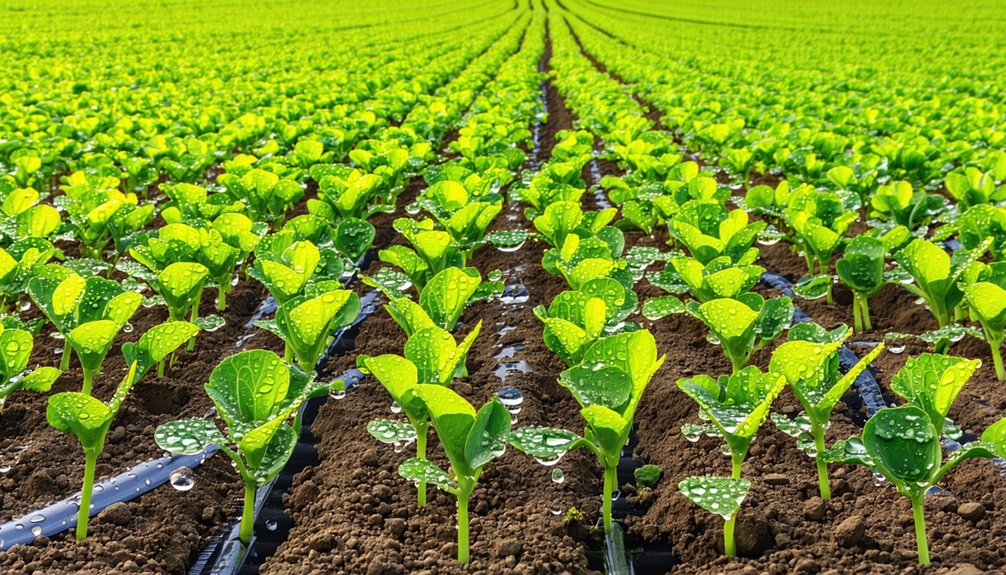
Drip irrigation is recognized for its water conservation techniques that deliver moisture directly to plant roots, reducing evaporation and runoff.
Its effectiveness varies with crop-specific usage, making it suitable for a range of agricultural products.
Proper installation and regular maintenance are essential to ensure optimal performance and longevity of the system.
Water Conservation Techniques
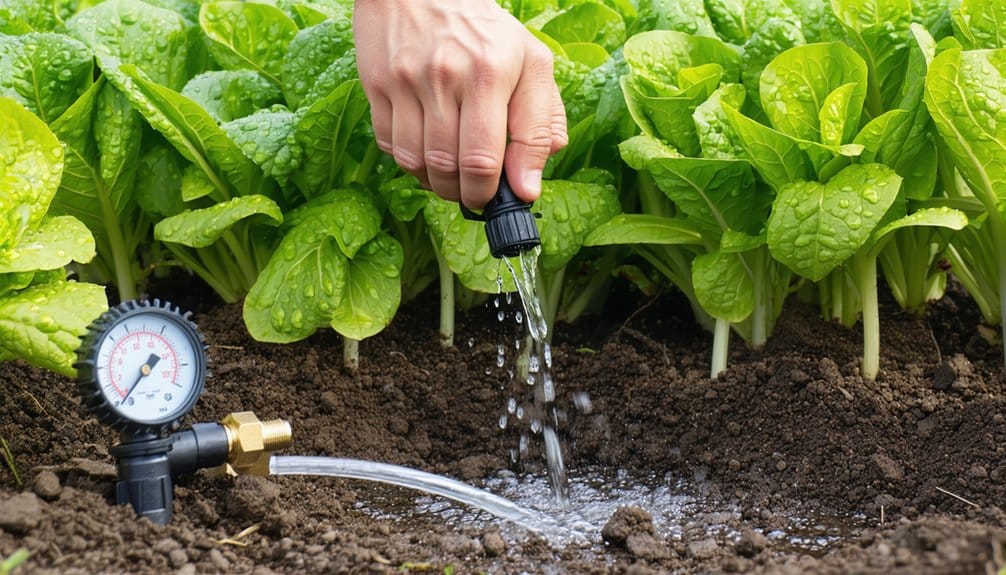
Although traditional irrigation methods often result in significant water loss, modern techniques like drip irrigation offer a precise and efficient alternative. Drip irrigation delivers water directly to the plant root zone, minimizing evaporation and runoff. This targeted approach not only conserves water but also enhances nutrient uptake and reduces weed growth.
Key water conservation techniques associated with drip irrigation include:
- Controlled water application rates tailored to specific crop needs, preventing overwatering.
- Use of pressure-compensating emitters to maintain uniform water distribution across varied terrain.
- Integration with automated systems and soil moisture sensors to optimize irrigation timing and volume.
These techniques collectively improve water use efficiency, reduce waste, and support sustainable agricultural practices, making drip irrigation a cornerstone of modern water conservation in farming.
Crop-Specific Usage
Efficiency in irrigation varies significantly depending on crop type, making tailored water delivery systems essential for maximizing benefits.
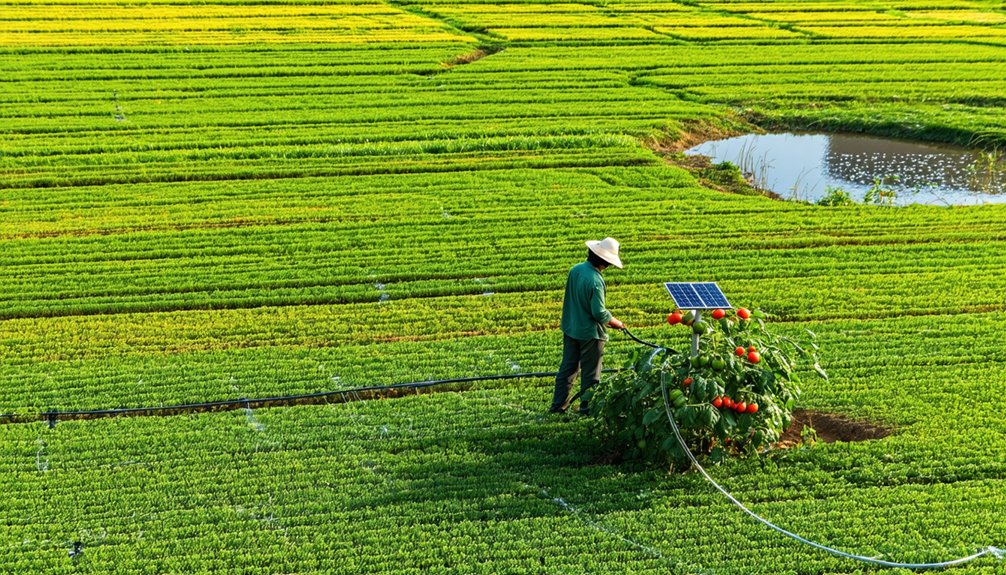
Drip irrigation offers precise water application, ideal for row crops, vegetables, and fruit trees that require consistent moisture at the root zone. This system reduces water wastage by delivering moisture directly to plant roots, minimizing evaporation and runoff.
It is especially beneficial for high-value crops such as tomatoes, strawberries, and grapes, where uniform water distribution improves quality and yield. Additionally, drip irrigation supports crops grown in arid regions by conserving scarce water resources.
Its adaptability allows for integration with fertigation, supplying nutrients alongside water, further enhancing crop performance. Overall, drip irrigation aligns water delivery with specific crop needs, optimizing resource use and boosting productivity.
Installation and Maintenance
Numerous factors influence the successful installation and ongoing maintenance of irrigation systems designed for targeted water delivery. Proper site assessment ensures optimal layout, minimizing water waste and maximizing efficiency.
Installation requires careful placement of drip lines and emitters to match crop root zones, preventing uneven water distribution. Regular maintenance is essential to sustain system performance and includes routine inspection and cleaning to avoid clogging, timely repair of leaks, and seasonal adjustments aligned with crop growth stages.
Key maintenance steps include:
- Flushing lines periodically to remove sediment buildup
- Replacing worn or damaged components promptly
- Monitoring system pressure to ensure uniform water flow
Adhering to these practices extends system lifespan and enhances crop yield by maintaining consistent moisture levels tailored to specific plant needs.
Sprinkler Irrigation: Advantages and Limitations
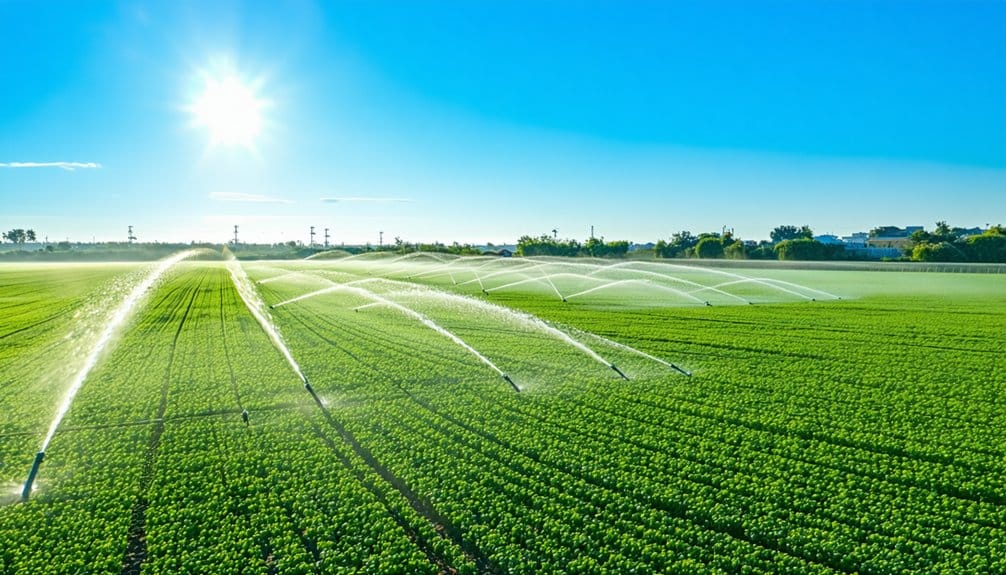
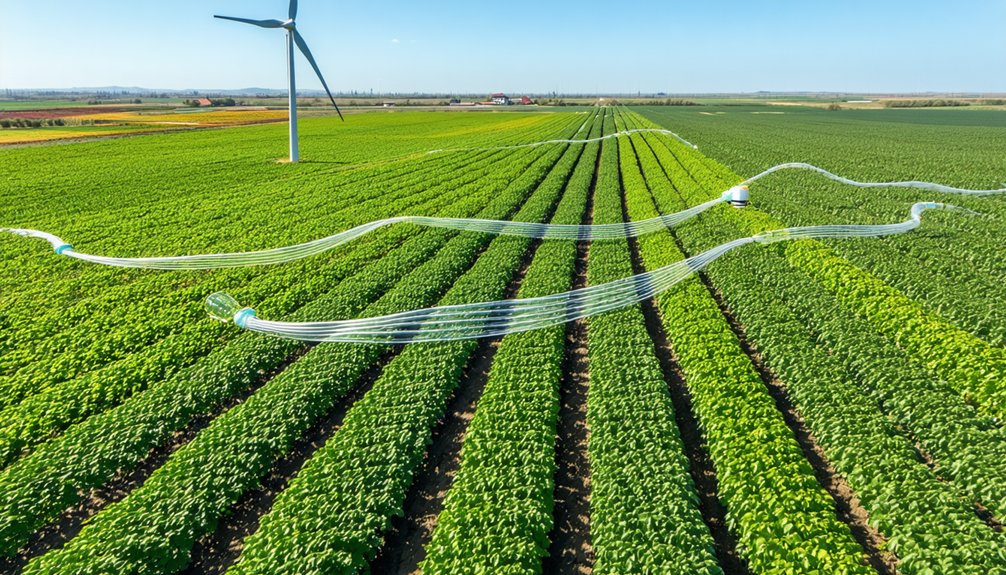
When water is applied through a network of pipes and sprayed over crops, sprinkler irrigation offers a versatile method suited to various terrains and crop types. Its primary advantage lies in uniform water distribution, promoting consistent crop growth.
It allows for automation, reducing labor costs, and can be adapted to small or large fields. Additionally, sprinkler systems help minimize water waste compared to flood irrigation by controlling application rates.
However, limitations include high initial setup costs and vulnerability to wind drift, which can reduce efficiency. Maintenance is necessary to prevent clogging and damage.
Moreover, sprinkler irrigation may not be ideal in regions with water scarcity due to evaporation losses. Careful management is required to balance water use and crop needs effectively.
Surface Irrigation: Traditional Methods and Modern Adaptations
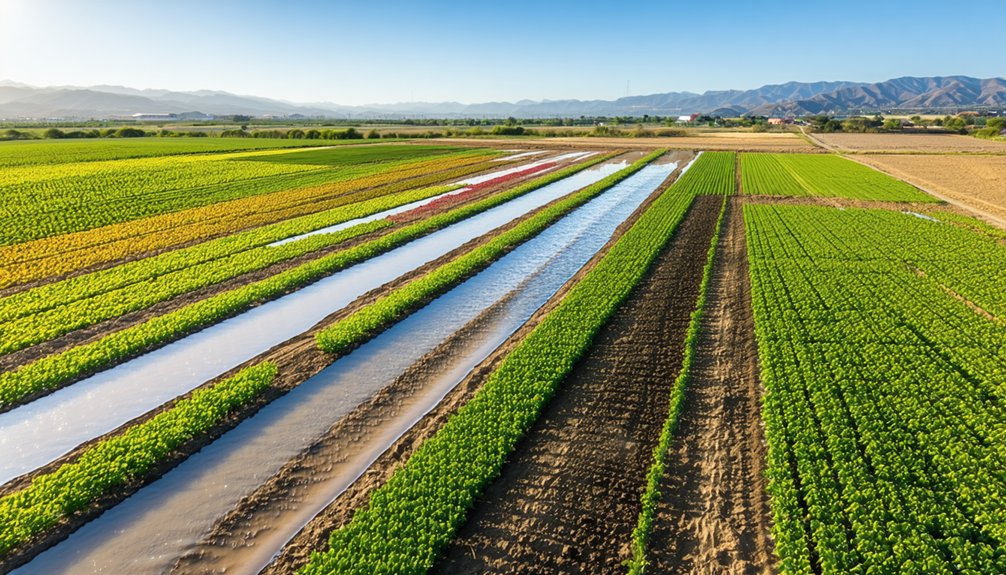
Although surface irrigation is one of the oldest methods of watering crops, it remains widely used due to its simplicity and low cost.
Traditional techniques such as furrow, basin, and border irrigation rely on gravity to distribute water across fields. Modern adaptations have improved efficiency by incorporating better land leveling and flow control. These enhancements help reduce water wastage and improve uniformity in distribution.
Key aspects include:
- Use of laser leveling to ensure even water spread
- Installation of gated or siphon tubes for precise flow management
- Integration of soil moisture sensors to optimize irrigation timing
These advancements maintain the fundamental principles of surface irrigation while addressing previous inefficiencies, making it a viable option for many farming operations aiming to balance cost and effectiveness.
Comparing Water Usage and Crop Yield Outcomes
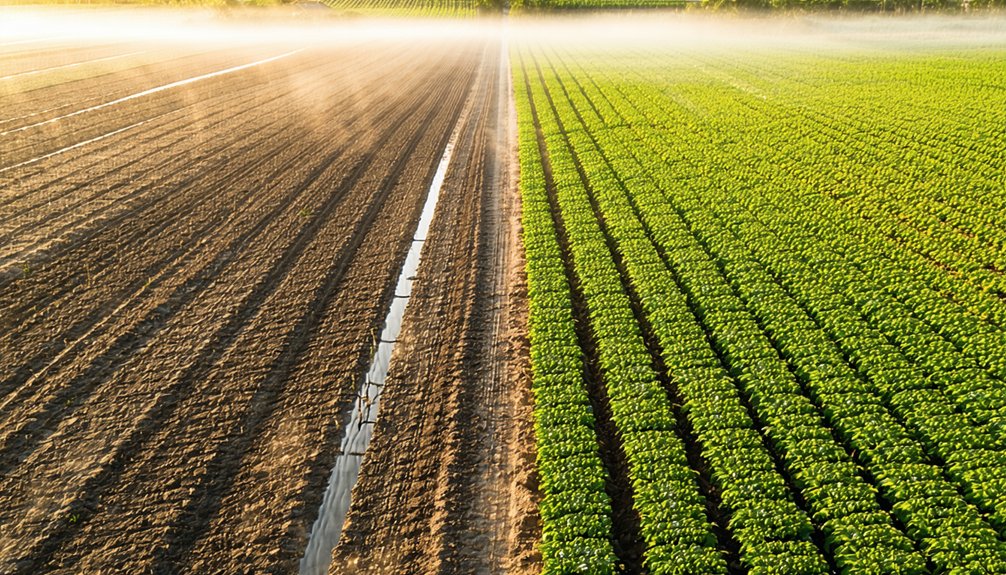
While irrigation methods vary widely, their impact on water consumption and crop yield remains a critical factor in evaluating agricultural efficiency.
Drip irrigation systems consistently demonstrate lower water usage by delivering moisture directly to plant roots, minimizing evaporation and runoff. In contrast, surface irrigation often results in higher water loss due to uneven distribution.
Sprinkler systems fall between these extremes, offering moderate water efficiency with potential evaporation during application.
Crop yield outcomes correspond closely with water management precision; drip irrigation tends to enhance yields by maintaining optimal soil moisture levels. Surface methods may produce variable results depending on soil type and topography.
Cost Analysis and Maintenance Requirements
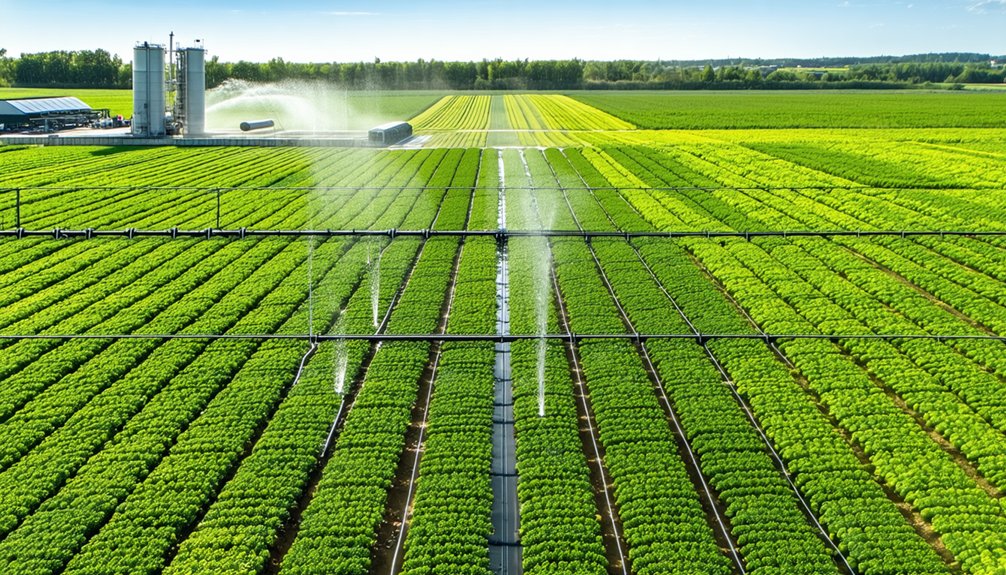
Understanding the efficiency of an irrigation system extends beyond water usage and crop yield to include the financial investment and upkeep involved. Cost analysis involves initial installation expenses, operational energy costs, and potential savings from water conservation.
Maintenance requirements vary among systems, affecting long-term viability and overall expense. Key factors influencing cost and maintenance include:
- Initial setup complexity, influencing labor and material costs.
- Frequency and type of maintenance tasks, such as filter cleaning or pipe repairs.
- Durability and replacement cycles of components impacting lifecycle expenses.
Evaluating these elements helps farmers balance upfront investment with ongoing maintenance demands, ensuring the irrigation system remains both economically and functionally efficient over time.
A thorough understanding of cost and maintenance lays the groundwork for informed decisions in selecting the most suitable irrigation technology.
Implementing the Optimal Irrigation System for Your Farm
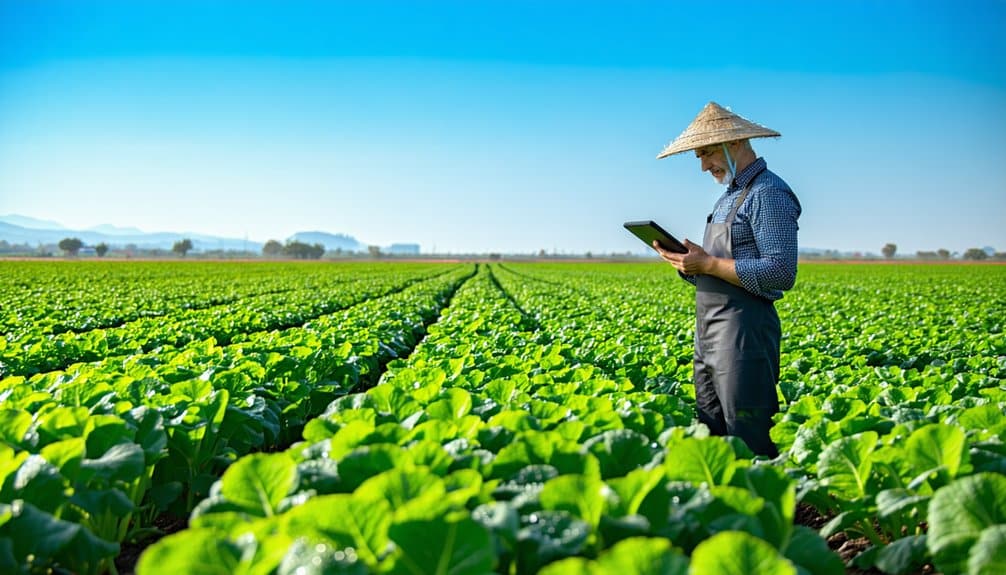
Selecting and implementing the optimal irrigation system requires a careful assessment of a farm’s specific conditions, including soil type, crop requirements, water availability, and budget constraints.
Once these factors are evaluated, the appropriate irrigation technology—such as drip, sprinkler, or surface irrigation—can be chosen to maximize efficiency.
Installation should prioritize uniform water distribution and minimize losses through evaporation or runoff.
Integrating automation and sensors can further optimize water usage by adjusting irrigation schedules based on real-time soil moisture and weather data.
Proper training for farm personnel ensures effective system operation and timely maintenance.
Continual monitoring and adjustment of the system enhance crop yield while conserving water resources, ultimately supporting sustainable farming practices tailored to the farm’s unique environment and economic considerations.
Conclusion
Selecting the most efficient irrigation system is crucial for maximizing crop yield and ensuring sustainable water use. Drip irrigation, with its precise water delivery and compatibility with automation, offers significant advantages over traditional methods. While sprinkler and surface irrigation have their roles, integrating technology with drip systems provides superior water efficiency and crop productivity. Ultimately, choosing the right irrigation approach tailored to specific farm needs enhances long-term agricultural success and resource conservation.