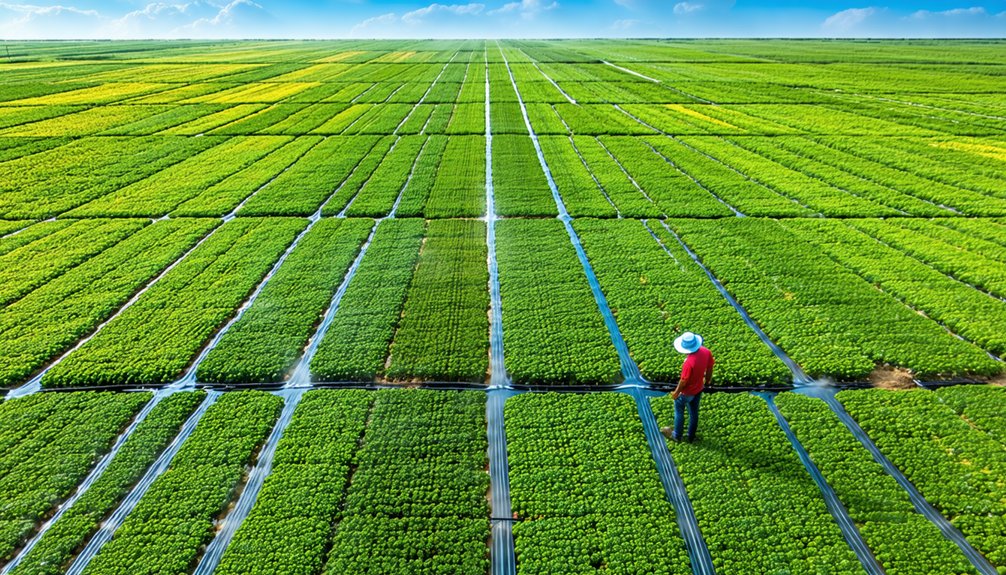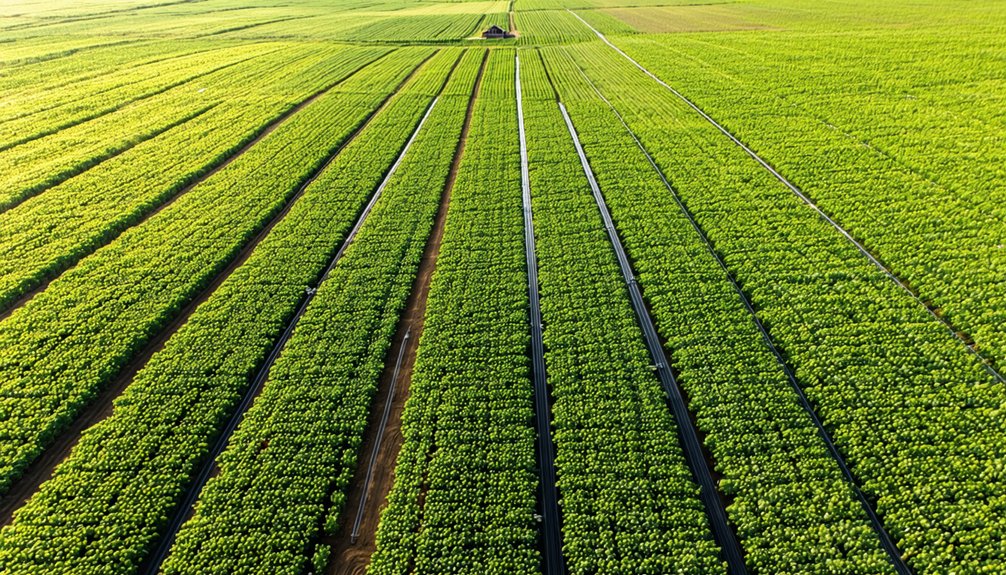

Efficient irrigation is a cornerstone of sustainable agriculture, directly influencing water conservation and crop productivity. Traditional methods often lead to significant losses, prompting the need for more precise techniques. Emerging systems like drip and subsurface irrigation offer targeted water delivery, minimizing waste while supporting plant health. Understanding how these methods compare and integrate with modern technologies is essential to optimizing resource use and maintaining soil vitality. The following exploration reveals key approaches shaping the future of irrigation.
Key Takeaways
- Drip irrigation maximizes water efficiency by delivering water directly to plant roots, reducing evaporation and runoff, ideal for diverse crops and terrains.
- Subsurface irrigation targets root zones precisely, minimizing water loss and improving crop yield through controlled delivery and automated systems.
- Sprinkler irrigation uniformly distributes water, reducing runoff and soil erosion, suitable for row crops, pastures, and orchards.
- Effective irrigation scheduling based on crop stage, weather, and evapotranspiration optimizes water use and conserves resources.
- Integrating soil moisture sensors and management techniques ensures optimal moisture, supporting healthy roots and sustainable water consumption.
Overview of Traditional Irrigation Techniques
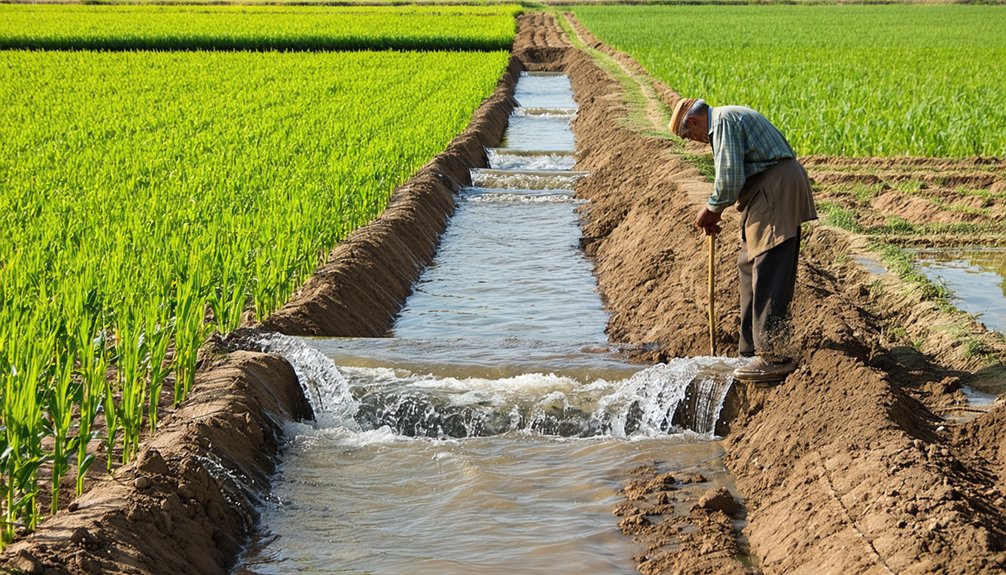
Traditional irrigation techniques, developed over centuries, form the foundation of agricultural water management in many regions. These traditional irrigation methods include surface irrigation practices such as furrow, basin, and flood irrigation, which rely on gravity to distribute water across fields.
Despite their simplicity, these methods have supported irrigation in agriculture effectively, especially in areas lacking advanced technology. However, they often face challenges related to water inefficiency and uneven distribution.
Nevertheless, when managed properly, traditional irrigation methods can contribute to sustainable agriculture by preserving water resources and maintaining soil health. Understanding these time-tested techniques is essential for integrating them with modern practices to optimize water use and promote long-term agricultural productivity.
Drip Irrigation: Precision Water Delivery
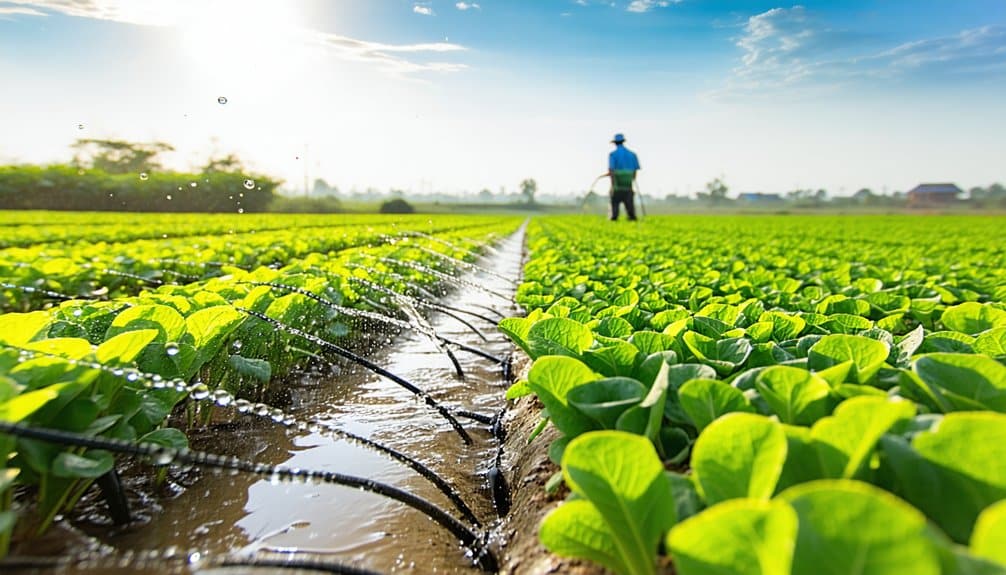
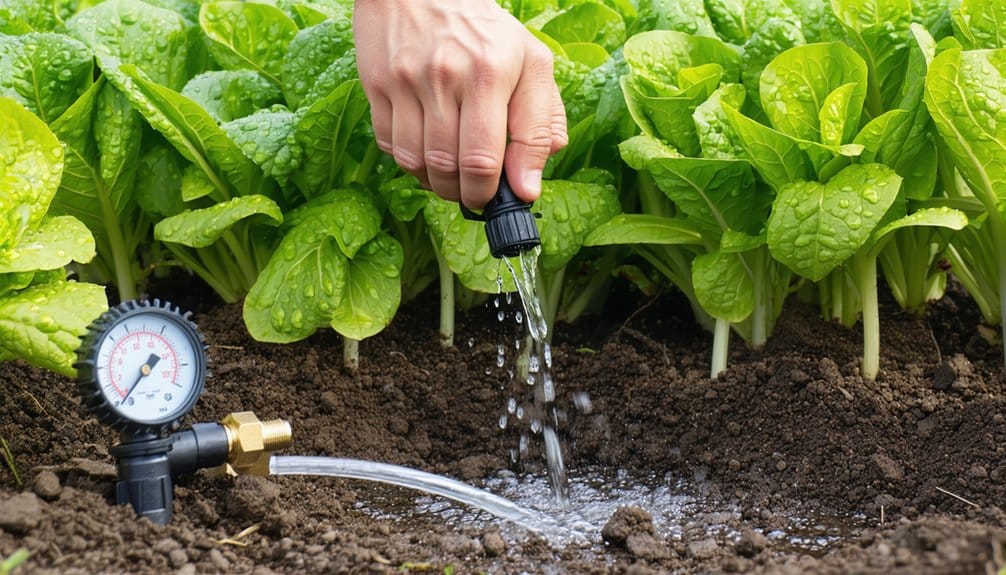
Drip irrigation delivers water directly to the root zone of plants through a network of tubes and emitters, maximizing efficiency and minimizing waste.
This method exemplifies efficient irrigation methods by targeting water application precisely where it is needed, reducing evaporation and runoff.
Its design supports cost-effective irrigation by lowering water consumption and decreasing labor and energy expenses associated with traditional systems.
Additionally, drip irrigation promotes environmentally friendly irrigation by conserving water resources and reducing soil erosion and nutrient leaching.
Suitable for various crops and terrains, it enables controlled water delivery tailored to plant requirements.
Consequently, drip irrigation stands as a sustainable solution that balances agricultural productivity with resource conservation, making it a preferred choice in modern farming practices.
Sprinkler Systems and Their Applications
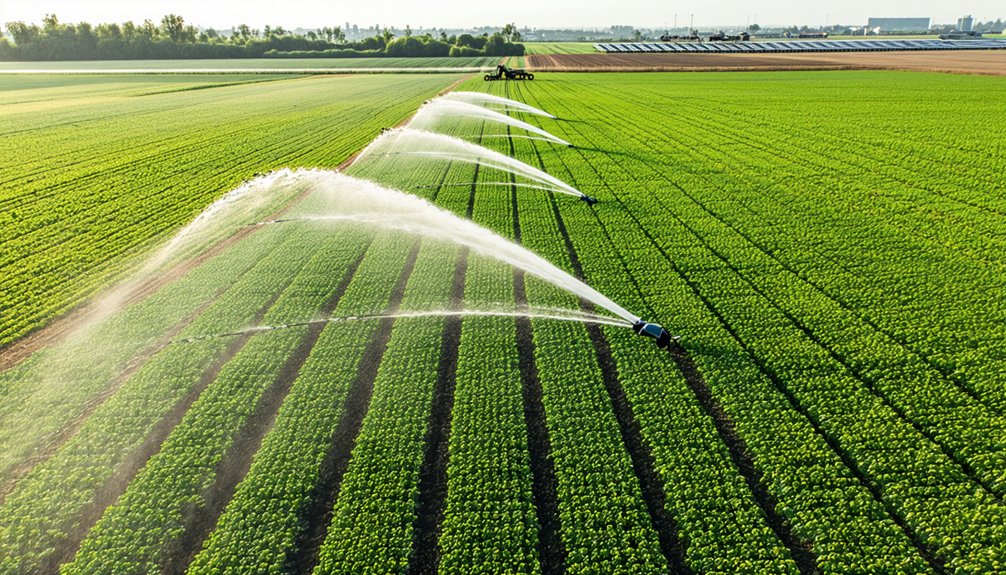
How can water distribution be optimized across diverse agricultural landscapes?
Sprinkler systems offer a versatile solution by simulating natural rainfall, delivering water uniformly over crops. These systems consist of a network of pipes and sprinklers that can be fixed or portable, adapting to various field sizes and topographies. They are effective for irrigating row crops, pastures, and orchards where uniform coverage is critical.
Sprinkler irrigation reduces water runoff and soil erosion compared to traditional methods, enhancing water use efficiency. Modern advancements include low-pressure sprinklers and automated controls that minimize water waste.
However, their performance can be affected by wind and evaporation, necessitating careful management. Overall, sprinkler systems provide a balance between efficient water use and operational flexibility in sustainable agriculture.
Surface Irrigation Methods and Efficiency
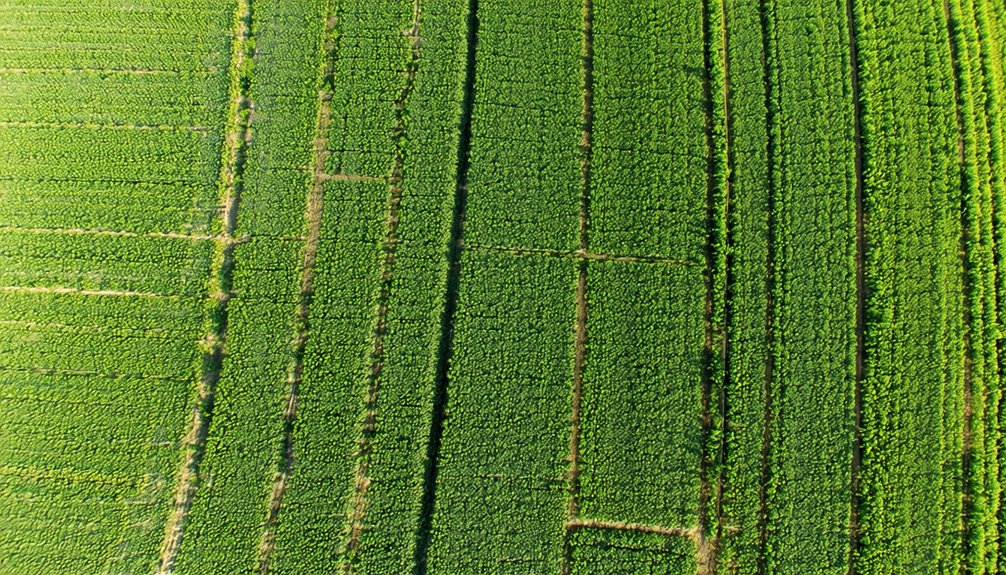
Although surface irrigation methods have been practiced for centuries, they remain a prevalent technique due to their simplicity and cost-effectiveness. This method involves distributing water over the soil surface by gravity flow, commonly through furrows, basins, or border strips.
Surface irrigation is favored in regions with abundant water supply and relatively flat terrain. However, its efficiency varies significantly depending on soil type, field leveling, and water management practices.
While surface irrigation typically exhibits lower water use efficiency compared to pressurized systems, improvements such as laser leveling and flow control can enhance uniformity and reduce water loss.
Despite some limitations, surface irrigation continues to be a viable option for many farmers seeking low-cost solutions, especially in developing countries where infrastructure for advanced irrigation is limited.
Subsurface Irrigation Innovations
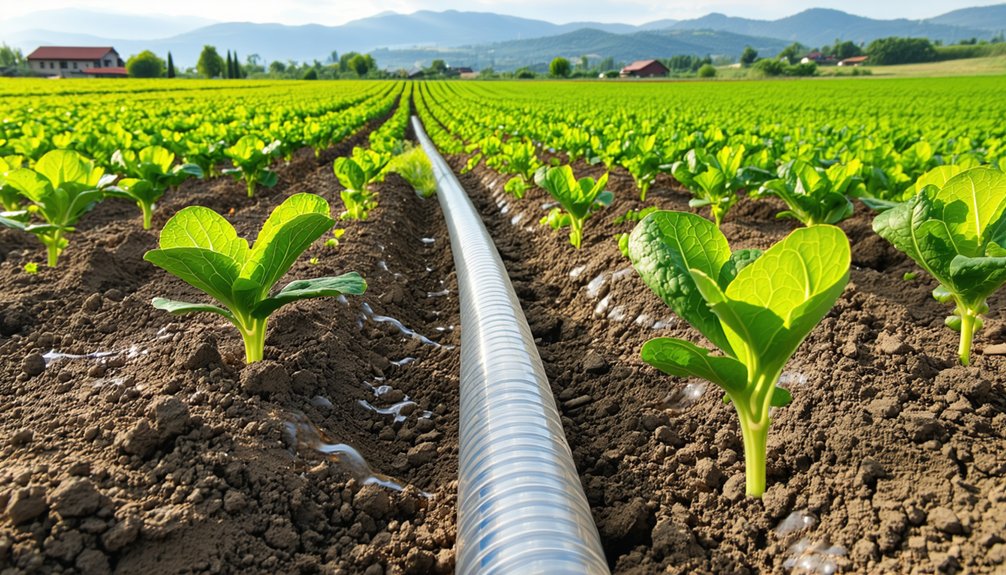
Recent advancements in drip irrigation technology have enhanced the precision of subsurface water delivery.
These innovations focus on targeting the root zone directly, minimizing water loss and improving crop yield.
Such methods represent a significant step toward more efficient and sustainable agricultural practices.
Drip System Advances
Drip system advances have transformed subsurface irrigation by enhancing water delivery directly to plant roots, minimizing evaporation and runoff. Innovations such as pressure-compensating emitters, improved filtration, and automated controls optimize water use efficiency and reduce labor. These systems support precise nutrient delivery and adapt to varying soil types and crop needs, contributing to sustainable agriculture.
| Feature | Benefit | Application |
|---|---|---|
| Pressure-compensating | Uniform water distribution | Uneven terrain |
| Automated controls | Real-time adjustments | Climate-responsive irrigation |
| Enhanced filtration | Prevents emitter clogging | High sediment water sources |
Such advances ensure consistent moisture levels, promoting healthier crops and conserving water resources effectively.
Root Zone Watering
When water is delivered directly to the root zone beneath the soil surface, plants benefit from improved moisture retention and reduced evaporation.
Root zone watering, a form of subsurface irrigation, precisely targets the soil where roots absorb water, optimizing water use efficiency. This method minimizes surface runoff and evaporation losses, making it particularly suitable for arid and semi-arid regions.
Innovations in root zone watering include the integration of sensors and automated control systems, which adjust irrigation schedules based on real-time soil moisture data.
Additionally, advancements in emitter design ensure uniform water distribution, preventing waterlogging and promoting healthy root growth.
Role of Automated Irrigation Technologies
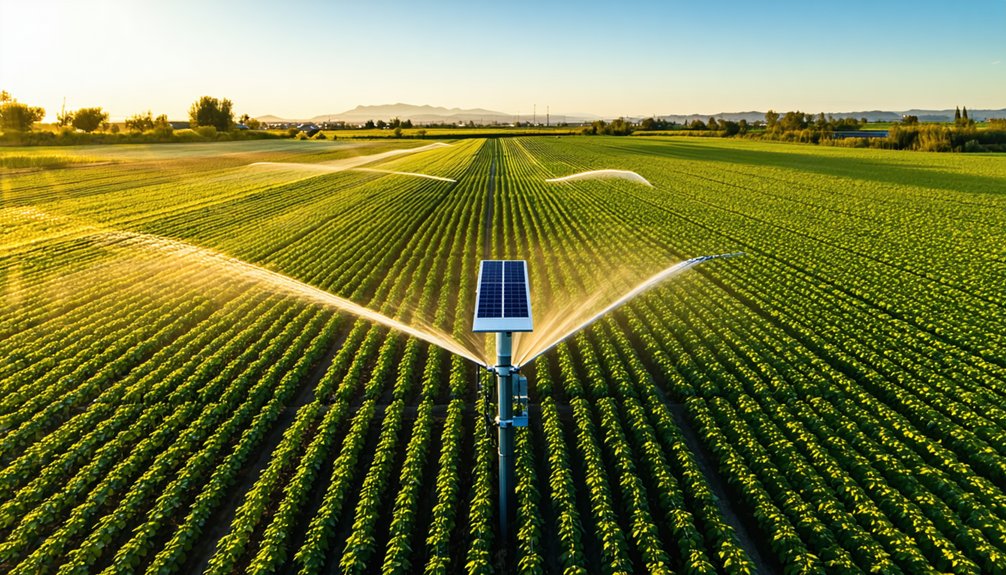
A variety of automated irrigation technologies have emerged as pivotal tools in enhancing water efficiency and crop yield in sustainable agriculture.
These systems optimize water application by precisely delivering moisture based on real-time data, minimizing waste and promoting healthier crop growth.
Key automated technologies include:
- Soil moisture sensors that trigger irrigation only when necessary
- Weather-based controllers adjusting schedules according to climatic conditions
- Remote monitoring platforms enabling farmers to manage irrigation via smartphones
Water Conservation Strategies in Irrigation
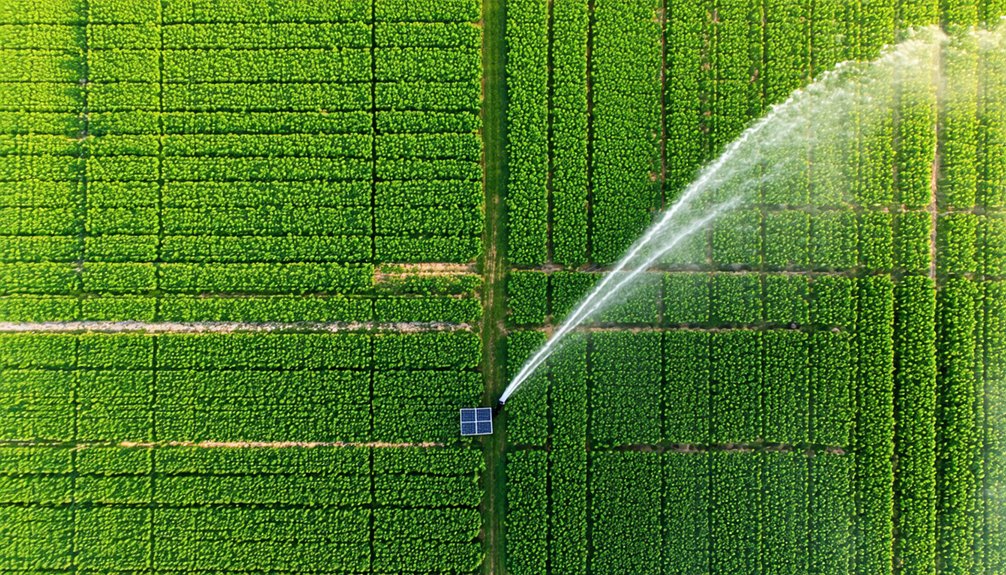
Water conservation in irrigation is essential for sustainable agriculture, with drip irrigation offering precise water delivery directly to plant roots, reducing waste.
Effective scheduling and timing optimize water use by aligning irrigation with crop needs and environmental conditions.
Additionally, soil moisture management techniques help maintain optimal soil hydration, preventing over-irrigation and conserving water resources.
Drip Irrigation Benefits
Drip irrigation stands out as an efficient method for delivering moisture directly to plant roots, minimizing evaporation and runoff. By targeting water application, this method reduces overall water consumption, making it ideal for sustainable agriculture.
It enhances plant growth by maintaining consistent soil moisture levels, thus improving crop yields. Additionally, the system limits weed growth by restricting water to specific zones, reducing competition for nutrients. Drip irrigation also lowers the risk of soil erosion and nutrient leaching, preserving soil health.
Key benefits include:
- Significant water savings compared to traditional irrigation
- Improved nutrient delivery efficiency by localized watering
- Reduced labor and energy costs due to automation compatibility
These factors collectively contribute to the sustainability and productivity of agricultural practices.
Scheduling and Timing
Although irrigation technology plays a crucial role in conserving resources, the effectiveness of water use heavily depends on precise scheduling and timing. Properly timed irrigation aligns water application with crop water demand, reducing waste and enhancing efficiency.
Scheduling considers factors such as crop growth stage, weather conditions, and evapotranspiration rates to determine optimal irrigation intervals. Avoiding irrigation during periods of low water uptake prevents runoff and deep percolation losses. Early morning or late evening watering minimizes evaporation, further conserving water.
Advanced scheduling tools, including climate data and automated controllers, enable dynamic adjustments to irrigation plans, responding to real-time environmental changes. Ultimately, meticulous scheduling and timing maximize water use efficiency, supporting sustainable agricultural practices and ensuring resource conservation without compromising crop productivity.
Soil Moisture Management
When soil moisture is effectively managed, irrigation efficiency improves substantially, reducing overall water consumption. Precise monitoring and control of soil moisture prevent over-irrigation and water loss through evaporation or runoff.
Advanced technologies like soil moisture sensors enable real-time data collection, guiding irrigation timing and volume adjustments. Additionally, maintaining optimal moisture levels supports healthy root development and maximizes crop yield.
Key strategies for effective soil moisture management include:
- Utilizing soil moisture sensors for accurate irrigation scheduling
- Implementing mulching to retain soil moisture and reduce evaporation
- Adopting deficit irrigation techniques to apply water below full crop water requirements without compromising yield
These approaches collectively enhance water conservation while sustaining agricultural productivity, making soil moisture management a cornerstone of sustainable irrigation practices.
Impact of Irrigation on Crop Yield and Soil Health
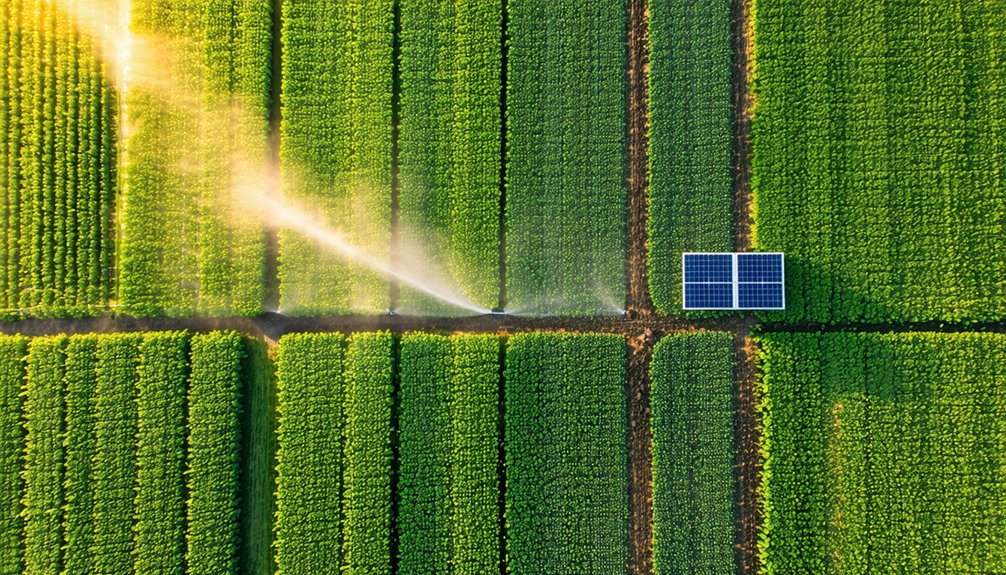
The balance between water application and soil conditions critically influences both crop yield and soil health. Appropriate irrigation enhances plant growth by ensuring adequate moisture for nutrient uptake and photosynthesis, directly improving yield.
Conversely, over-irrigation can lead to waterlogging, reducing oxygen availability to roots and promoting disease. Furthermore, excessive water use may cause nutrient leaching, diminishing soil fertility.
Under-irrigation stresses crops, limiting growth and yield potential. Soil structure also responds to irrigation practices; well-managed irrigation maintains aggregation and porosity, supporting microbial activity essential for nutrient cycling.
In contrast, improper irrigation can compact soil or increase salinity, degrading soil quality over time. Therefore, selecting irrigation methods that optimize water delivery supports sustainable crop production while preserving long-term soil health.
Cost-Benefit Analysis of Various Irrigation Systems
Evaluating irrigation systems requires careful consideration of initial investment costs alongside long-term operational expenses.
The potential for yield improvement benefits plays a critical role in determining overall value. Balancing these factors helps identify the most economically viable options for sustainable agriculture.
Initial Investment Costs
Although irrigation systems vary widely in technology and scale, their initial investment costs significantly influence adoption decisions among farmers. High upfront expenses can be a barrier, especially for smallholder farmers with limited capital.
Different systems demand varying levels of financial commitment depending on complexity and infrastructure needs. For example, drip irrigation requires specialized equipment, while surface irrigation involves minimal hardware costs but may necessitate land grading.
Key factors affecting initial investment include:
- Equipment purchase and installation costs
- Land preparation and system design expenses
- Availability of subsidies or financial assistance programs
Understanding these costs helps stakeholders evaluate which irrigation method aligns with their budget and long-term goals, facilitating more informed decisions that support sustainable agricultural practices.
Long-Term Operational Expenses
Analyzing long-term operational expenses reveals the true economic viability of different irrigation systems. While initial costs are important, ongoing expenses such as maintenance, energy consumption, and labor significantly impact overall affordability. Drip irrigation generally incurs moderate maintenance and low energy costs, whereas sprinkler systems require higher energy use and more frequent repairs. Surface irrigation has minimal energy costs but may demand extensive labor and land management. The following table summarizes key operational expenses:
| Irrigation Method | Maintenance Cost | Energy & Labor Cost |
|---|---|---|
| Drip Irrigation | Moderate | Low |
| Sprinkler Systems | High | High |
| Surface Irrigation | Low | Moderate to High |
This cost distribution influences long-term sustainability decisions, balancing efficiency and affordability.
Yield Improvement Benefits
Understanding the long-term operational expenses provides a foundation for assessing the overall value of irrigation systems. Yield improvement benefits are a critical factor in evaluating these systems’ cost-effectiveness.
Efficient irrigation methods such as drip and sprinkler systems enhance water distribution, leading to significant crop yield increases. These benefits justify higher initial investments by reducing water waste and improving plant health.
When conducting a cost-benefit analysis, it is essential to consider:
- Increased crop productivity and quality
- Reduction in water usage and associated costs
- Enhanced resilience against drought and climate variability
Integrating Renewable Energy With Irrigation Practices
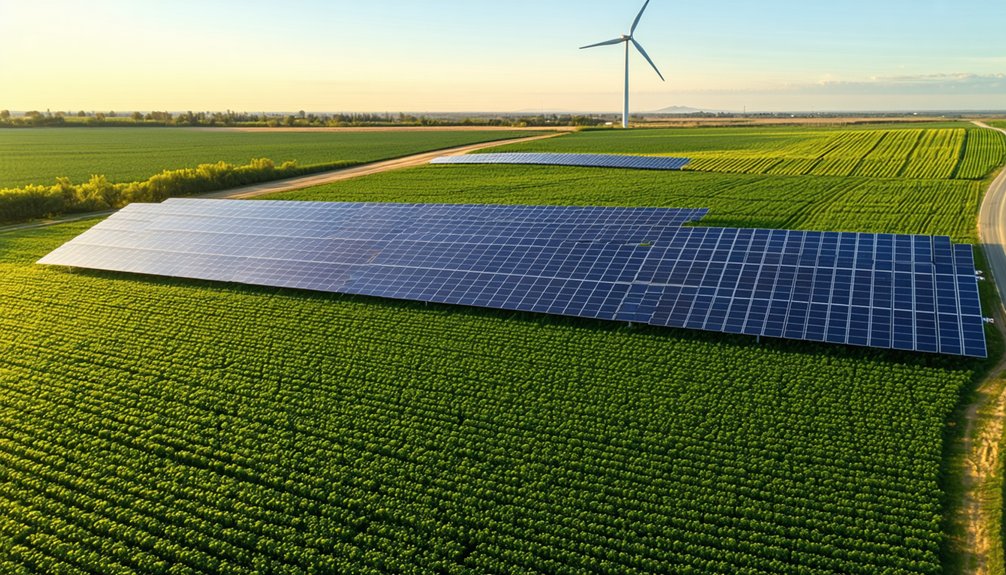
How can renewable energy transform irrigation practices to enhance sustainability in agriculture?
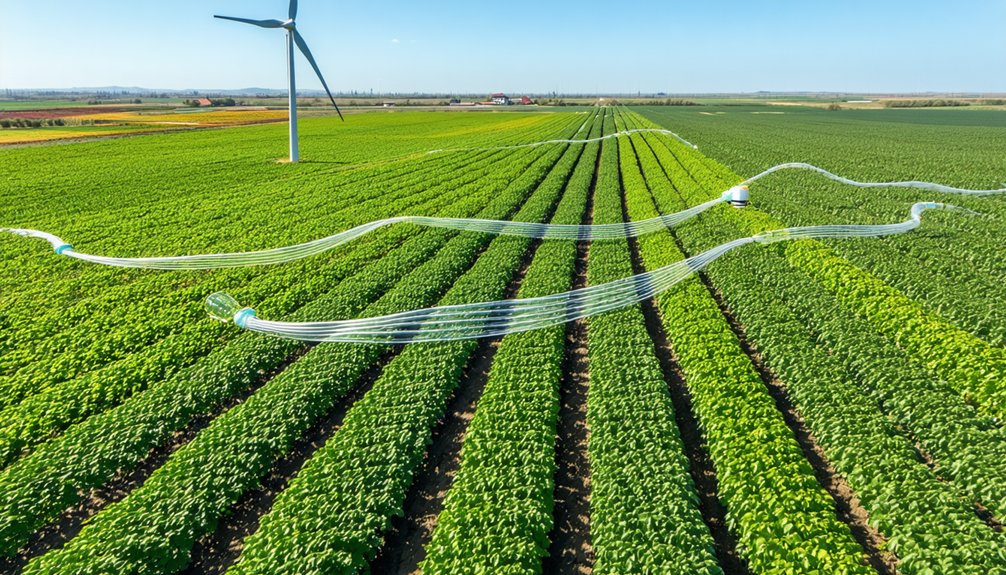
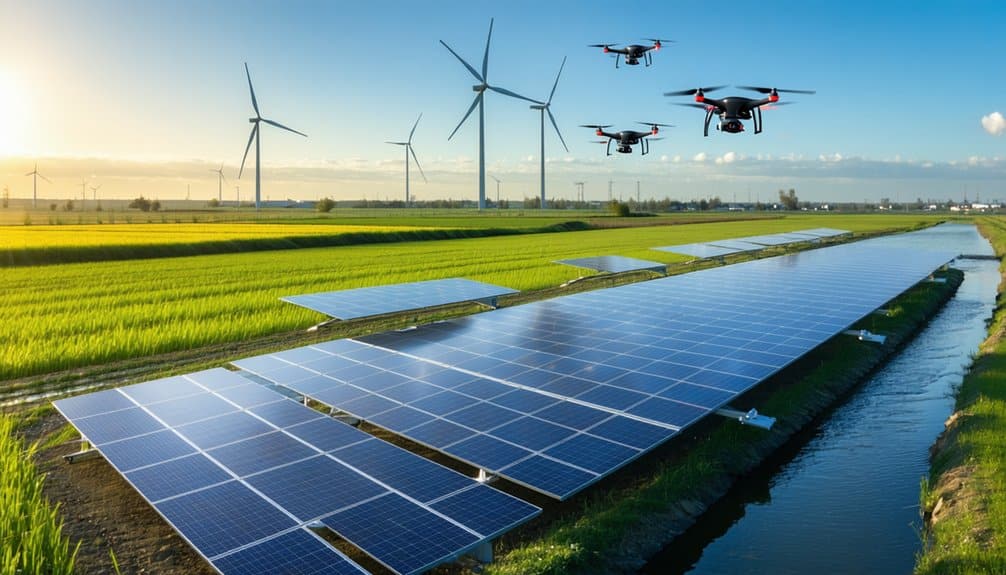
Integrating renewable energy sources such as solar, wind, and biomass with irrigation systems reduces reliance on fossil fuels, lowering greenhouse gas emissions.
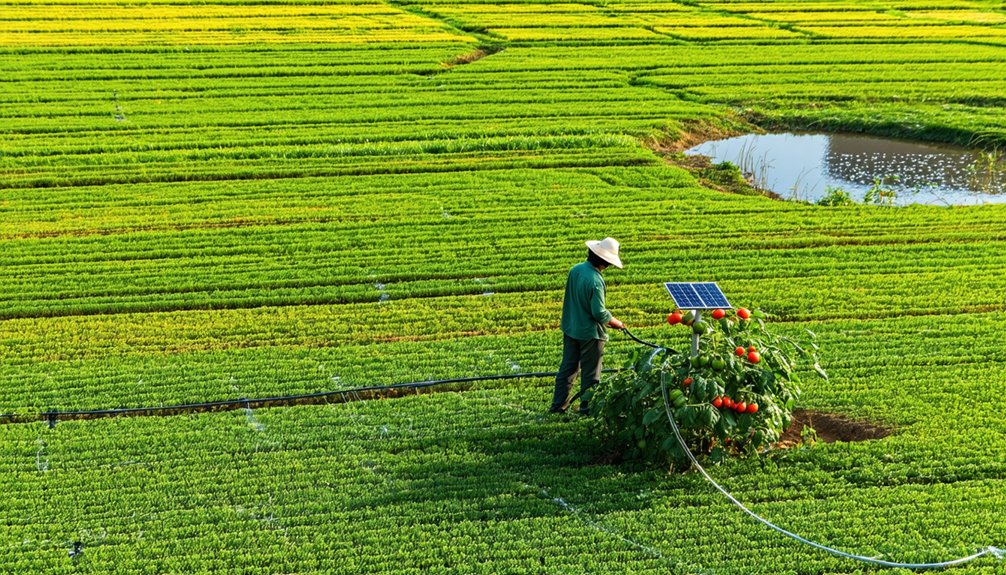
Solar-powered pumps, for instance, provide a cost-effective and reliable water supply, especially in remote areas lacking grid access. This integration allows precise water delivery aligned with crop needs, minimizing waste and conserving resources.
Additionally, renewable energy-driven irrigation supports resilient farming operations by reducing energy costs and enhancing long-term viability.
The synergy between renewable energy and efficient irrigation methods fosters environmental stewardship while maintaining agricultural productivity.
Consequently, adopting renewable energy in irrigation constitutes a critical step toward sustainable agriculture, balancing economic, environmental, and social objectives.
Conclusion
Efficient irrigation methods, such as drip and subsurface systems, play a vital role in sustainable agriculture by optimizing water use and enhancing crop productivity. Integrating advanced technologies like soil moisture sensors and automated scheduling further refines water application, reducing waste and preserving soil health. Adopting these innovative practices supports resource conservation and economic viability, contributing to resilient agricultural ecosystems. Ultimately, modern irrigation techniques offer a balanced approach to meeting growing food demands while safeguarding environmental sustainability.