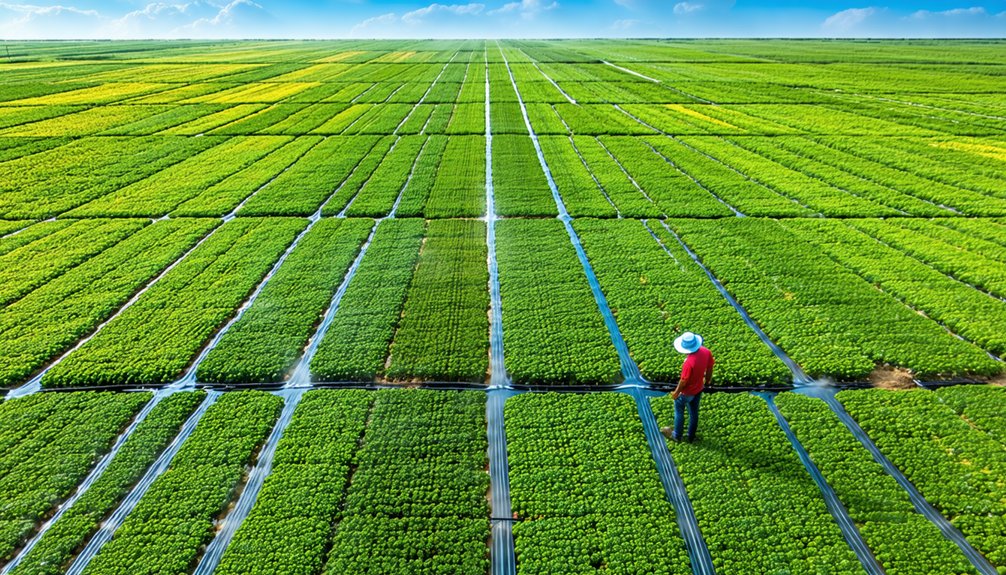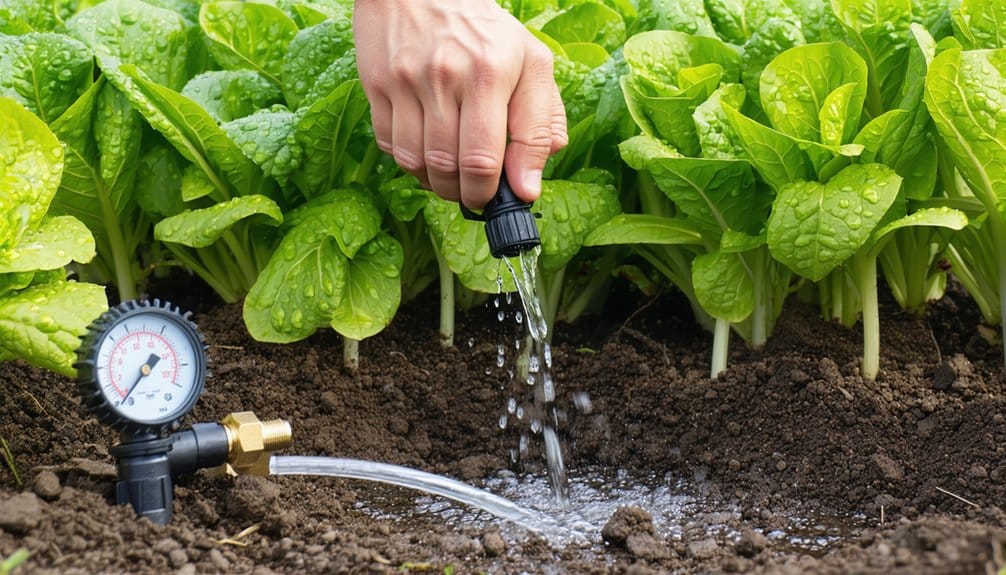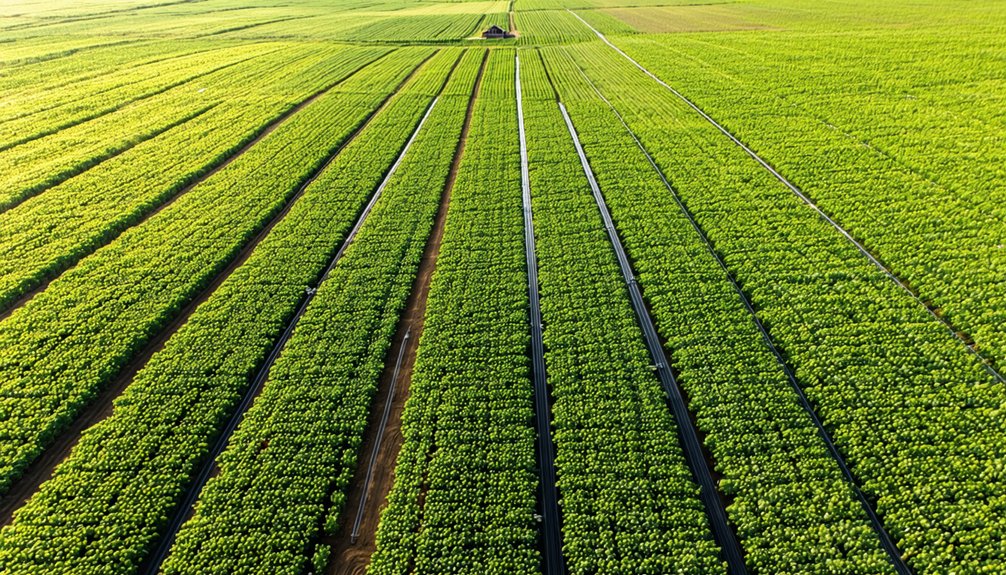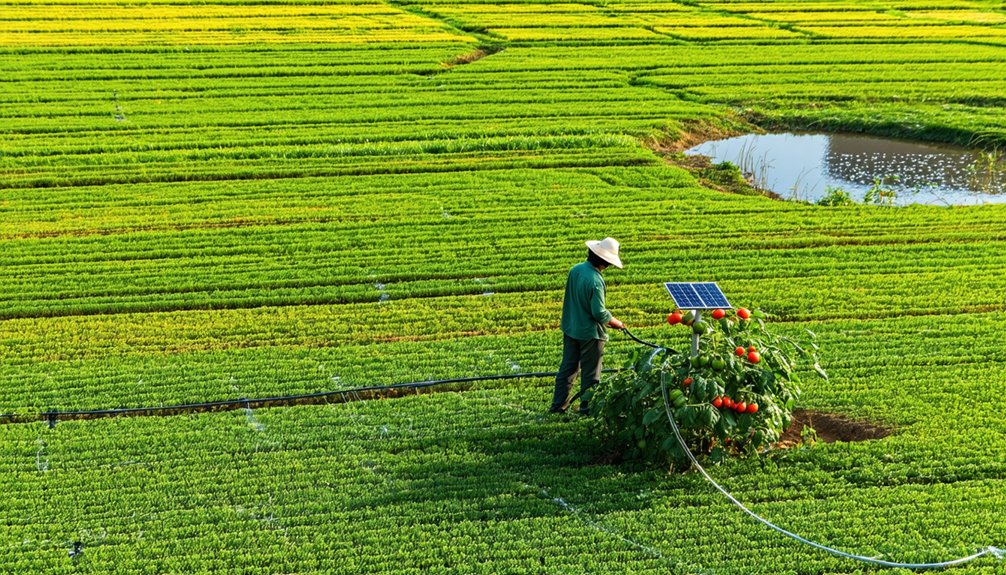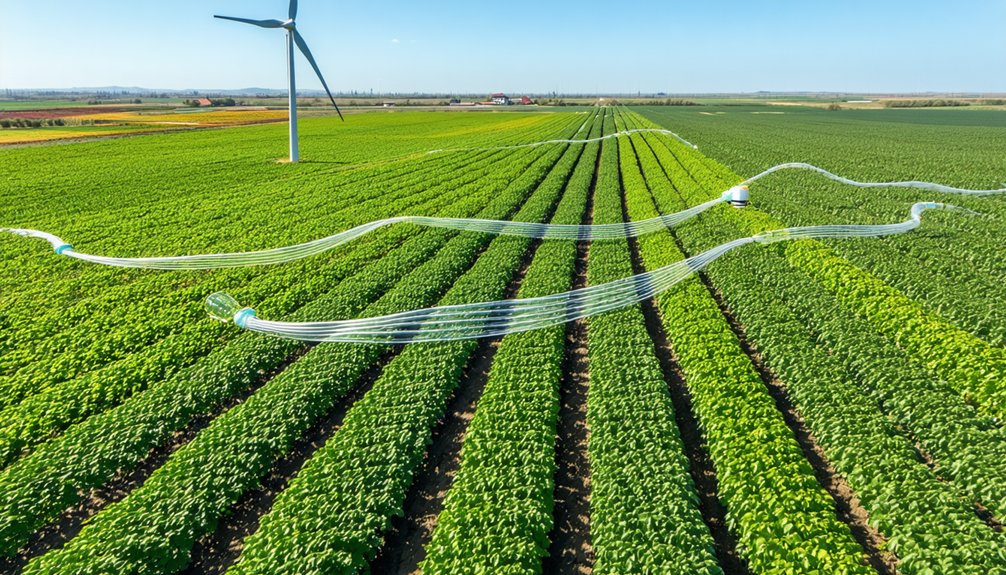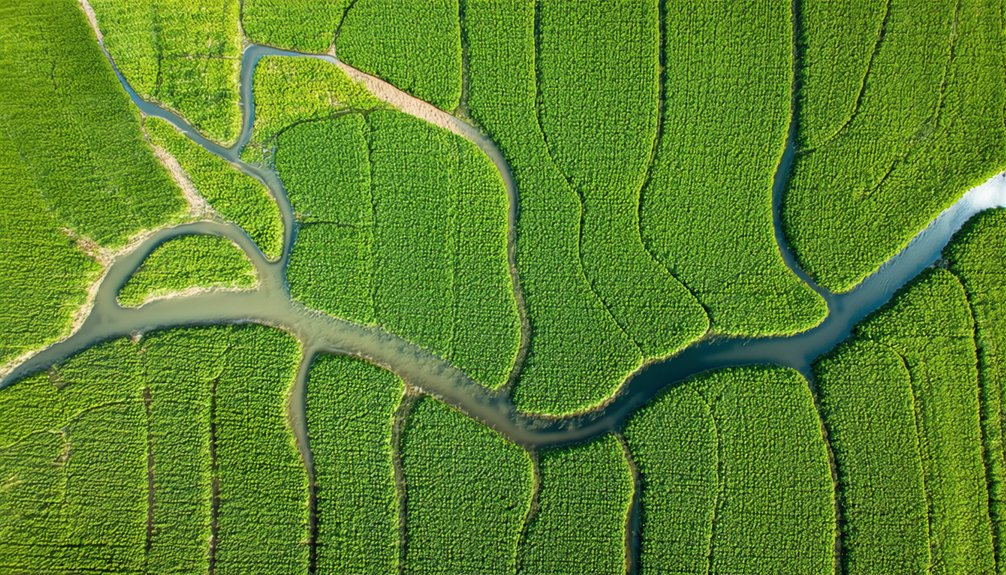
When you think about irrigation, surface systems might not be the first that come to mind, yet they play a crucial role in agriculture. Understanding how gravity helps distribute water across fields can reveal much about crop success. Different methods cater to various soil types and crops, but achieving optimal efficiency requires more than just basic knowledge. What are the key components that make surface irrigation effective, and what challenges might you encounter?
Understanding Surface Irrigation Systems
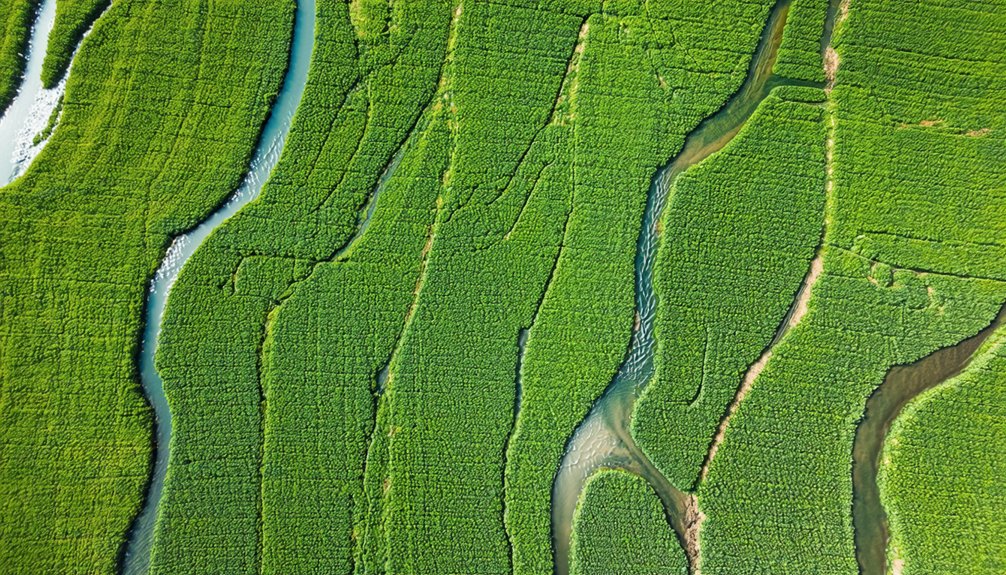
When you think about efficient ways to water crops, surface irrigation systems often come to mind. These systems rely on gravity to distribute water across the field, making them a popular choice among farmers.
By using various surface irrigation types, you can effectively tailor your approach to suit different soil and crop conditions. This method allows for a straightforward setup and requires minimal technology, which can be appealing if you’re looking to keep costs down.
However, it’s essential to understand the significance of proper design and management in maximizing water efficiency. Unlike other irrigation methods, surface irrigation can lead to uneven water distribution if not implemented correctly, so attention to detail is crucial for achieving optimal results.
Types of Surface Irrigation Methods
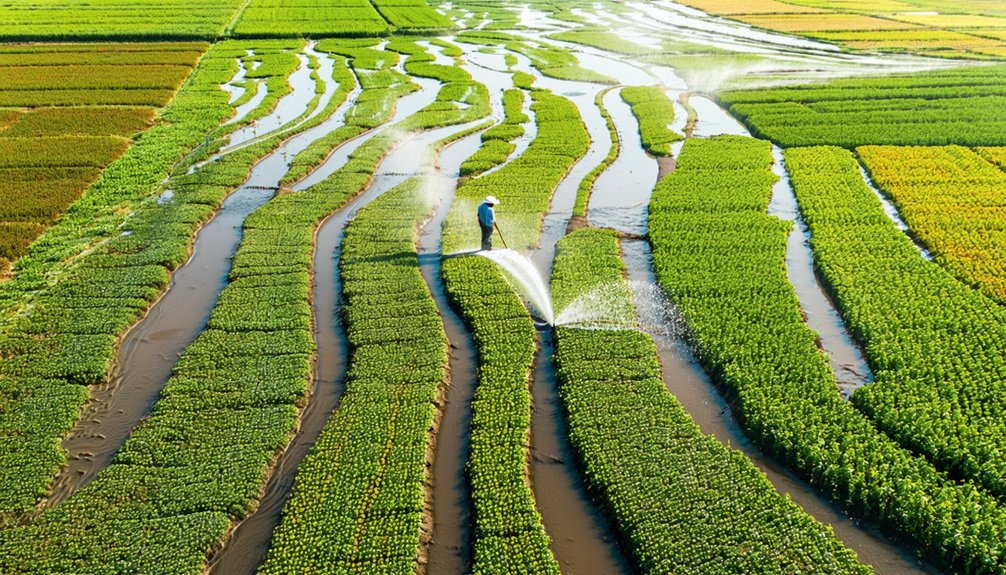
When it comes to surface irrigation, there are several effective methods you can use.
You might consider the furrow irrigation technique, the basin irrigation approach, or the flood irrigation system.
Each method has its own benefits and can suit different types of crops and landscapes.
Furrow Irrigation Technique
Furrow irrigation is one of the most efficient surface irrigation techniques, commonly used in many agricultural settings. In this method, you create shallow channels, or furrows, between crop rows, allowing water to flow directly to the plant roots.
As the water seeps into the soil, it efficiently nourishes your crops. This technique offers significant agriculture irrigation benefits, such as reducing water runoff and evaporation. By controlling the water distribution, you can optimize moisture levels, resulting in improved crop yields.
Plus, furrow irrigation is cost-effective, requiring less infrastructure than some other methods. This efficiency not only conserves water but also enhances productivity, making it a popular choice for farmers looking to maximize their resources.
Basin Irrigation Approach
Another effective method in surface irrigation is basin irrigation. In this approach, you create small, level basins or depressions around each plant or group of plants.
When you irrigate, water fills these basins, allowing it to soak into the soil slowly and evenly. This method helps reduce runoff and ensures that plants receive adequate moisture for healthy growth.
Basin irrigation works particularly well in areas with uniform soil types and gentle slopes. You might find it beneficial for crops that require consistent watering, such as rice or certain vegetables.
However, keep in mind that proper maintenance is crucial; you’ll need to monitor the basins for any erosion or sediment buildup to maintain their effectiveness.
Flood Irrigation System
Flood irrigation is a straightforward and widely used method in surface irrigation systems. In this technique, water flows over the soil surface, soaking it uniformly.
You’ll typically see it applied in fields with level land, where you can control water distribution effectively. To set it up, you create channels or furrows to direct water to your crops.
This method’s simplicity makes it easy to implement, but you need to manage water application carefully to avoid waterlogging or erosion. It’s essential to monitor soil moisture regularly to ensure your plants receive just the right amount.
Flood irrigation is particularly beneficial for crops like rice and certain vegetables, as they thrive in flooded conditions.
Key Components of Surface Irrigation
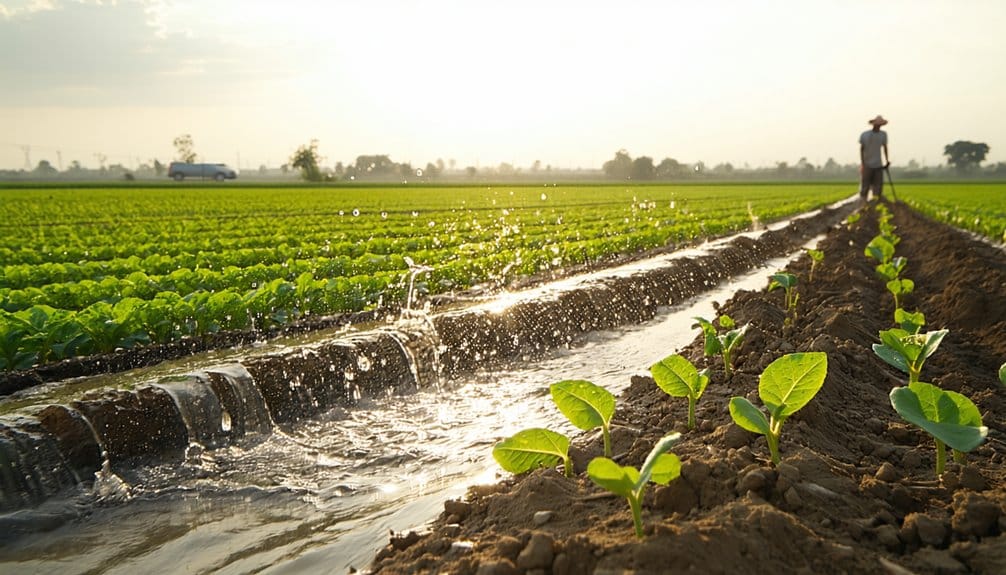
When implementing surface irrigation, you need to consider several key components that ensure effective water management.
Water distribution techniques, land slope, and soil type all play crucial roles in how efficiently your system operates.
Understanding these factors will help you optimize your irrigation practices for better crop yields.
Water Distribution Techniques
While effective water distribution is crucial for successful surface irrigation, understanding the key components can significantly enhance your irrigation practices.
First, consider the layout of your field; using furrows, basins, or borders can influence how water moves. Next, evaluate your water source—gravity flow or pressurized systems can affect distribution efficiency.
You’ll also want to assess the soil type, as sandy soils drain faster than clay, altering how much water your crops receive. Implementing controlled flow rates ensures even distribution, preventing both runoff and waterlogging.
Finally, using proper irrigation scheduling helps you apply the right amount of water at optimal times, maximizing efficiency and crop yield.
Focus on these techniques, and you’ll see improved results in your surface irrigation efforts.
Land Slope Considerations
Understanding land slope is vital for optimizing surface irrigation practices. The slope of your land directly impacts water flow and distribution. A gentle slope can promote even water spread, while a steep slope may lead to runoff and erosion.
You’ll want to measure the slope accurately to determine how water will behave on your fields. If your land’s slope is too steep, consider implementing terraces or contour farming techniques to slow down water movement and enhance absorption.
Conversely, if your slope is minimal, you might need to create furrows or basins to guide the water effectively. By addressing these slope considerations, you can significantly improve irrigation efficiency and crop yields, ensuring your efforts lead to productive results.
Soil Type Influence
The type of soil you have plays a crucial role in how effectively surface irrigation works. Different soil textures—like sandy, loamy, or clay—affect water infiltration and retention.
If your soil is sandy, water drains quickly, which means you’ll need to irrigate more frequently. On the other hand, clay soils hold water well but can lead to pooling if you’re not careful.
Loamy soils strike a balance, providing good drainage while retaining moisture. Understanding your soil type helps you optimize irrigation schedules, ensuring your crops get the right amount of water.
It’s essential to regularly test your soil and adjust your irrigation methods accordingly, so you can maximize efficiency and boost crop yields.
Water Distribution in Surface Irrigation
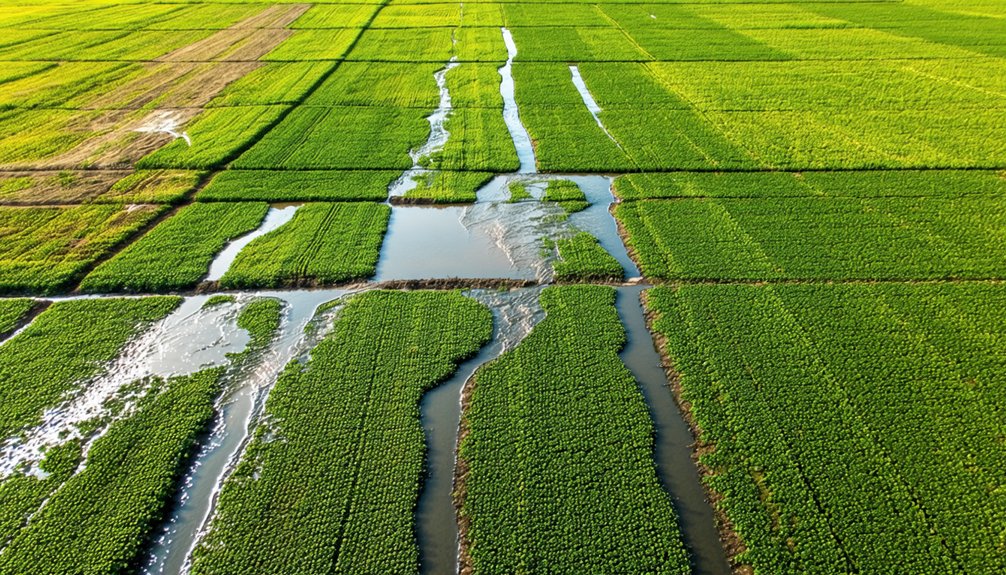
Water distribution in surface irrigation plays a crucial role in ensuring crops receive the right amount of moisture. You’ll find that water flows over the soil surface, soaking into the ground and reaching the plant roots.
The key is to manage the flow rate and timing effectively. As you set up your system, consider the slope, soil type, and crop needs. Uneven distribution can lead to some areas being overwatered while others remain dry.
You can use furrows, basins, or borders to direct the water efficiently. Monitoring moisture levels regularly will help you adjust your irrigation practices and maintain uniformity.
Advantages of Surface Irrigation
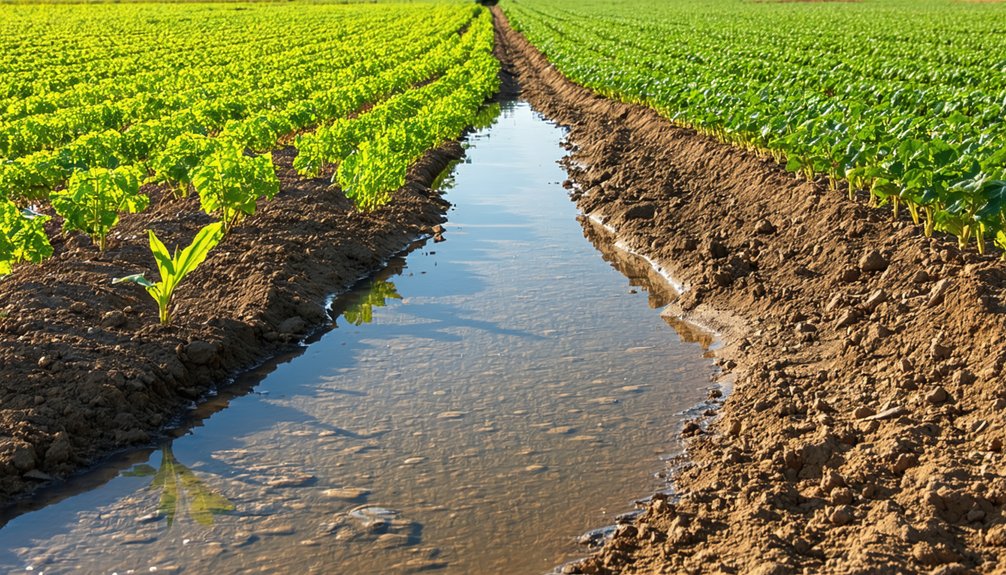
While many irrigation methods exist, surface irrigation offers several advantages that can significantly benefit your farming practices.
First, it’s cost-effective, as it requires minimal investment in infrastructure compared to other systems. You’ll find maintenance is simpler, reducing ongoing expenses.
Additionally, surface irrigation effectively distributes water across large areas, ensuring your crops receive consistent moisture. This method also promotes soil health by allowing water to infiltrate gradually, which minimizes erosion.
Moreover, it’s adaptable to various soil types and crop requirements, making it versatile for different farming conditions. You can even utilize available water resources efficiently, as surface irrigation can leverage rainfall.
Challenges and Limitations
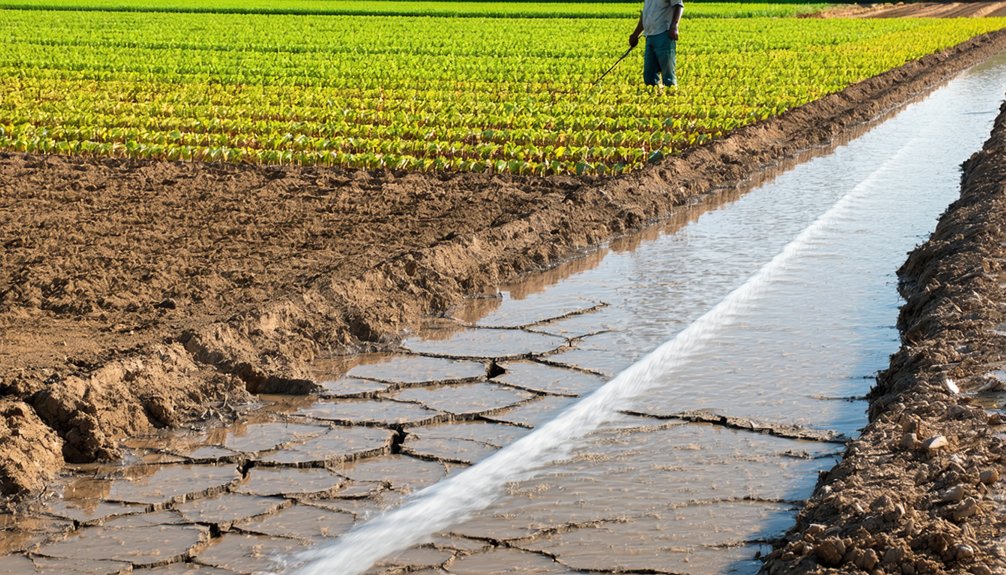
Although surface irrigation has its advantages, it also comes with challenges and limitations that farmers need to consider.
One major issue is uneven water distribution, which can lead to over-saturation in some areas and under-saturation in others. This inconsistency can negatively impact crop yields.
You might also face soil erosion, especially on sloped lands, as water runs off instead of soaking in.
Additionally, surface irrigation often requires significant labor and time for setup and maintenance.
Water quality can be another concern, as contaminants in surface water can affect crop health.
Lastly, during dry spells, reliance on this method can become problematic, making it essential to evaluate alternative irrigation options when water availability is low.
Best Practices for Effective Surface Irrigation
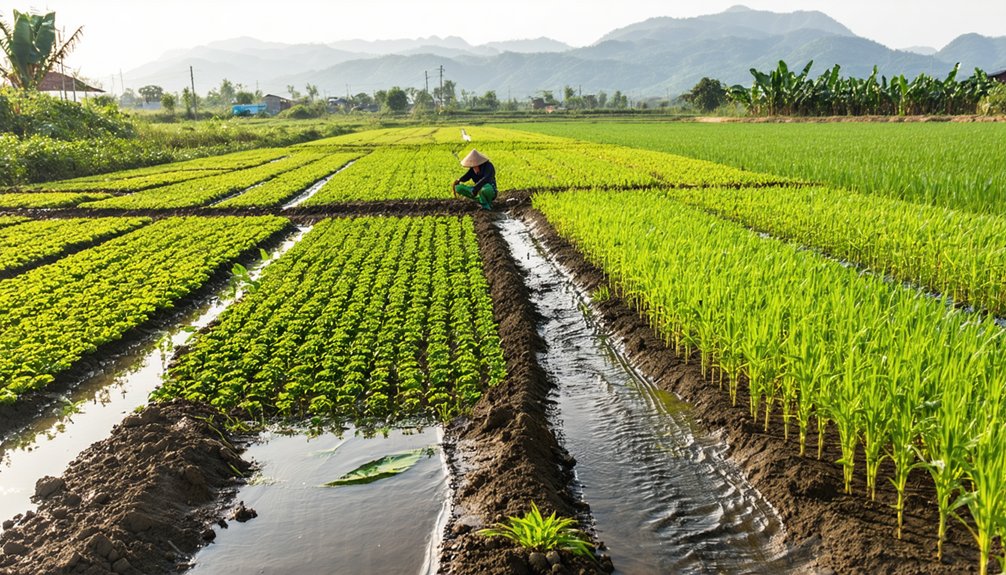
To maximize the effectiveness of surface irrigation, you should focus on proper field design and layout. Ensure your fields have uniform slopes to promote even water distribution.
You’ll also want to create well-defined furrows or basins that guide water flow efficiently. Timing is crucial; irrigate when soil moisture levels are low but before crops show signs of stress.
Additionally, consider the type of crop you’re growing; some may require more or less water. Regular maintenance of your irrigation channels can prevent blockages and optimize flow.
Lastly, monitor your system frequently to adjust for weather conditions and soil types. By following these best practices, you’ll enhance water efficiency and promote healthier crops.
Conclusion
In conclusion, surface irrigation is a practical method for efficiently distributing water across your fields. By understanding the different types of systems and their key components, you can optimize water usage and promote healthy crops. While there are challenges to consider, adopting best practices can enhance your irrigation efforts. Embrace this technique to harness gravity’s power and ensure your plants thrive, all while minimizing water waste and soil erosion. Happy farming!