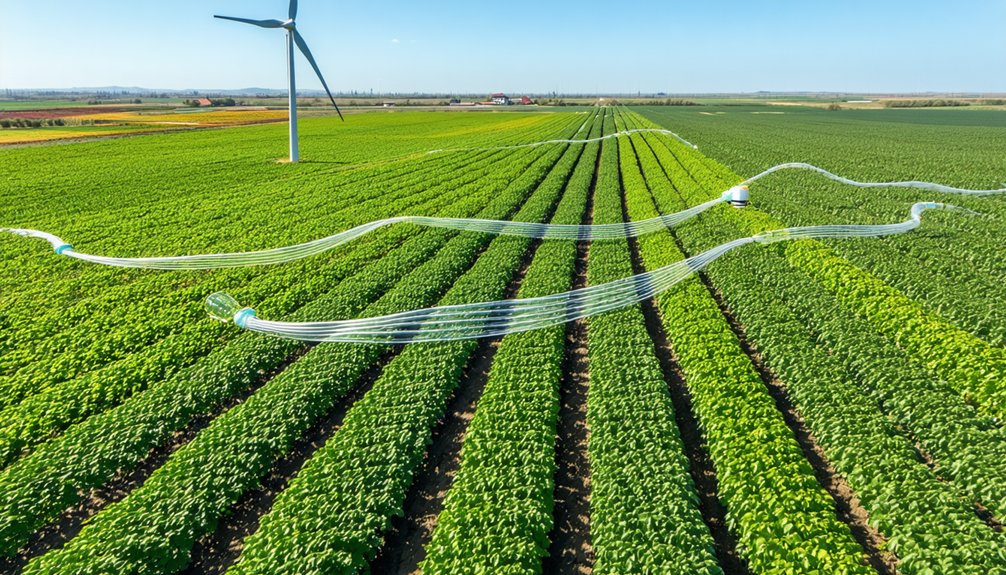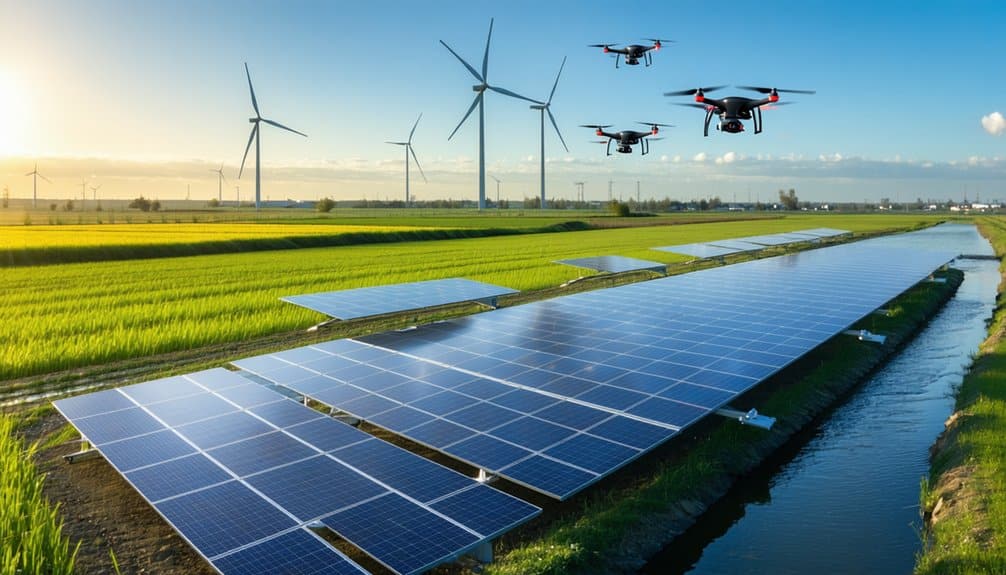

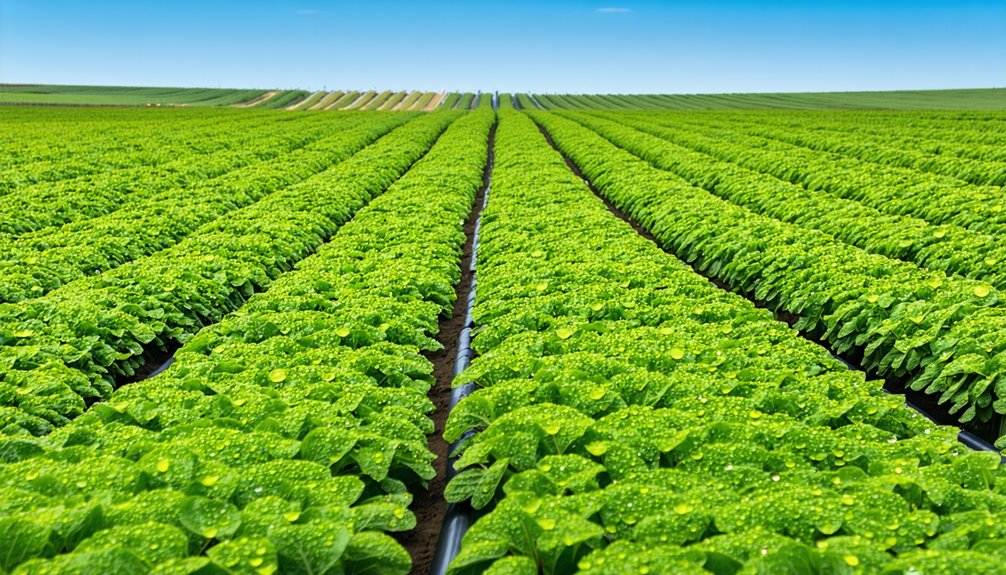
When it comes to efficient water management in agriculture and gardening, drip irrigation systems stand out. They deliver water directly to plant roots, reducing waste and promoting healthy growth. But how do you design a system that meets your specific needs? Understanding the principles and components can make a significant difference. Let’s explore the key elements that contribute to an effective drip irrigation system and why it might be the ideal choice for your garden or farm.
Key Takeaways
- Drip irrigation delivers water directly to plant roots, enhancing efficiency and reducing water waste through targeted application.
- Essential components include a reliable water source, filtration system, tubing, emitters, and pressure regulators for optimal performance.
- Proper design considers plant needs and land characteristics to minimize pressure loss and ensure effective water distribution.
- Regular maintenance, including checking for blockages and leaks, is crucial for sustaining system efficiency and preventing costly repairs.
- The system conserves water by minimizing evaporation and runoff, resulting in healthier plants and reduced water costs.
Understanding Drip Irrigation Principles
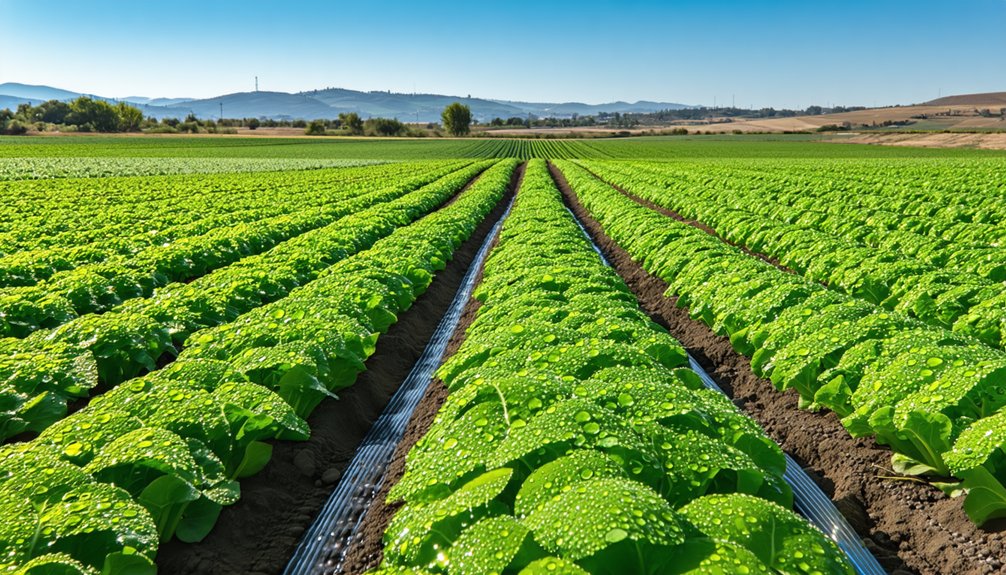
Drip irrigation systems work by delivering water directly to the roots of plants, ensuring efficiency and minimizing waste.
By using a drip irrigation design, you can target specific areas, allowing water to soak into the soil where it’s needed most. This method significantly boosts irrigation efficiency, reducing runoff and evaporation.
You’ll find that plants thrive when they receive consistent moisture without the stress of overwatering. Additionally, a well-planned drip irrigation system can save you time and money, as you won’t need to water as frequently.
Understanding these principles can help you optimize your garden or farm, leading to healthier plants and better yields. Drip irrigation systems also reduce water consumption, making them a sustainable choice for modern agriculture.
With the right approach, you’ll maximize both water usage and overall productivity.
Key Components of a Drip Irrigation System
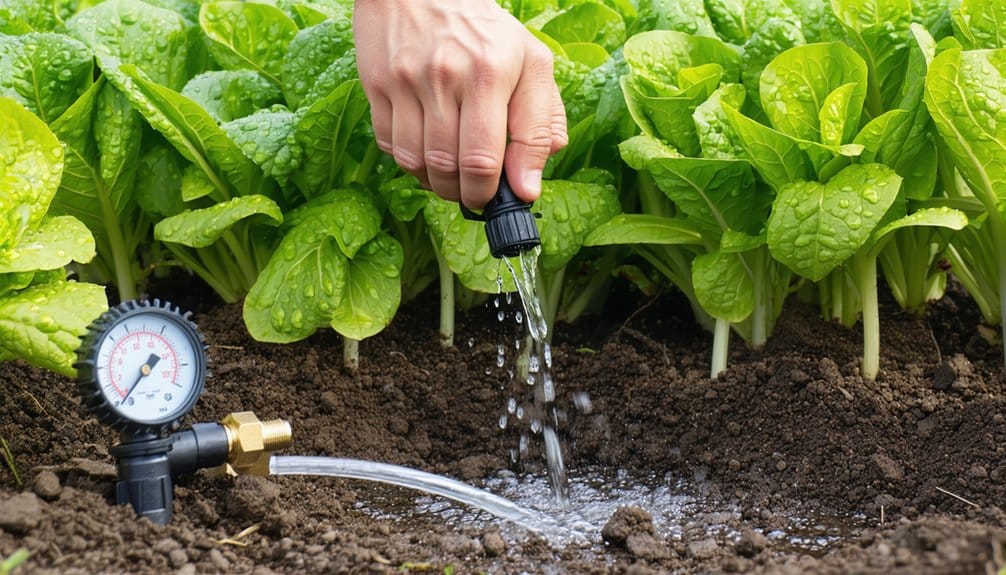
A successful drip irrigation system relies on several key components that work together to deliver water efficiently.
First, you need a reliable water source, which can be a well, reservoir, or municipal supply.
Next, a filtration system is crucial to remove debris and prevent clogging in your agriculture watering systems.
Additionally, you’ll require tubing to transport water to your plants.
Emitters, or drip heads, are vital as they determine the flow rate and distribution of water directly to the root zone.
Lastly, pressure regulators ensure consistent water flow, which is essential for the system’s efficiency.
Moreover, understanding drip irrigation system components allows for better design and adaptation to specific agricultural needs.
As you implement these components, you’ll contribute to the future of irrigation, maximizing water usage and promoting sustainable agricultural practices.
Designing an Efficient Drip Irrigation Layout
When designing an efficient drip irrigation layout, you’ll want to consider the specific needs of your plants and the characteristics of your land.
Start by mapping out your garden or field, noting plant spacing and growth patterns. Choose the right type of drip tubing and emitters based on soil type and water requirements.
Position the mainline and sub-main lines to minimize pressure loss, ensuring even water distribution. Use pressure regulators to maintain consistent flow rates.
Incorporate filters to prevent clogging, and install a timer for automated watering.
Lastly, regularly check for leaks or blockages to maintain efficiency. By tailoring your layout to your landscape, you’ll optimize water usage and promote healthy plant growth. Additionally, implementing a greenhouse drip irrigation system can significantly enhance water efficiency and plant health.
Benefits of Drip Irrigation for Water Conservation
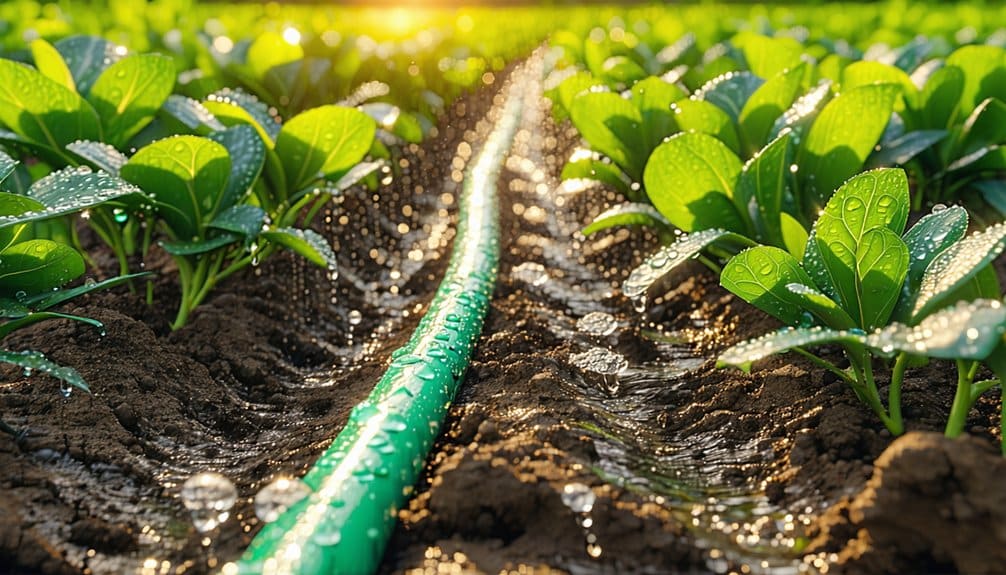
Because of its targeted watering approach, drip irrigation stands out as a powerful tool for water conservation. This system delivers water directly to the plant roots, minimizing evaporation and runoff. You’ll notice significant reductions in water usage, often up to 50% compared to traditional methods. By using drip irrigation, you not only conserve water but also promote healthier plant growth through consistent moisture levels. Additionally, the implementation of commercial drip irrigation systems can lead to even more efficient water use on a larger scale.
Here’s a quick comparison of water conservation benefits:
| Benefit | Description | Impact |
|---|---|---|
| Reduced Evaporation | Water reaches roots directly | Higher efficiency |
| Minimized Runoff | Less water wasted | Better conservation |
| Targeted Application | Focus on plants needing water | Enhanced growth |
| Soil Moisture Control | Consistent moisture levels | Healthier plants |
| Lower Water Costs | Reduced water bill | Cost-effective |
Comparing Drip Irrigation to Other Irrigation Methods
While many irrigation methods exist, drip irrigation often outshines them due to its efficiency and precision. Unlike traditional methods like flood or sprinkler irrigation, which can waste significant amounts of water, drip irrigation delivers water directly to the plant roots. This targeted approach minimizes evaporation and runoff, ensuring your plants get the moisture they need without excess waste.
When comparing drip irrigation to surface irrigation, you’ll find that the latter can lead to uneven water distribution, often resulting in over-saturation in some areas and drought in others. Bubbler irrigation offers a different technique, delivering water in a localized manner but may not provide the same level of water conservation as drip systems.
With drip systems, you control the flow and timing, making them ideal for various crops. Overall, if you’re seeking an efficient, water-saving solution, drip irrigation is hard to beat.
Maintenance and Troubleshooting for Drip Systems
To keep your drip irrigation system running smoothly, regular maintenance is key. Neglecting this can lead to clogs and inefficiencies.
Here are three essential maintenance tasks you should perform:
- Inspect Emitters: Regularly check your emitters for blockages, as dirt and debris can easily build up. Clean or replace them as necessary.
- Flush the System: Periodically flush the lines to clear out any accumulated sediment. This simple step helps maintain optimal water flow.
- Check for Leaks: Look for any signs of leaks in the tubing or connections. Repair any damaged areas immediately to prevent water loss and ensure efficiency. Additionally, consider scheduling regular maintenance checks to proactively address potential issues and prolong the lifespan of your system.
Future Trends in Drip Irrigation Technology
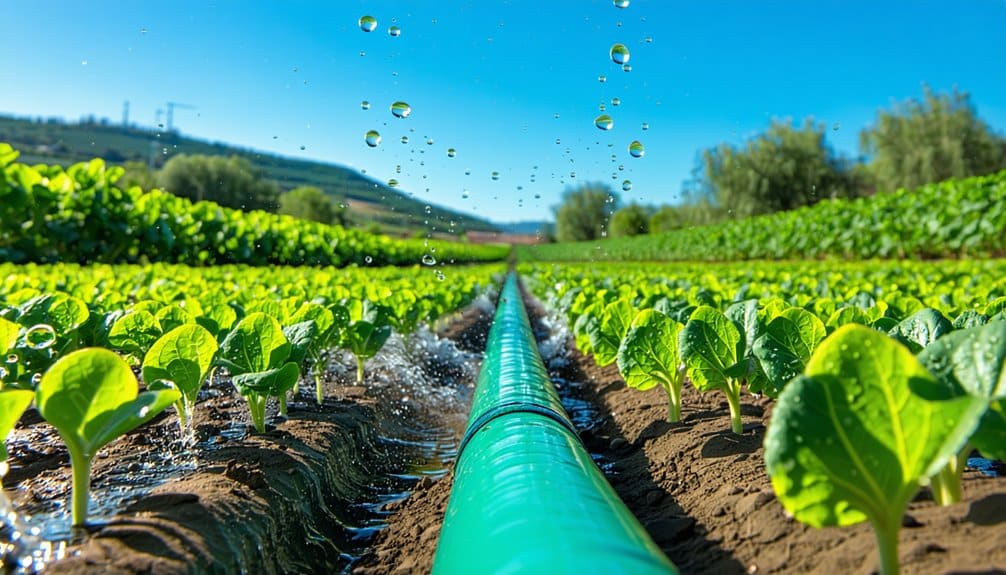
As technology advances, the future of drip irrigation looks promising with innovations that aim to enhance efficiency and sustainability.
You’ll likely see smarter systems that utilize sensors and IoT technology to monitor soil moisture and weather conditions in real-time. This data-driven approach allows for precise water application, reducing waste.
Also, advancements in materials will lead to longer-lasting, more robust tubing that can withstand harsh conditions. You might encounter solar-powered pumps, making systems more energy-efficient and reducing operational costs.
Additionally, integrating AI could optimize water distribution based on crop needs, ensuring maximum yield. Furthermore, the emergence of top drip irrigation systems will provide gardeners with a range of customizable options to suit their specific needs.
With these trends, you can expect a more adaptable, efficient, and environmentally friendly approach to irrigation that aligns with modern agricultural practices.
Conclusion
In conclusion, drip irrigation systems stand out for their efficiency and precision in water management. By understanding the principles, key components, and design strategies, you can create an effective layout that meets your plants’ needs while conserving water. Regular maintenance ensures your system runs smoothly, so you can enjoy the benefits of reduced costs and healthier plants. As technology advances, staying informed on future trends will keep your irrigation practices at the forefront of sustainability.