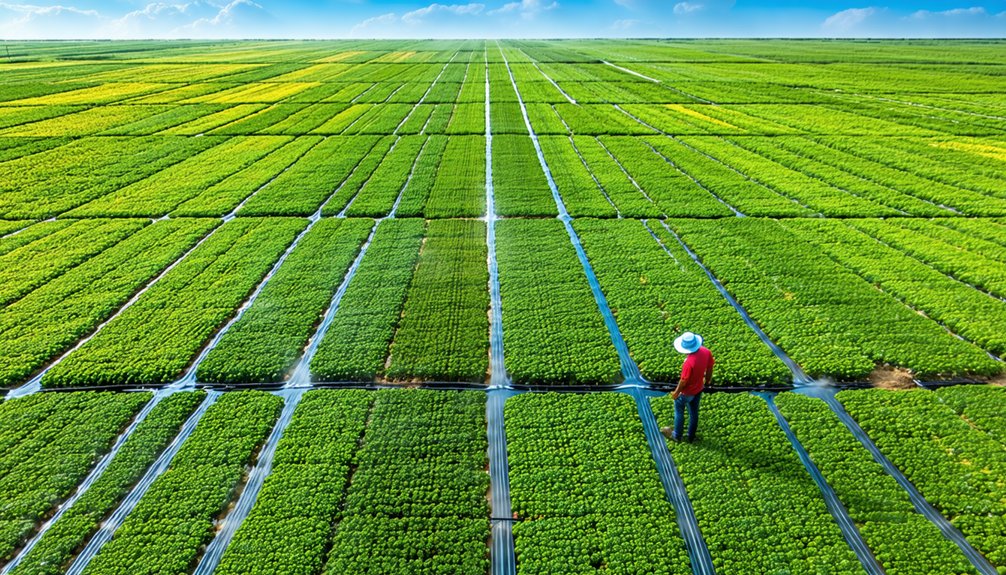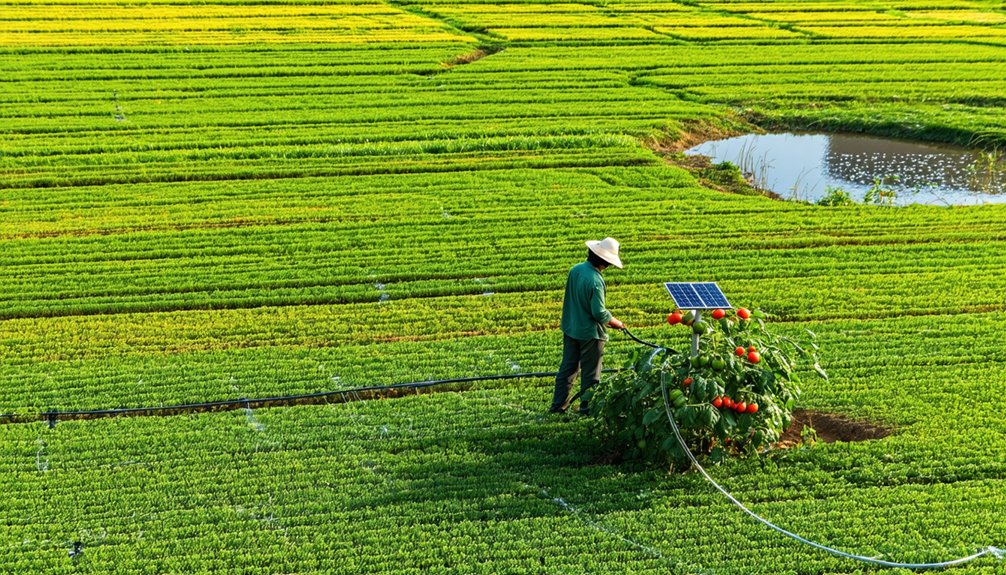

When it comes to choosing the best drip irrigation system for your garden, it’s crucial to consider your specific needs and conditions. From garden size to plant types, each factor influences your choice. Understanding the benefits and components of these systems can help you make an informed decision. So, what do you need to keep in mind to ensure your plants thrive with efficient watering? Let’s explore the details together.
Understanding Drip Irrigation Systems
When you want to ensure your garden thrives, understanding drip irrigation systems is essential. The best drip irrigation system caters to your specific needs, delivering water directly to the roots of your plants.
Key drip system features include adjustable emitters, pressure regulators, and easy installation options. These components work together to provide consistent moisture while minimizing water waste.
When you conduct an irrigation system comparison, consider factors like water efficiency, ease of maintenance, and adaptability to different garden layouts.
Take the time to evaluate your options and choose a system that fits your garden’s requirements. With the right knowledge, you’ll maximize your garden’s potential and create a flourishing environment for your plants to grow.
Benefits of Drip Irrigation for Your Garden
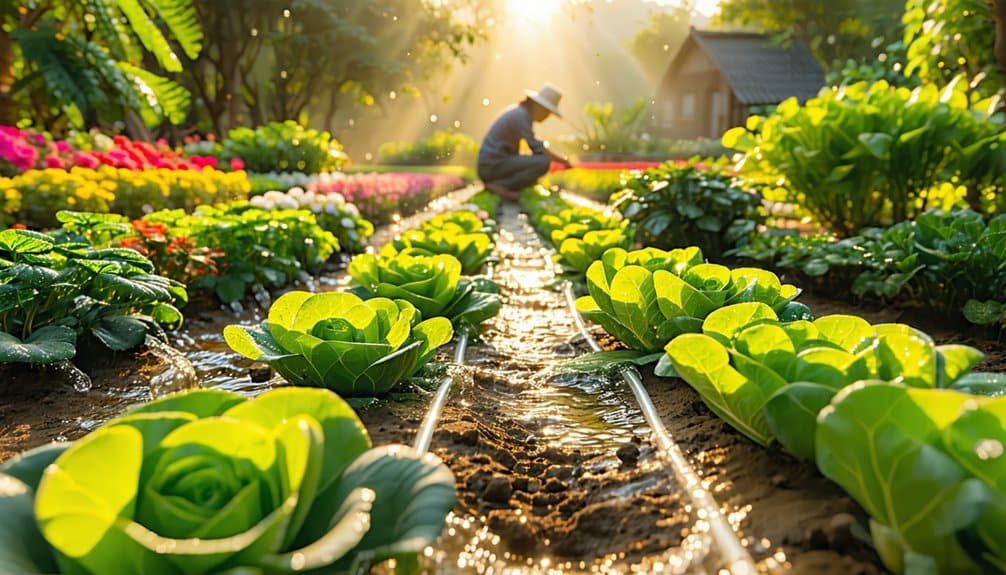
Drip irrigation systems offer numerous advantages that can significantly enhance your gardening experience.
With precise garden irrigation, you deliver water directly to the plants’ roots, minimizing waste and ensuring they receive exactly what they need. This method reduces evaporation and runoff, making your garden watering more efficient, especially in hot climates.
You’ll find that your plants thrive with consistent moisture levels, leading to healthier growth and better yields.
Additionally, drip irrigation saves you time and effort, as it can be automated, allowing you to enjoy more time in your garden rather than tending to it.
Embracing this system not only conserves water but also promotes sustainable practices, making your gardening journey both enjoyable and environmentally friendly.
Key Components of a Drip Irrigation System
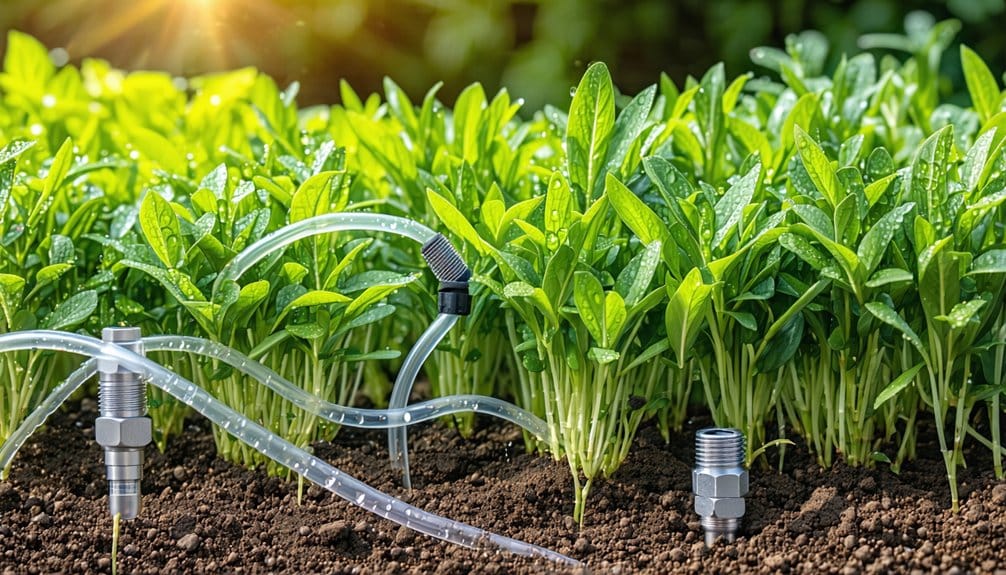
To set up an effective drip irrigation system, you need to understand its key components.
You’ll work with mainline and submain lines to deliver water, while emitters and drippers control the flow to your plants.
Plus, don’t forget about filters and pressure regulators to keep everything running smoothly.
Mainline and Submain Lines
Understanding the roles of mainline and submain lines is essential for creating an efficient drip irrigation system.
The mainline serves as the primary conduit, delivering water from your source to various areas of your garden. It’s typically larger in diameter and built to handle the main flow.
On the other hand, submain lines branch off from the mainline, distributing water to specific sections of your garden. These lines are smaller and allow for better water management, ensuring that every plant receives the right amount of moisture.
Emitters and Drippers
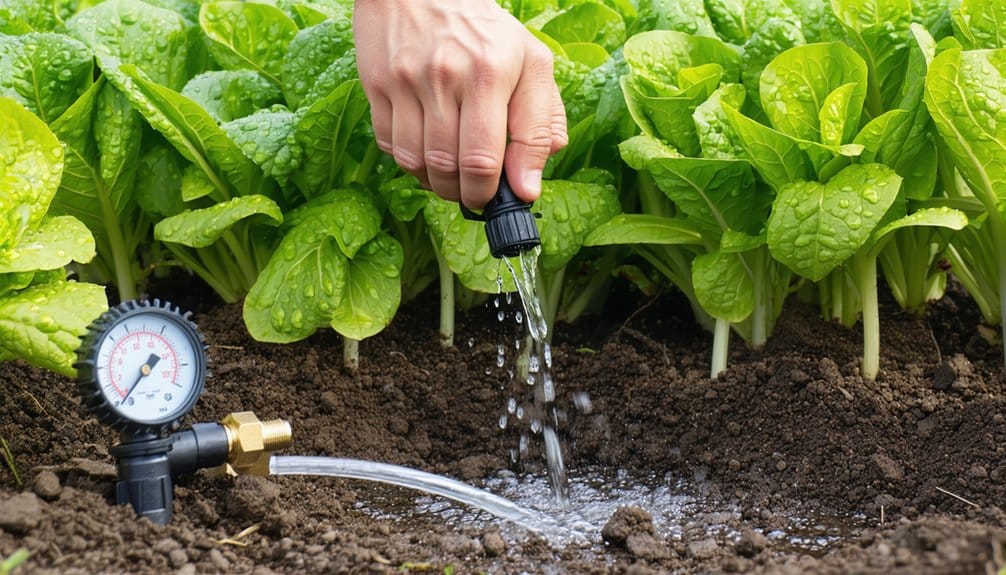
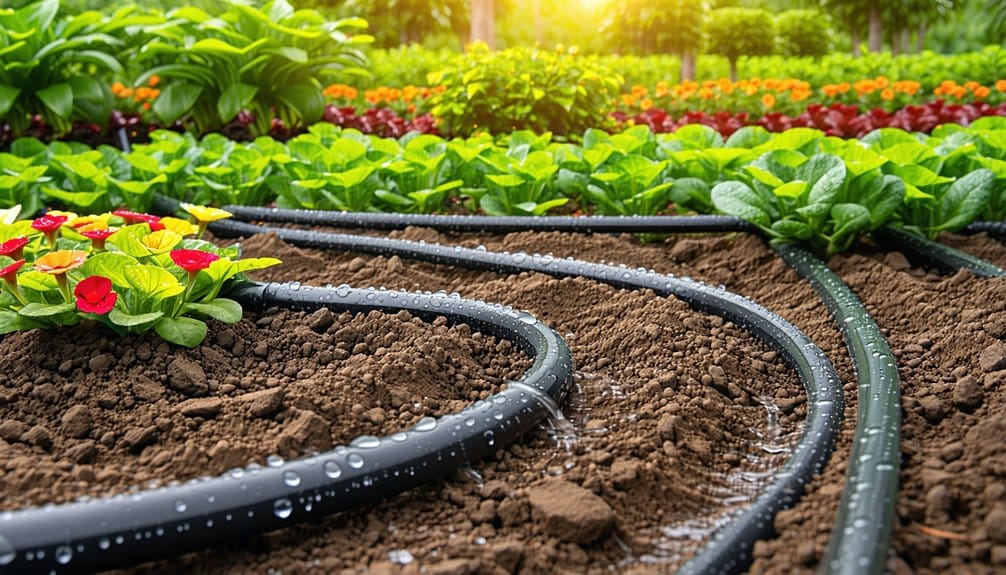
Emitters and drippers are the heart of a drip irrigation system, delivering water directly to your plants’ roots. They come in various types and flow rates, allowing you to customize the watering for different plants and soil conditions.
When choosing emitters, consider factors like the plant’s water needs and the soil’s absorption rate. You might prefer pressure-compensating drippers for uneven terrain, ensuring consistent water delivery.
Also, consider spacing your emitters to cover the root zone adequately. Installing them correctly can prevent water waste and promote healthy growth.
Regularly check your emitters for clogs and damage to maintain efficiency. With the right emitters in place, your plants will thrive while conserving water.
Filters and Pressure Regulators
Filters and pressure regulators are essential components that ensure your drip irrigation system operates efficiently.
Filters protect your emitters by removing debris and particles from the water, preventing clogs that can disrupt the flow. Without a good filter, your system’s performance could suffer, leading to uneven watering.
Pressure regulators, on the other hand, maintain a consistent water pressure, which is crucial for proper emitter function. If the pressure is too high, emitters might over-deliver water, while low pressure can lead to under-watering.
By incorporating both filters and pressure regulators, you’ll enhance the longevity and effectiveness of your drip irrigation system, ensuring that your garden receives the right amount of water consistently.
Choose wisely for the best results!
Types of Drip Irrigation Systems
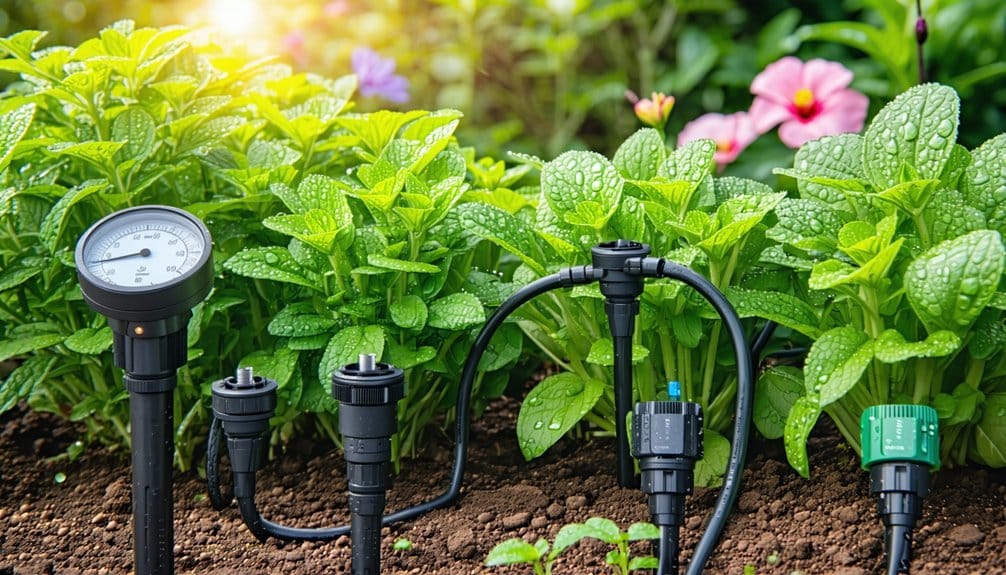
When it comes to watering your garden efficiently, choosing the right type of drip irrigation system is crucial.
There are several options available to suit your specific needs. The most common types include surface drip systems, which lay tubing directly on the ground, and subsurface systems, which bury the tubing underground for deeper root watering.
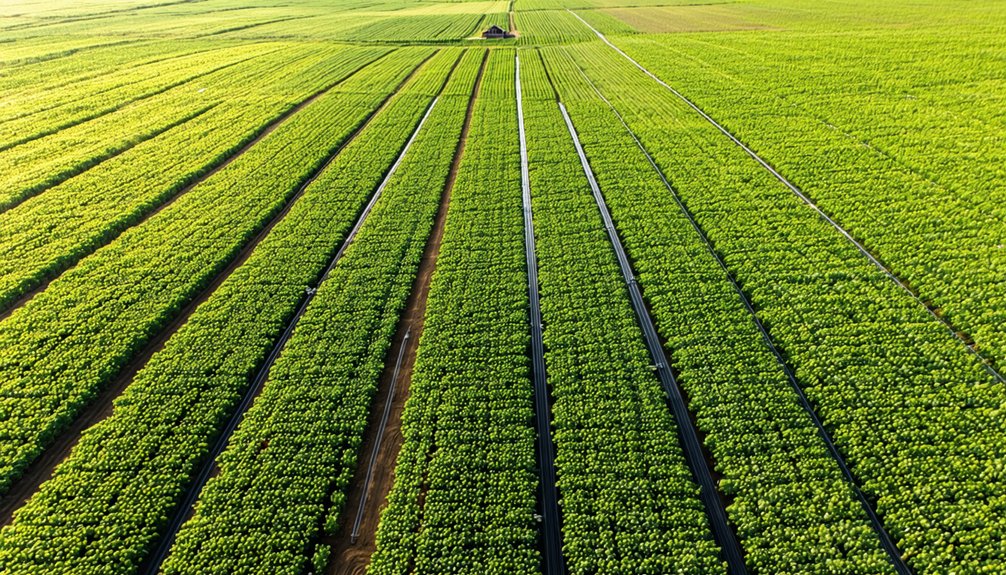
You might also consider using drip tape, which is ideal for row crops and can be easily laid out and removed.
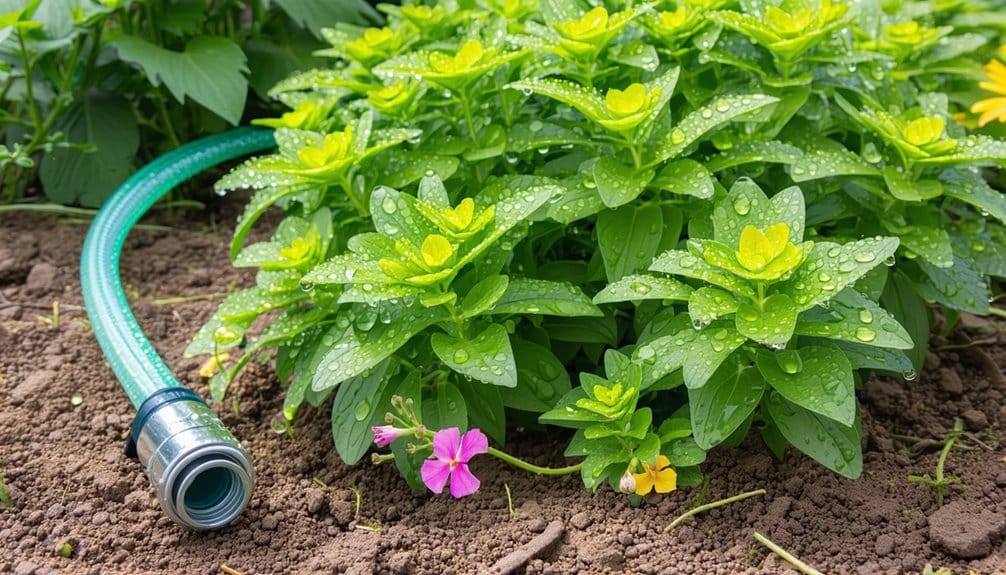
Another option is a soaker hose, designed to slowly release water along its length.
Each of these systems has its advantages, so think about your garden’s layout, plant types, and water needs to find the best fit for your watering routine.
Factors to Consider When Choosing a System
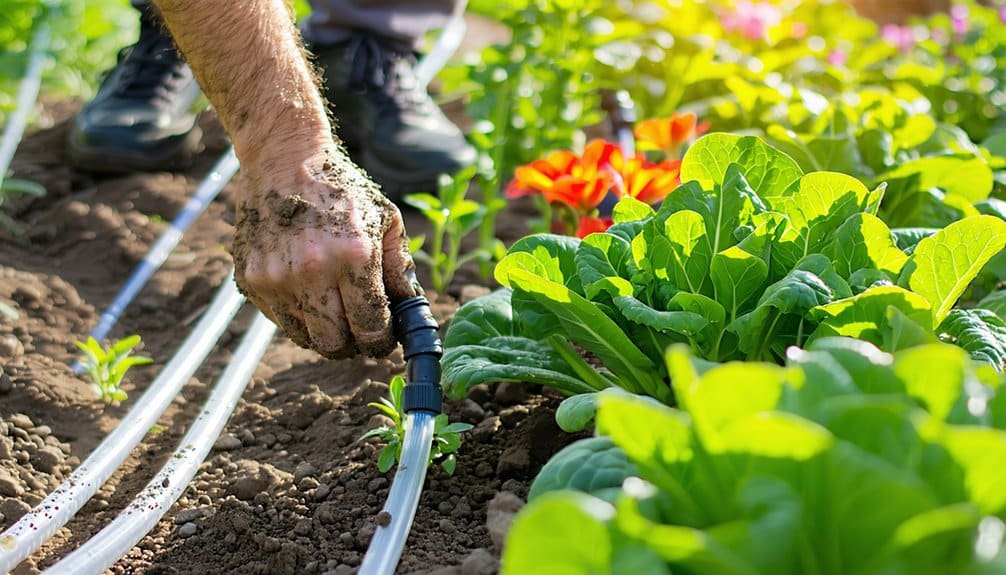
When selecting a drip irrigation system, you need to consider several key factors.
Think about your garden’s size and layout, as well as the availability of a water source.
Lastly, don’t forget to factor in your budget and maintenance costs to ensure it fits your needs.
Garden Size and Layout
Garden size and layout play a crucial role in determining the most effective drip irrigation system for your needs. Consider the dimensions of your garden, as larger areas may require a more extensive setup with multiple drip lines.
If you have a rectangular garden, straight lines might work best, while a more irregular layout may need flexible tubing to reach all plants effectively.
Think about the plant types and their water needs. Grouping plants with similar requirements can help you design a more efficient system.
Don’t forget to account for any obstacles, like trees or pathways, that could impact your layout. By carefully assessing your garden’s size and design, you can choose a drip irrigation system that maximizes efficiency and minimizes waste.
Water Source Availability
Understanding your water source availability is essential for selecting the right drip irrigation system.
First, evaluate the type of water source you have, whether it’s a well, municipal supply, or rainwater collection.
Next, consider the flow rate. A higher flow rate may allow for more extensive irrigation, while a lower flow rate requires a system designed for efficiency.
Also, think about water quality; contaminants can clog emitters, so filtration may be necessary.
You’ll want to check for pressure levels, as most drip systems function best within a specific range.
Lastly, assess how consistent your water supply is throughout the growing season.
All these factors will help you choose a system that meets your garden’s needs effectively.
Budget and Maintenance Costs
Budgeting for a drip irrigation system involves not just the initial purchase price, but also ongoing maintenance costs.
You’ll want to consider the quality of materials, as higher-quality systems may require less frequent replacement, saving you money in the long run. Don’t forget to factor in potential repairs and the cost of replacement parts, like emitters and tubing.
Regular maintenance, such as cleaning filters and checking for leaks, can help extend the lifespan of your system, but it does take time.
Decide if you’re comfortable handling these tasks or if you’ll need to hire a professional. Balancing initial costs with long-term maintenance will guide you in choosing a system that fits your budget and keeps your garden thriving.
Installation Process for Drip Irrigation
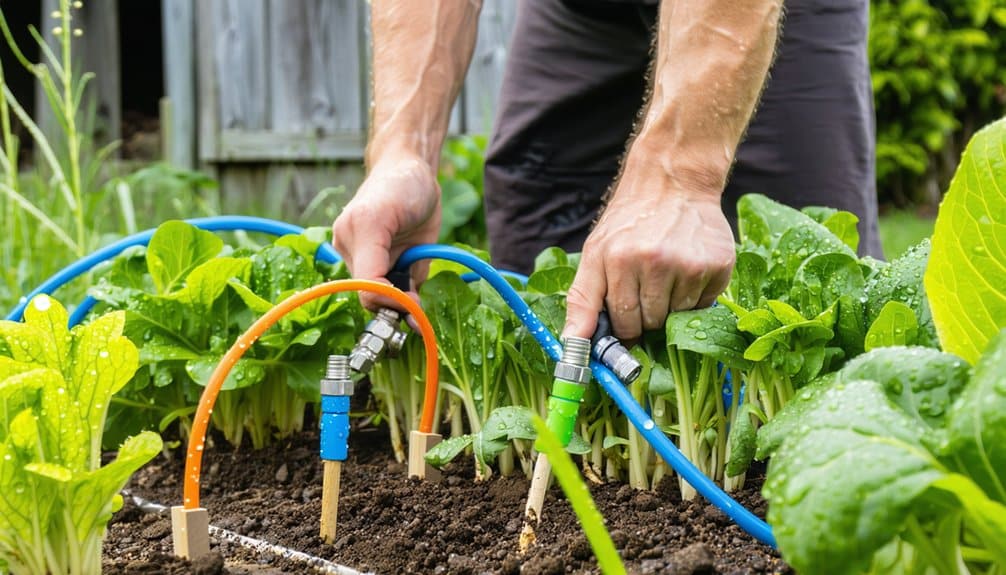
When you’re ready to set up a drip irrigation system, the installation process can seem daunting, but it doesn’t have to be. First, gather all necessary materials: tubing, emitters, connectors, and stakes.
Start by planning your layout, ensuring you cover all plants evenly. Then, lay out the mainline tubing, connecting it to your water source. Cut the tubing to size, and attach emitters at appropriate intervals based on your plants’ needs.
Secure the tubing with stakes to keep it in place. Finally, test the system to ensure water flows evenly to each plant. Adjust emitters if needed, and you’re all set!
Enjoy the convenience of your new drip irrigation system as it maintains your garden effortlessly.
Maintenance Tips for Optimal Performance
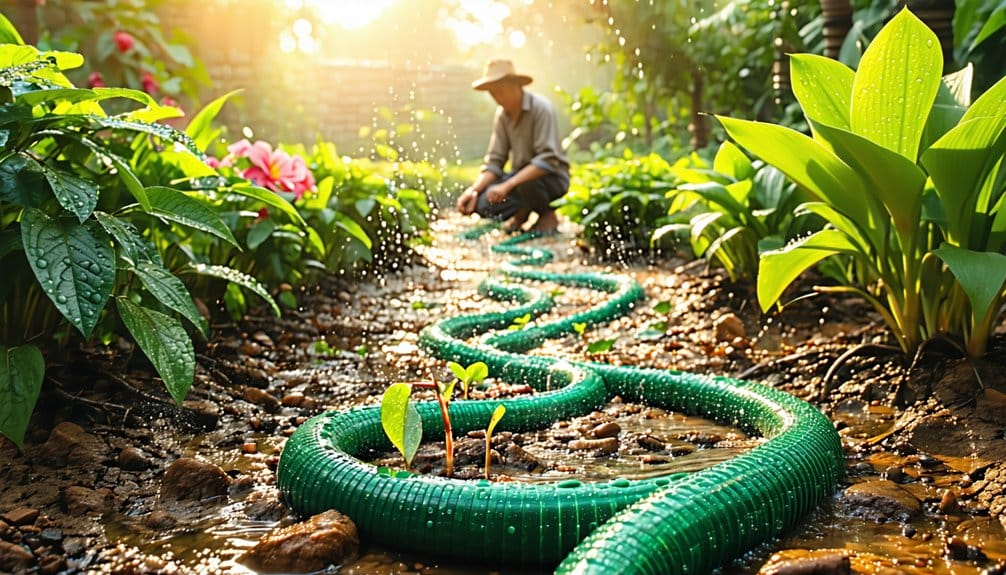
To keep your drip irrigation system running smoothly, regular maintenance is essential.
Start by checking your filters and flush them regularly to prevent clogs. Inspect the drip lines for any leaks or damage; even small holes can waste water.
It’s also a good idea to clean the emitters periodically to ensure they’re delivering water properly. Adjust the system seasonally, especially before winter, to prevent freezing and damage.
Monitor your water pressure to ensure it’s within the recommended range. Lastly, keep an eye on the surrounding plants and soil moisture levels to gauge the system’s effectiveness.
Cost Analysis of Drip Irrigation Systems
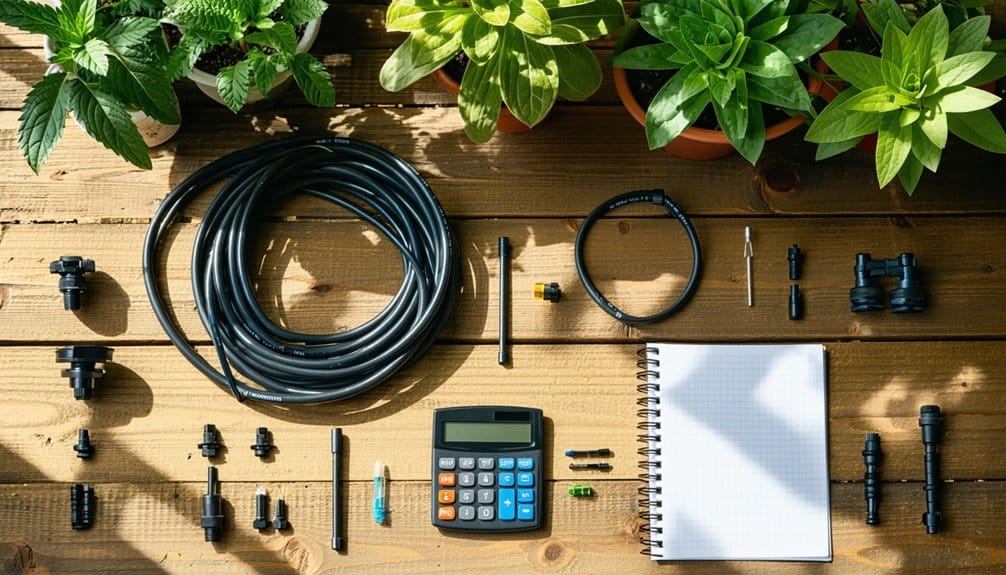
Investing in a drip irrigation system can significantly enhance your garden’s efficiency, but understanding the costs involved is crucial.
The initial setup can range from $100 for a basic system to several thousand for a more complex one, depending on your garden size and needs. You’ll need to factor in components like tubing, emitters, filters, and pressure regulators.
Don’t forget about installation costs—whether you do it yourself or hire a professional. Additionally, consider ongoing expenses like water usage and maintenance.
While the upfront investment might seem steep, the long-term savings on water bills and improved plant health often make it worthwhile. Assess your budget carefully to find the best system that meets your gardening goals.
Common Mistakes to Avoid With Drip Irrigation
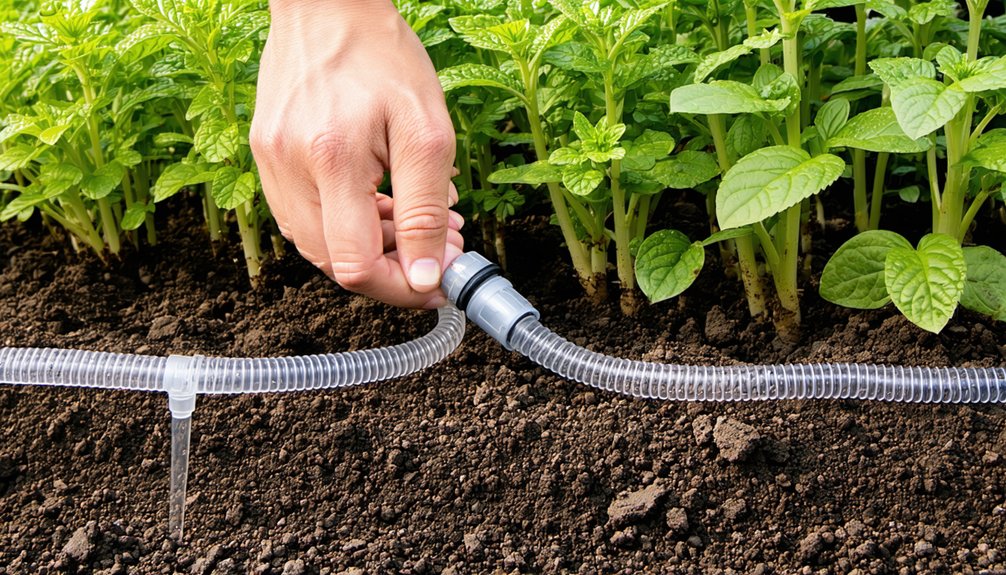
While drip irrigation systems can transform your garden, there are common mistakes that can undermine their effectiveness.
First, don’t skimp on planning; take the time to design an efficient layout that suits your garden’s needs.
Next, avoid using the wrong emitter type or spacing; this can lead to uneven watering.
Additionally, check for clogs regularly; a blocked emitter can cause dry spots in your garden.
You should also be cautious with water pressure; too high can damage the system, while too low can under-water plants.
Lastly, don’t forget to adjust your system seasonally; plants’ water requirements change throughout the year.
Conclusion
In conclusion, choosing the right drip irrigation system can transform your garden into a thriving oasis. By understanding your needs and considering the various components and types available, you can make an informed decision that maximizes efficiency. Remember to plan your layout carefully and stay on top of maintenance for the best results. With the right system in place, you’ll not only save water but also promote healthier, more vibrant plants that flourish throughout the growing season.