
Water management predictive modeling presents a crucial opportunity for enhancing resource allocation and sustainability. By employing advanced algorithms and real-time data, stakeholders can better understand future supply and demand dynamics. This approach not only informs decision-making but also addresses challenges like droughts and floods. As the landscape of water management evolves, exploring the intricacies and implications of these predictive models becomes essential for communities and ecosystems alike. What lies ahead in this emerging field?
Key Takeaways
- Predictive modeling identifies future water supply and demand patterns, enabling proactive resource management and sustainability.
- Advanced algorithms and machine learning enhance accuracy by analyzing historical data for informed decision-making in water management.
- Real-time data from IoT devices and remote sensing improve monitoring, facilitating timely interventions for droughts and floods.
- Successful applications include urban water optimization, flood risk assessments, and efficient agricultural water use, demonstrating significant water conservation benefits.
- Stakeholder engagement and transparency foster collaboration, enhancing model accuracy and public support for predictive initiatives in water management.
Understanding Predictive Modeling in Water Management
While water scarcity and quality issues continue to escalate globally, understanding predictive modeling in water management has become increasingly vital.
Predictive modeling serves as a crucial tool for anticipating future water supply and demand patterns, enabling more effective resource allocation. By employing advanced data analysis techniques, water managers can evaluate historical trends and simulate various scenarios, thereby improving decision-making processes.
This proactive approach allows for timely interventions that can mitigate the impacts of droughts or floods. Furthermore, predictive modeling helps identify potential risks associated with water quality degradation, ensuring that strategies are in place to safeguard public health.
Ultimately, integrating predictive modeling into water management practices enhances the sustainability and resilience of water resources in an uncertain future.
Data Collection and Analysis Techniques

Effective water management predictive modeling relies on robust data collection and analysis techniques.
Identifying relevant data sources is crucial for gathering accurate information, while the utilization of advanced analytical tools enhances the interpretation of this data.
Together, these elements form the foundation for informed decision-making in water management strategies.
Data Sources Identification
Identifying appropriate data sources is crucial for the development of effective predictive models in water management.
Accurate data collection enables enhanced water conservation strategies and the optimization of smart water systems.
Various sources can provide valuable insights:
- Meteorological data: Information on precipitation, temperature, and humidity.
- Hydrological data: Streamflow and groundwater levels essential for modeling.
- Infrastructure data: Information on pipelines, reservoirs, and treatment facilities.
- Usage statistics: Residential and industrial water consumption patterns.
- Geospatial data: Mapping tools that offer spatial analysis and visualization.
Analytical Tools Utilization
To develop robust predictive models in water management, the utilization of advanced analytical tools is essential for both data collection and analysis. These tools encompass a range of techniques, including geographic information systems (GIS), remote sensing, and statistical software.
GIS enables the visualization and interpretation of spatial data, while remote sensing provides real-time insights into water bodies and surrounding environments. Statistical software facilitates the analysis of large datasets, helping to identify patterns and correlations.
Additionally, machine learning algorithms can enhance predictive accuracy by processing complex data relationships. By leveraging these analytical tools, water management professionals can improve decision-making processes, optimize resource allocation, and enhance sustainability efforts, ultimately leading to more efficient water management practices.
Key Variables Influencing Water Management Models

Key variables play a crucial role in shaping water management models, particularly the impacts of climate change and the condition of existing infrastructure.
Climate change introduces variability in water availability and demand, necessitating adaptive strategies.
Meanwhile, assessing the infrastructure’s condition ensures that systems are resilient and capable of meeting future challenges.
Climate Change Impacts
As climate change continues to alter weather patterns and hydrological cycles, water management models must adapt to an array of evolving variables. Understanding these impacts is critical for effective resource allocation and sustainability.
Key variables influenced by climate change include:
- Precipitation Variability: Changes in rainfall patterns affect water availability.
- Temperature Fluctuations: Higher temperatures increase evaporation rates, impacting water supply.
- Extreme Weather Events: Increased frequency of floods and droughts complicates management strategies.
- Sea Level Rise: Coastal water sources are threatened, affecting freshwater availability.
- Ecosystem Changes: Altered habitats can influence local water demand and quality.
Infrastructure Condition Assessment
Infrastructure condition assessment serves as a vital component in the development and refinement of water management models. Accurate evaluations of physical assets, including pipes, treatment plants, and storage facilities, provide essential data that influences model predictions.
Key variables such as age, material, maintenance history, and observed deterioration levels inform the reliability of water infrastructure. Additionally, geographic and environmental factors, including soil conditions and flood risk, play a crucial role in assessing infrastructure resilience.
Case Studies: Successful Applications of Predictive Modeling
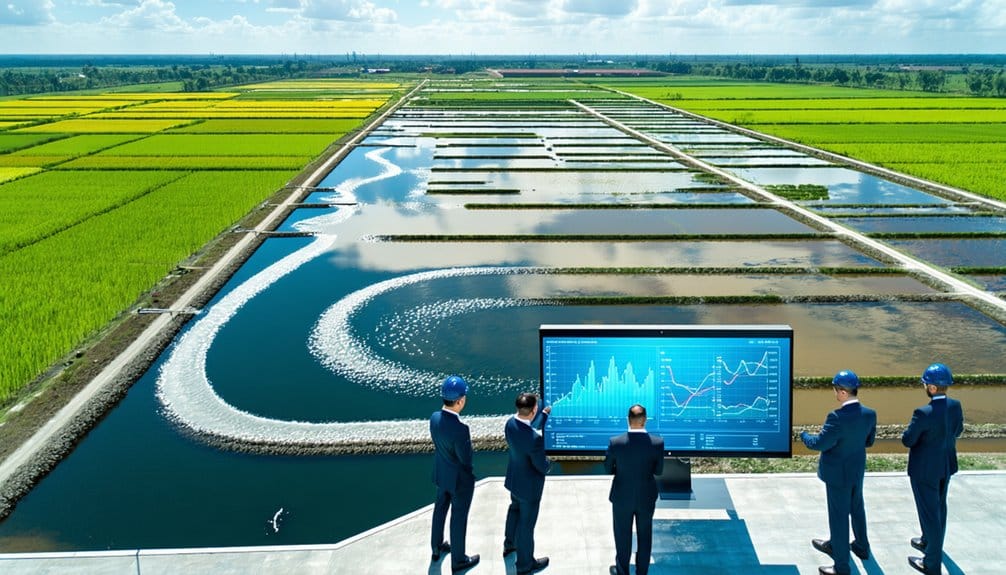
Exploring successful applications of predictive modeling in water management reveals innovative strategies that enhance resource efficiency and sustainability.
Various case studies highlight the potential of these models across different contexts:
- Urban Water Supply: Cities have utilized predictive analytics to forecast demand, optimizing reservoir management and reducing waste.
- Flood Risk Assessment: Communities employed models to predict flood events, allowing for proactive infrastructure improvements and emergency response planning.
- Agricultural Water Use: Farmers integrated predictive tools to manage irrigation schedules, resulting in significant water savings and improved crop yields.
- Wastewater Treatment Optimization: Treatment plants implemented predictive modeling to enhance process efficiency and reduce operational costs.
- Aquifer Recharge Management: Water authorities leveraged models to optimize natural recharge rates, ensuring sustainable groundwater levels.
These applications illustrate the transformative impact of predictive modeling in water management.
Challenges in Implementing Predictive Models

Despite the promising outcomes observed in various case studies, the implementation of predictive models in water management faces several challenges.
One significant hurdle is the integration of diverse data sources, which can result in inconsistencies and gaps that undermine model accuracy. Additionally, the complexity of hydrological systems often leads to difficulties in selecting appropriate algorithms and parameters.
Stakeholder resistance is another challenge, as organizations may be hesitant to adopt new technologies due to perceived costs or uncertainties in outcomes. Furthermore, a lack of trained personnel capable of interpreting model results can hinder effective decision-making.
Finally, regulatory frameworks may lag behind technological advancements, complicating the deployment of predictive models in real-world scenarios. Addressing these challenges is crucial for successful implementation.
Future Trends in Water Management Predictive Analytics

As the demand for sustainable water management intensifies, predictive analytics is expected to evolve significantly, incorporating advanced technologies such as artificial intelligence and machine learning.
Future trends in this field may include:
- Enhanced data integration from diverse sources, improving accuracy.
- Real-time analytics for immediate decision-making in water resource allocation.
- Predictive modeling for flood and drought risk assessment, minimizing impacts.
- User-friendly interfaces for stakeholders to access insights easily.
- Increased collaboration among governmental, academic, and private sectors to share best practices.
These advancements will not only optimize water distribution but also foster resilience against climate change, ensuring a sustainable future for water management practices worldwide.
The Role of Technology in Enhancing Predictive Modeling

The integration of technology plays a pivotal role in advancing predictive modeling within water management. By employing advanced algorithms, machine learning, and data analytics, water management systems can predict trends and optimize resource allocation. Technologies such as remote sensing and IoT devices collect real-time data, enabling more accurate modeling. The following table highlights key technological components enhancing predictive modeling:
| Technology | Functionality | Impact on Predictive Modeling |
|---|---|---|
| Machine Learning | Analyzes historical data patterns | Improves accuracy of forecasts |
| IoT Devices | Gathers real-time environmental data | Enhances data granularity |
| Remote Sensing | Monitors water resources remotely | Increases coverage and efficiency |
| Data Analytics | Processes large datasets | Facilitates informed decision-making |
These innovations collectively enhance the efficacy of water management strategies.
Stakeholder Engagement in Model Development

Effective stakeholder engagement is crucial in the development of predictive models for water management. Engaging diverse stakeholders ensures that the models are relevant, comprehensive, and widely accepted.
Key benefits of involving stakeholders include:
- Increased Transparency: Builds trust among community members and decision-makers.
- Diverse Perspectives: Incorporates a variety of insights that enhance model accuracy.
- Public Acceptance: Fosters greater support for initiatives based on the models.
- Resource Sharing: Encourages collaboration and pooling of resources for data collection.
- Feedback Mechanism: Provides ongoing input that can refine and improve the model over time.
Ultimately, effective engagement facilitates the creation of robust predictive models that address the complexities of water management challenges.
Measuring the Impact of Predictive Modeling on Water Conservation

While predictive modeling serves as a vital tool in water management, its true effectiveness can be gauged through its impact on water conservation practices.
The integration of predictive models allows stakeholders to forecast water demand, optimize resource allocation, and identify areas for potential conservation efforts. By analyzing historical data and current usage patterns, these models enable water managers to implement targeted interventions that reduce waste.
Studies have shown that communities employing predictive modeling have experienced significant decreases in water consumption, highlighting its effectiveness.
Furthermore, the ability to simulate various scenarios aids in promoting awareness and engagement among users, fostering a culture of conservation.
Ultimately, the quantifiable benefits of predictive modeling underscore its critical role in sustainable water management strategies.
Conclusion
In conclusion, harnessing predictive modeling in water management presents a transformative opportunity for optimizing resource allocation and enhancing sustainability. By leveraging advanced algorithms and real-time data, stakeholders can effectively anticipate supply and demand patterns, manage risks, and foster a culture of conservation. Despite challenges in implementation, the collaboration between technology and stakeholder engagement is crucial in shaping future trends and measuring the impact of these models on water conservation efforts, ultimately benefiting both communities and the environment.