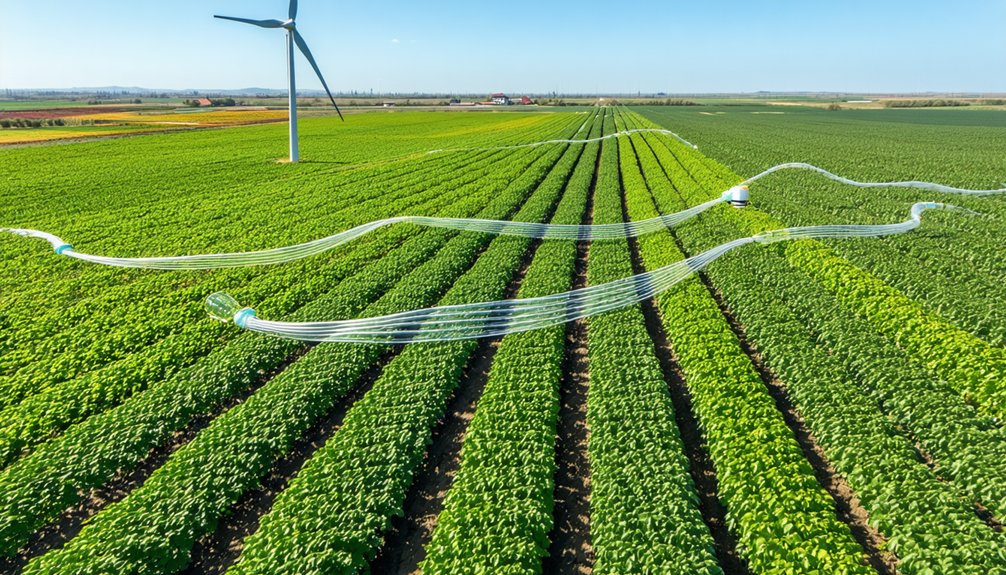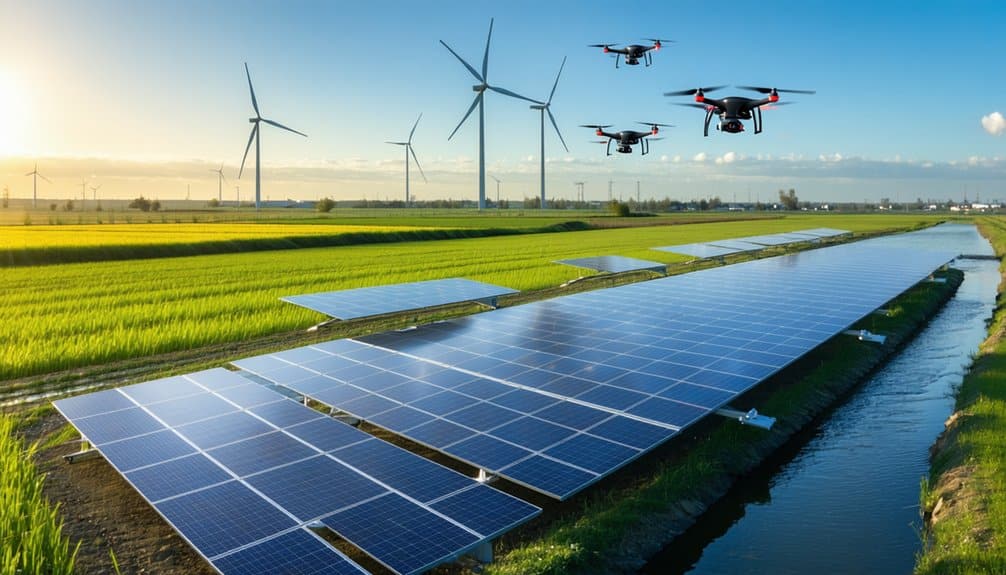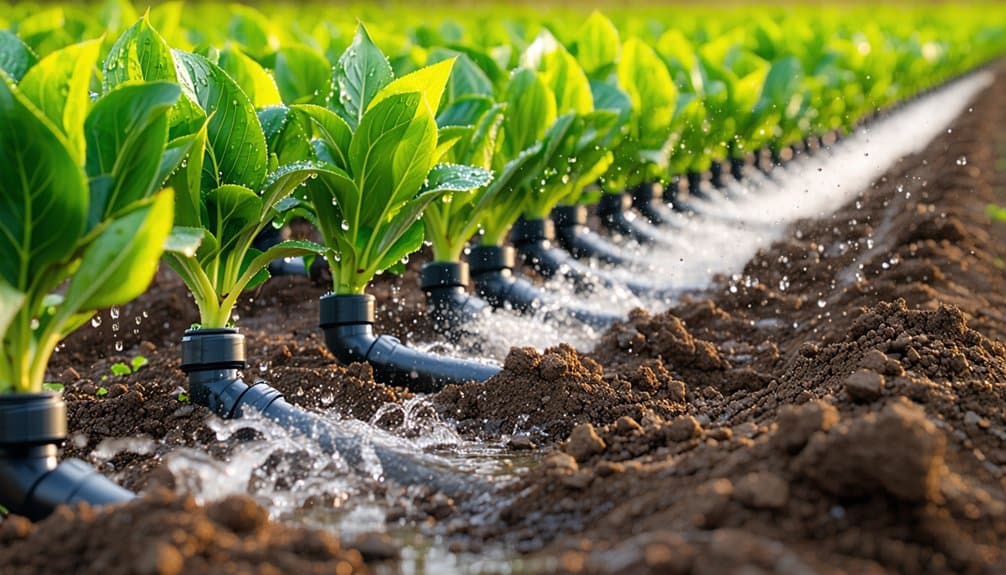
When it comes to optimizing water use in agriculture, you’ll find that drip irrigation systems offer a range of options suited to various needs. Each type, from surface to subsurface systems, has its own advantages and challenges. Understanding these differences can greatly impact plant health and resource management. So, what might work best for your crops? Let’s explore the intricacies of each system to find the right fit.
Key Takeaways
- Surface drip irrigation delivers water directly to plant roots and is customizable based on crop needs, featuring various emitter types.
- Subsurface drip irrigation maximizes water efficiency by preventing evaporation and runoff, requiring careful planning and regular maintenance.
- Pressure compensating drippers ensure uniform water distribution on uneven terrains by adjusting flow rates based on pressure variations.
- Non-pressure compensating drippers offer a cost-effective solution but may lead to uneven distribution and clogging issues in sloped areas.
- Inline drip tubing has built-in emitters for consistent delivery, while online tubing features externally attached emitters for easier adjustments and maintenance.
Surface Drip Irrigation Systems
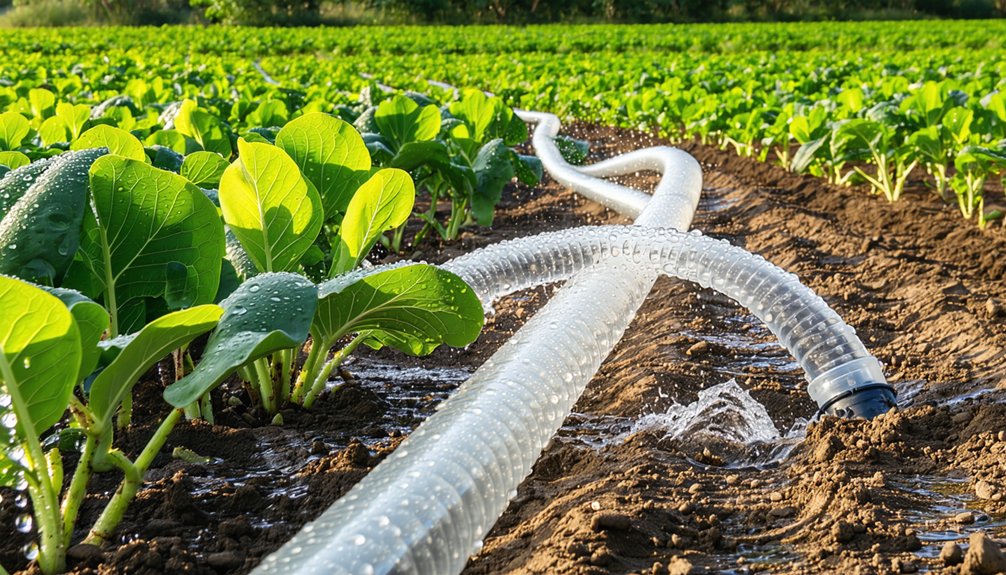
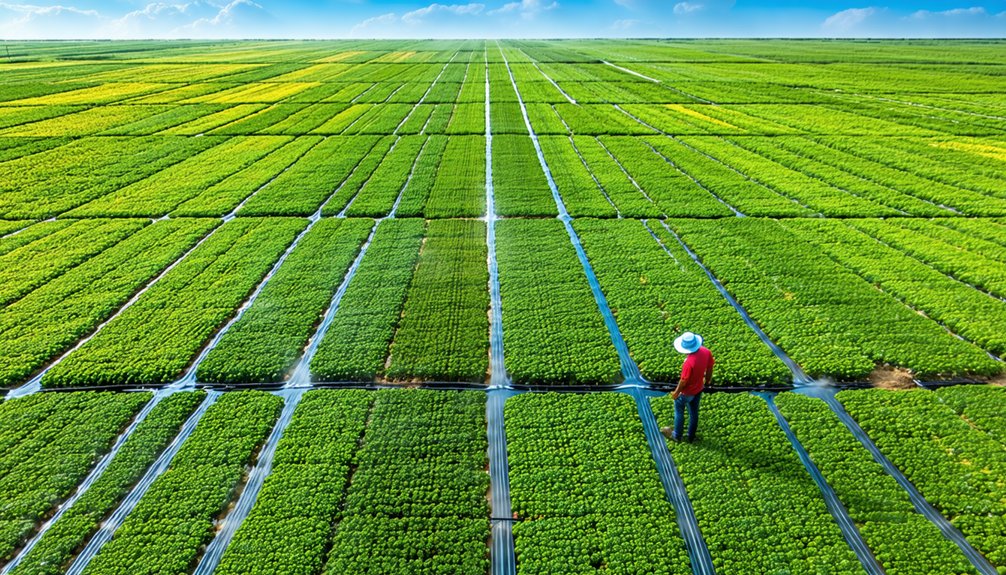
Surface drip irrigation systems are an efficient way to deliver water directly to the root zone of plants. In this type of drip irrigation system, you’ll find emitters placed along the surface, allowing water to seep into the soil gradually.
You can customize the layout based on your crop needs, making it a versatile irrigation system. There are various types of drip irrigation, including line-source and point-source systems, each suited for specific applications.
Subsurface Drip Irrigation Systems
When you want to maximize water efficiency and minimize evaporation, subsurface drip irrigation systems offer an excellent solution. These systems deliver water directly to the plant roots, which helps conserve moisture and nutrients.
When choosing drip irrigation, consider the soil type and crop needs to ensure optimal performance. Subsurface systems can be installed below the soil surface, preventing issues like evaporation and runoff.
However, they do require careful planning and installation. Regular drip irrigation maintenance is crucial to prevent clogging and ensure the system operates efficiently.
Pressure Compensating Drippers
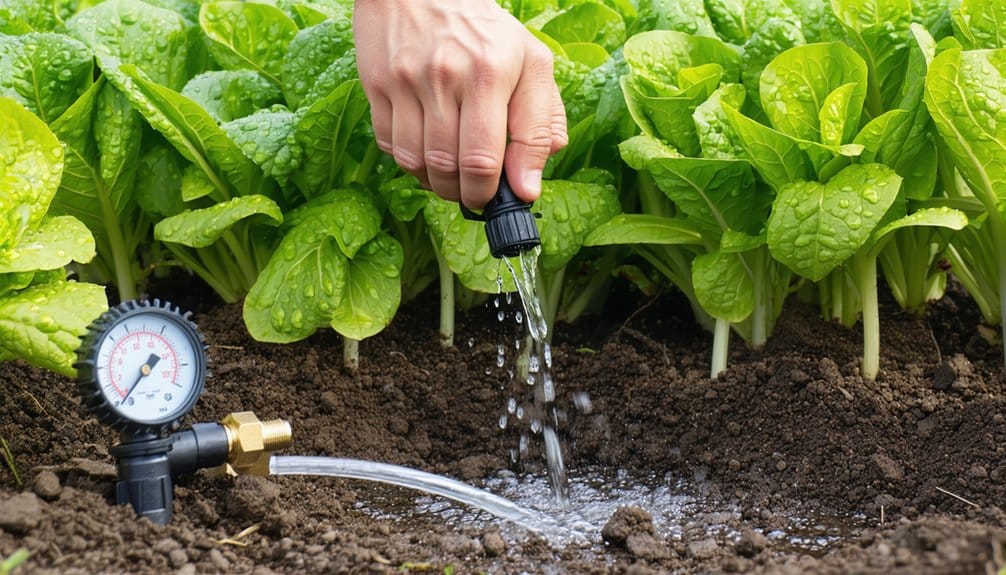
Pressure compensating drippers are essential for maintaining uniform water distribution, especially in uneven terrains or varying soil types.
These innovative devices adjust the flow rate based on the pressure, ensuring each plant receives the right amount of water, regardless of its location.
Here are some key benefits of using pressure compensating drippers:
- Consistent Output: They deliver a steady flow, even when pressure fluctuates.
- Water Efficiency: Minimize wastage by directing water precisely where it’s needed.
- Improved Crop Health: Ensure all plants receive adequate moisture for optimal growth.
- Reduced Maintenance: Fewer issues with clogging compared to traditional drippers.
- Versatile Applications: Ideal for a range of crops and terrains, from orchards to gardens.
Using these drippers can make a significant difference in your irrigation strategy.
Non-Pressure Compensating Drippers
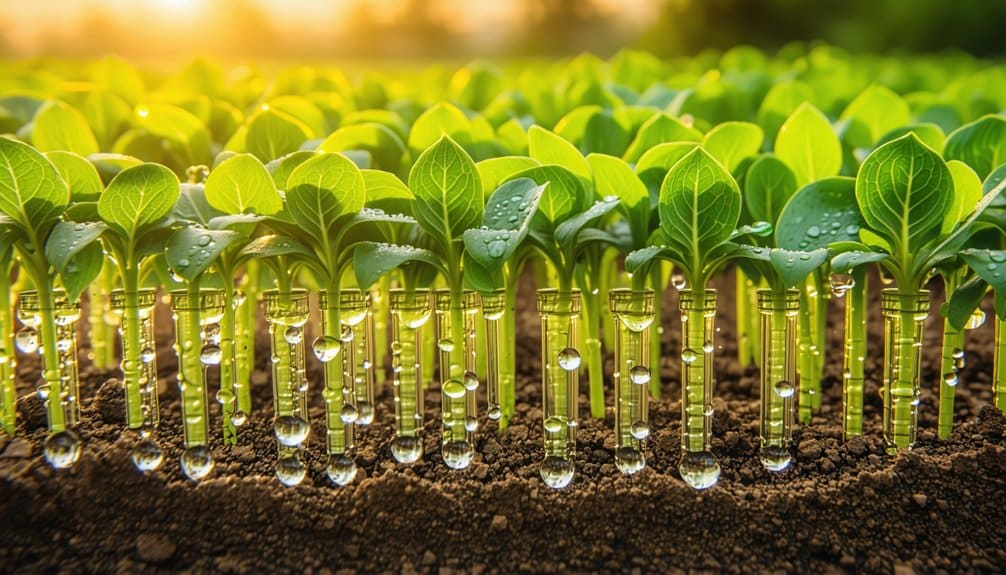
Now let’s explore non-pressure compensating drippers and their unique design features.
You’ll find both advantages and disadvantages that can impact your irrigation choices.
Understanding where these drippers are most suitable will help you make informed decisions for your garden or farm.
Design Features Overview
While designing a drip irrigation system, understanding the key features of non-pressure compensating drippers can significantly enhance your efficiency.
These drippers are designed to deliver a consistent flow rate regardless of pressure variations, making them suitable for various applications.
Here are some essential design features to consider:
- Simple construction: Typically made from durable materials, ensuring longevity.
- Flow rate options: Available in different flow rates to meet specific crop needs.
- Emitter spacing: Adjustable spacing allows for tailored irrigation layouts.
- Debris-resistant: Often equipped with filters to minimize clogging.
- Compatibility: Easily integrates with existing systems for quick upgrades.
Advantages and Disadvantages
Although non-pressure compensating drippers offer several advantages, they also come with some drawbacks that you should consider. One major benefit is their cost-effectiveness, making them a popular choice for budget-sensitive projects. They’re also easy to install and maintain. However, they can lead to uneven water distribution, especially on sloped terrains, which might affect plant health. Additionally, these drippers may clog more easily compared to their pressure-compensating counterparts.
| Advantages | Disadvantages |
|---|---|
| Cost-effective | Uneven water distribution |
| Easy to install | Clogging issues |
| Suitable for flat areas | Not ideal for sloped terrains |
Suitable Applications
When considering non-pressure compensating drippers, it’s essential to match their characteristics with your specific irrigation needs.
These drippers are ideal for applications where water pressure is consistent and uniform across the system.
Here are some suitable scenarios:
- Row crops: They work well in long rows where elevation changes are minimal.
- Orchards: Non-pressure compensating drippers can efficiently irrigate fruit trees with similar water requirements.
- Container gardening: Great for potted plants, as they deliver consistent moisture.
- Small-scale gardens: Perfect for DIY setups where you control the pressure.
- Landscape beds: Effective for evenly watering flower beds and shrubs.
Inline vs. Online Drip Tubing
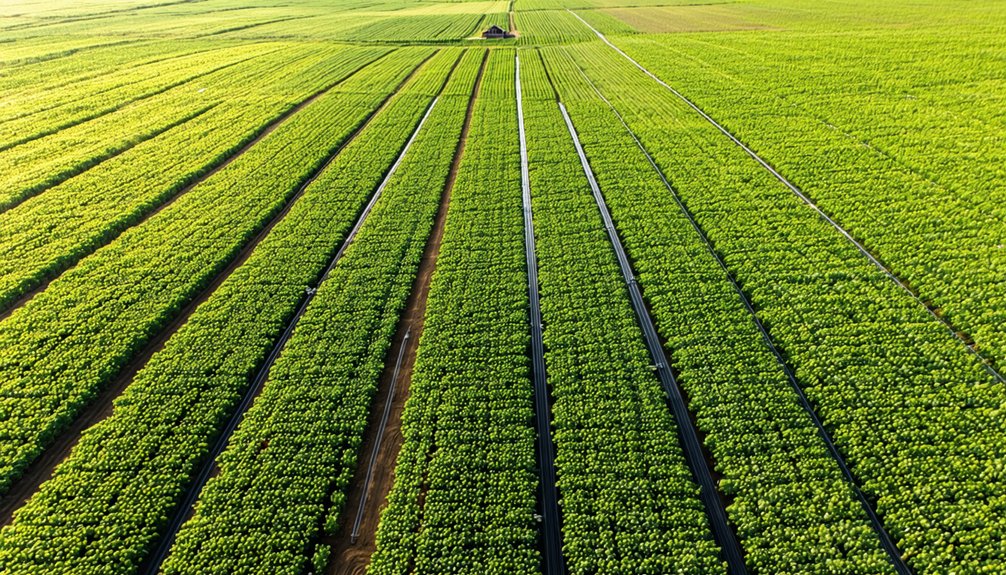
Choosing between inline and online drip tubing can significantly impact your irrigation efficiency and system performance. Inline tubing has emitters built into the tubing itself, providing consistent water distribution along the length. This makes it ideal for row crops or dense plantings. On the other hand, online tubing features emitters attached to the outside, allowing for easier replacement or adjustment. It’s often better for larger, widely spaced plants.
| Feature | Inline Drip Tubing | Online Drip Tubing |
|---|---|---|
| Emitter Location | Built into the tubing | Attached externally |
| Maintenance | Lower maintenance needs | Easier to adjust/replace |
| Application | Best for dense crops | Suitable for larger plants |
| Cost | Generally higher initial cost | Lower initial cost |
Decide based on your specific needs!
Drip Irrigation Kits for Home Gardens
If you want to maximize your home garden’s efficiency, investing in a drip irrigation kit is a smart choice. These kits simplify the watering process and ensure your plants receive consistent moisture.
When choosing a kit, consider the following features:
- Adjustable emitters for customized water delivery
- Flexible tubing to fit your garden layout
- Filters to prevent clogging and ensure longevity
- Pressure regulators to maintain optimal water flow
- Easy installation guides for hassle-free setup
With a drip irrigation kit, you’ll save water, reduce weeds, and promote healthier plant growth.
Plus, you can enjoy more free time while your garden thrives! Whether you’re a beginner or a seasoned gardener, these kits make efficient watering a breeze.
Smart Drip Irrigation Technologies
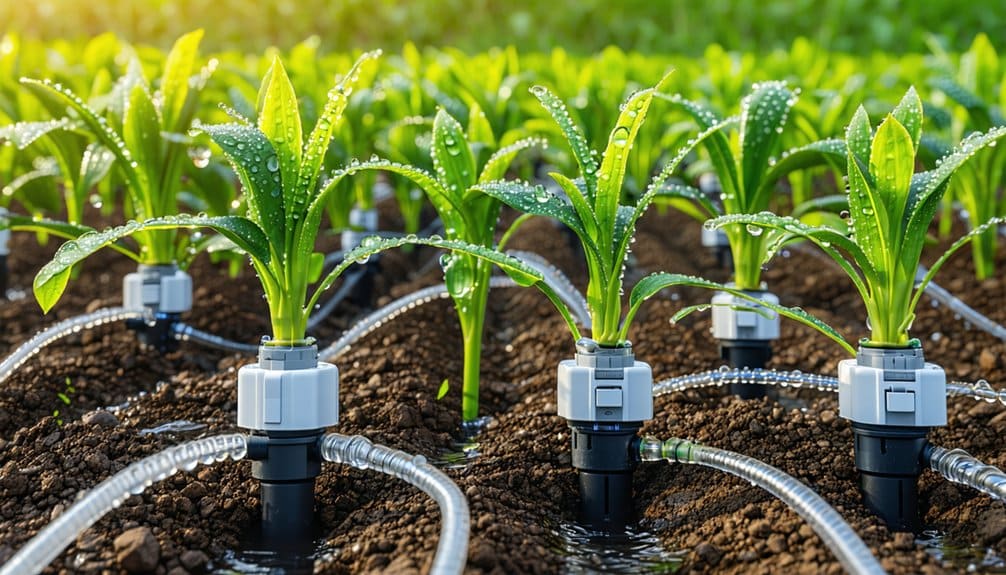
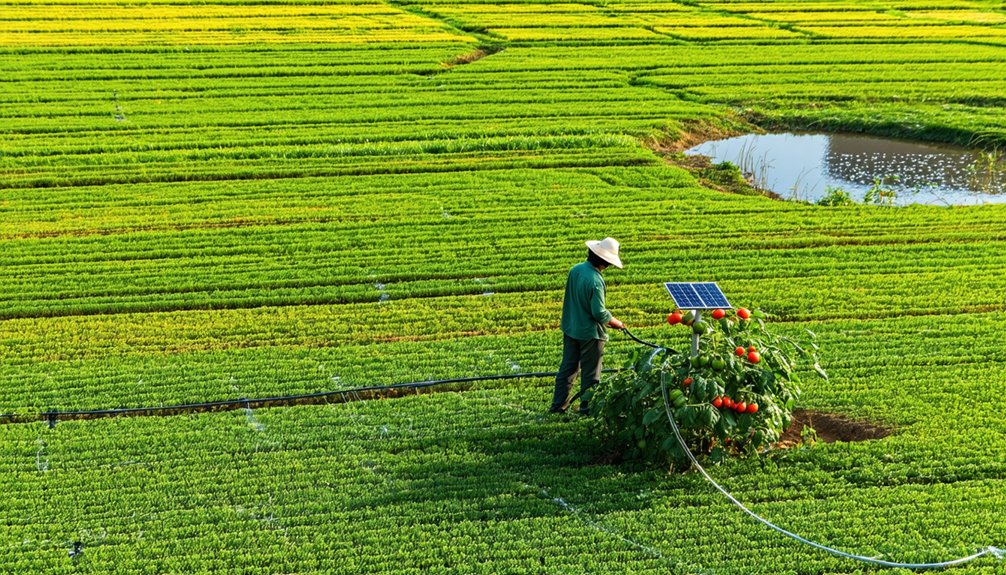
Smart drip irrigation technologies can transform how you manage water in your garden.
By integrating IoT devices, you can automate schedules and make data-driven decisions for optimal water usage.
This not only saves time but also ensures your plants get the precise amount of moisture they need.
IoT Integration Benefits
As farmers increasingly adopt drip irrigation systems, integrating Internet of Things (IoT) technology brings numerous advantages that enhance efficiency and sustainability.
With IoT, you can monitor and manage your irrigation systems more effectively, leading to better resource use. Here are some key benefits:
- Real-time data access: Get instant insights into soil moisture and crop health.
- Remote monitoring: Control your irrigation system from anywhere, reducing the need for on-site visits.
- Predictive analytics: Anticipate water needs based on weather patterns and soil conditions.
- Enhanced decision-making: Use data-driven insights to optimize water usage and crop yields.
- Reduced labor costs: Automate routine tasks, freeing up time for more critical farm operations.
Embracing IoT can revolutionize your farming practices!
Automation and Scheduling
Automation and scheduling in drip irrigation technology can significantly enhance your irrigation efficiency and precision. By integrating smart controllers, you can tailor watering schedules based on weather conditions, soil moisture levels, and plant needs. This not only conserves water but also promotes healthier plants.
Here’s a quick comparison of automation options:
| Automation Type | Benefits |
|---|---|
| Smart Timers | Easy scheduling; saves time |
| Soil Moisture Sensors | Prevents over/under watering |
| Weather-Responsive Systems | Adjusts irrigation based on weather forecasts |
Implementing these technologies allows you to manage your drip irrigation system with minimal effort while maximizing results. With automation, you can focus on other important tasks while ensuring your plants receive the care they need.
Data-Driven Water Management
Integrating data-driven water management into your drip irrigation system takes efficiency to the next level.
By utilizing smart technologies, you can optimize water usage while maximizing crop yields. These systems collect and analyze data, allowing you to make informed decisions.
Here are some key benefits:
- Real-time monitoring: Keep track of soil moisture levels and adjust irrigation accordingly.
- Weather integration: Use weather forecasts to anticipate water needs and prevent over-irrigation.
- Water usage analytics: Identify patterns and inefficiencies in your current watering practices.
- Crop-specific adjustments: Tailor watering schedules based on specific plant requirements.
- Remote access: Manage your system from anywhere, ensuring timely interventions.
Embracing these innovations can help you conserve water and enhance productivity.
Maintenance and Troubleshooting of Drip Systems
While drip irrigation systems can save you time and water, regular maintenance is crucial to keep them functioning efficiently.
Start by checking for clogs in emitters, as dirt and debris can easily block them. Clean filters regularly to prevent buildup and ensure a steady flow.
Inspect your tubing and connections for leaks or damage; replacing worn parts promptly can save you from larger issues later.
Make it a habit to flush the system periodically to remove any sediment. If you notice uneven watering, adjust the emitters or check for pressure issues.
Finally, during winter, don’t forget to drain your system to prevent freezing.
With these simple steps, you can keep your drip irrigation system running smoothly.
Frequently Asked Questions
What Crops Benefit Most From Drip Irrigation Systems?
Drip irrigation systems benefit a variety of crops, especially those needing precise water delivery like tomatoes, peppers, cucumbers, and strawberries. You’ll find improved yields and reduced water waste, making it ideal for efficient farming.
How Does Weather Affect Drip Irrigation Efficiency?
Did you know that efficient drip irrigation can reduce water use by up to 50%? Weather affects its efficiency significantly; high temperatures increase evaporation rates, while rain can saturate soil, reducing the need for watering.
Can Drip Irrigation Be Used in Hilly Terrains?
Yes, you can use drip irrigation in hilly terrains. By adjusting the system’s layout and pressure, you’ll ensure even water distribution, preventing erosion and maximizing efficiency, making it ideal for sloped areas.
What Is the Average Lifespan of Drip Irrigation Components?
Drip irrigation components, like the roots of a resilient plant, thrive for about 5 to 15 years, depending on materials and maintenance. You’ll want to monitor them regularly to ensure optimal performance and longevity.
How Do I Determine the Right Spacing for Drip Emitters?
To determine the right spacing for drip emitters, consider your plants’ water needs, soil type, and climate. Generally, space emitters 12 to 24 inches apart, adjusting based on crop requirements and growth patterns as necessary.
Conclusion
In exploring different types of drip irrigation systems, you’ll find options that suit every agricultural need, just like a tailor fitting a suit. Whether you choose surface or subsurface systems, or opt for pressure compensating drippers, each choice enhances water efficiency and plant health. Investing in smart technologies and understanding maintenance can further boost your system’s effectiveness. By selecting the right components, you’ll cultivate a thriving garden or farm that flourishes with the right care and attention.