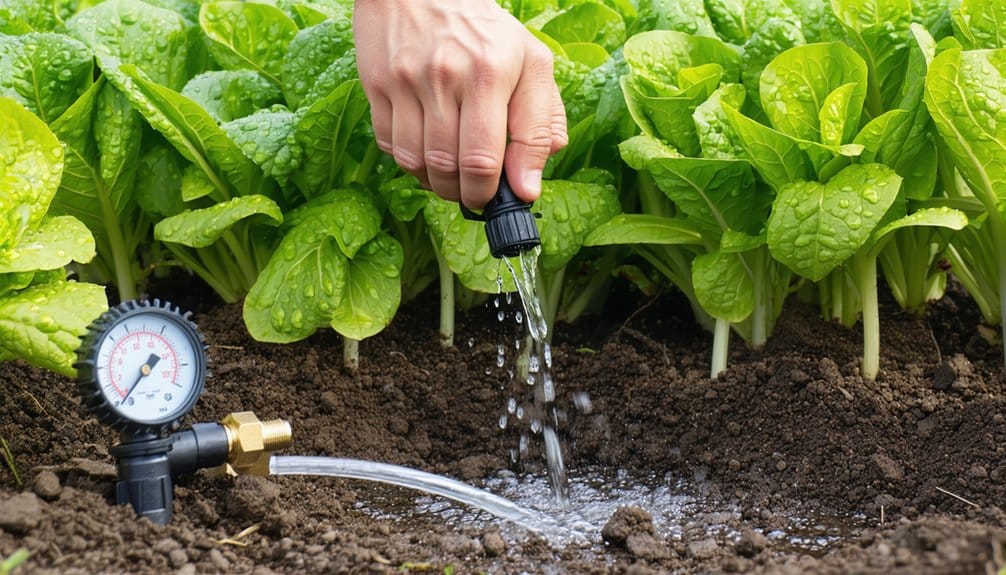

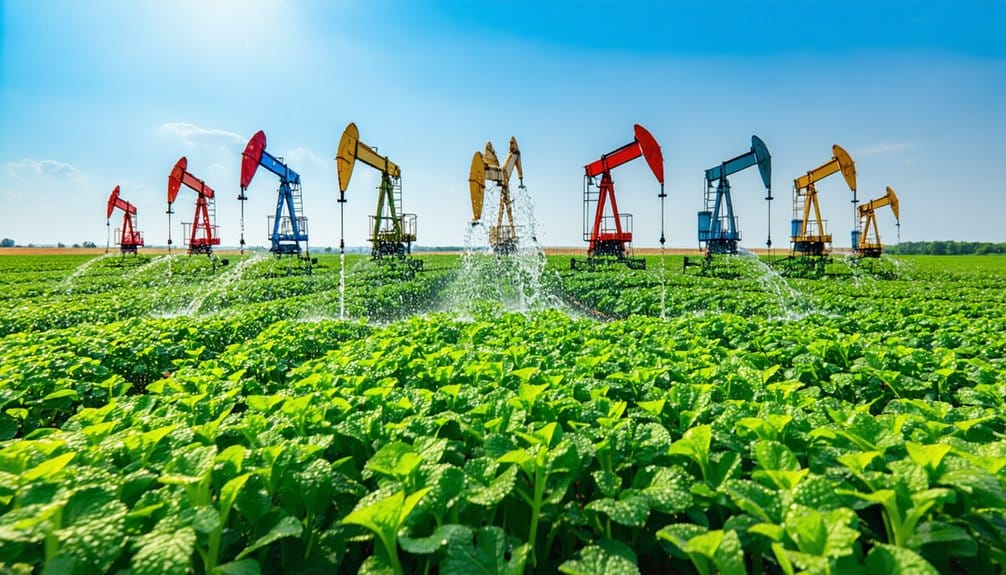
Effective agricultural irrigation hinges on the selection of the right pumps. Various types, including centrifugal, submersible, and positive displacement pumps, each offer distinct advantages tailored to specific needs. Understanding the capabilities and applications of these pumps is essential for maximizing efficiency and crop yields. As farmers face fluctuating water availability and climate challenges, the choice of pumping systems becomes increasingly critical. What factors should be considered when making this important decision?
Key Takeaways
- Centrifugal pumps are efficient and reliable, ideal for high flow rates in various agricultural irrigation setups.
- Submersible pumps minimize evaporation and reduce maintenance costs by operating underwater, making them energy-efficient options.
- Positive displacement pumps ensure consistent flow regardless of pressure changes, suitable for viscous fluids in diverse applications.
- Solar-powered pumps provide a sustainable solution for irrigation, especially in remote areas with limited electricity access, reducing reliance on fossil fuels.
- Booster pumps enhance water pressure and flow rates, ensuring optimal irrigation performance across large fields or elevated areas.
Centrifugal Pumps
Centrifugal pumps are widely recognized for their efficiency and reliability in agricultural irrigation systems.
These agricultural irrigation pumps utilize centrifugal force to move water through the system, making them ideal for various irrigation equipment. Their design allows for smooth operation, reducing maintenance needs and increasing overall productivity.
Farmers often consider them among the best irrigation pumps available due to their high flow rates and ability to handle large volumes of water. Additionally, centrifugal pumps can be easily integrated with modern irrigation technologies, enhancing their effectiveness in delivering water to crops.
Ultimately, the widespread adoption of centrifugal pumps has significantly improved water management practices, contributing to sustainable agricultural practices and increased crop yields.
Submersible Pumps
Submersible pumps play a crucial role in agricultural irrigation by effectively transporting water from underground sources.
This section will explore the various types of submersible pumps available, highlight their key benefits for irrigation systems, and provide essential installation and maintenance tips.
Understanding these aspects can help farmers optimize their irrigation strategies and improve overall efficiency.
Types of Submersible Pumps
When considering irrigation solutions, various types of submersible pumps play a crucial role in efficiently delivering water from underground sources.
These pumps can be categorized into several types, including centrifugal, positive displacement, and jet pumps.
Centrifugal submersible pumps are widely used for farm irrigation due to their ability to handle large volumes of water with high efficiency.
Positive displacement pumps, on the other hand, are ideal for applications requiring high pressure, making them beneficial for deep well irrigation.
Jet pumps are often utilized for shallow water sources, providing a cost-effective solution for smaller farming operations.
Each type of submersible pump offers unique advantages that contribute to efficient farming practices and effective water management in agricultural settings.
Key Benefits for Irrigation
While various irrigation methods exist, submersible pumps stand out for their numerous advantages in agricultural settings.
These pumps operate underwater, allowing for efficient water delivery directly to the root zone of crops. This placement minimizes evaporation losses and maximizes water availability, ensuring optimal plant growth.
Submersible pumps are also known for their energy efficiency, often requiring less power to operate compared to surface pumps. Their design facilitates quiet operation, reducing noise pollution in the farming area.
Additionally, these pumps are less prone to damage from debris since they are submerged, leading to lower maintenance costs.
Installation and Maintenance Tips
Proper installation and maintenance of submersible pumps are essential for ensuring optimal performance and longevity in agricultural irrigation systems.
To begin, it is important to select a suitable location for installation, ensuring the pump is submerged adequately and positioned away from debris. Proper sealing and electrical connections should be verified to prevent water ingress and electrical failures.
Regular inspections are crucial, focusing on wear components such as bearings and seals. Cleaning the pump and surrounding area helps prevent clogs and ensures efficient operation.
Monitoring performance indicators like flow rate and pressure can help identify potential issues early. Lastly, following manufacturer guidelines for maintenance schedules and procedures significantly enhances the pump’s lifespan and reliability in irrigation applications.
Positive Displacement Pumps
Positive displacement pumps play a crucial role in agricultural irrigation by delivering a consistent flow of water, regardless of changes in pressure. These pumps operate by trapping a fixed amount of water and forcing it into the irrigation system, ensuring efficient distribution. Their design allows for effective handling of viscous fluids, making them suitable for various agricultural applications.
| Feature | Description |
|---|---|
| Flow Consistency | Maintains steady output |
| Pressure Tolerance | Operates under varying pressures |
| Fluid Compatibility | Handles various viscosities |
| Maintenance Needs | Generally low maintenance |
Farmers appreciate positive displacement pumps for their reliability and efficiency, contributing significantly to successful irrigation practices. Their unique capabilities make them essential in modern agricultural settings.
Diaphragm Pumps
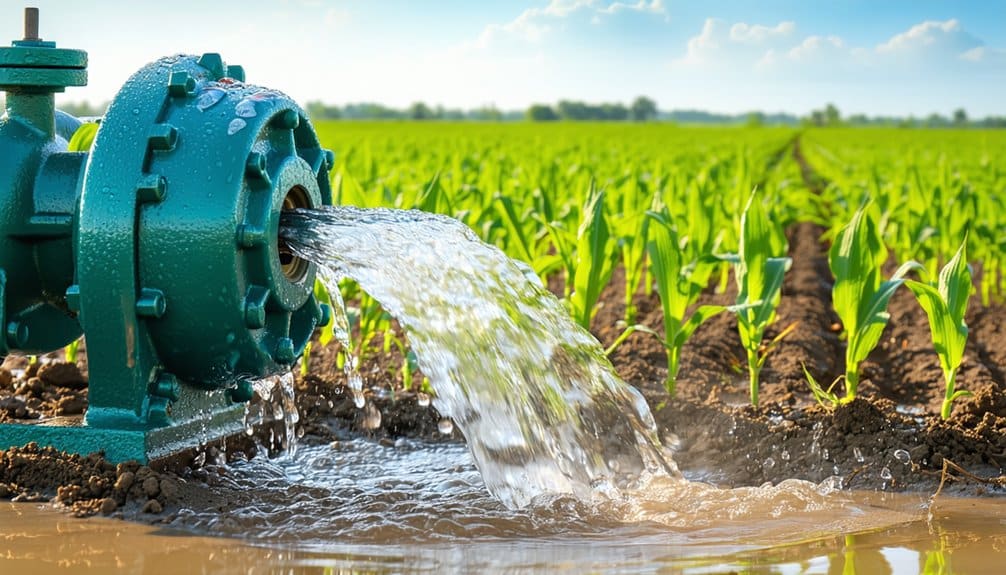
Diaphragm pumps are recognized for their ability to provide precise flow control and handle a variety of fluids, making them advantageous in agricultural settings.
Their versatility allows for applications ranging from transferring fertilizers to irrigation systems.
Understanding the specific benefits and uses of diaphragm pumps can enhance irrigation efficiency and effectiveness in farming operations.
Advantages of Diaphragm Pumps
In agricultural irrigation, diaphragm pumps stand out for their efficiency and versatility.
These pumps excel in handling a wide range of fluids, including those with solid particles, making them particularly useful in various irrigation scenarios. Their design allows for precise flow control and minimal pulsation, ensuring a steady supply of water to crops.
Additionally, diaphragm pumps operate at lower maintenance costs due to fewer moving parts, which translates to reduced downtime. They are also capable of self-priming, enabling quick and effective operation.
Furthermore, diaphragm pumps can be driven by electric or hydraulic power, offering flexibility in energy sources.
These advantages make diaphragm pumps an ideal choice for farmers seeking reliable and effective irrigation solutions.
Applications in Agriculture
Versatile and efficient, diaphragm pumps find numerous applications in agriculture, enhancing irrigation practices across various farming operations.
These pumps are particularly valued for their ability to handle a variety of fluids, including fertilizers and pesticides, making them essential for effective crop management.
Their design enables them to operate in challenging conditions, ensuring reliable performance in both large-scale and small-scale farming settings.
- Irrigation Systems: Delivering water with precision to maximize crop yields.
- Fertilizer Application: Facilitating the even distribution of liquid fertilizers, promoting healthy plant growth.
- Pesticide Spraying: Ensuring effective pest control through uniform application of chemicals.
Gear Pumps
Gear pumps are widely recognized for their efficiency in agricultural irrigation applications. These pumps utilize revolving gears to transfer fluid, ensuring a consistent and reliable flow rate.
Their design allows for high-pressure capabilities, making them suitable for various irrigation systems, including drip and sprinkler setups. Gear pumps are particularly advantageous in situations where precise control over fluid delivery is necessary, helping to optimize water usage and improve crop yield.
Additionally, their compact size and relatively low maintenance requirements contribute to their popularity among farmers. With robust construction, gear pumps can withstand harsh agricultural environments, offering durability and longevity.
Turbine Pumps
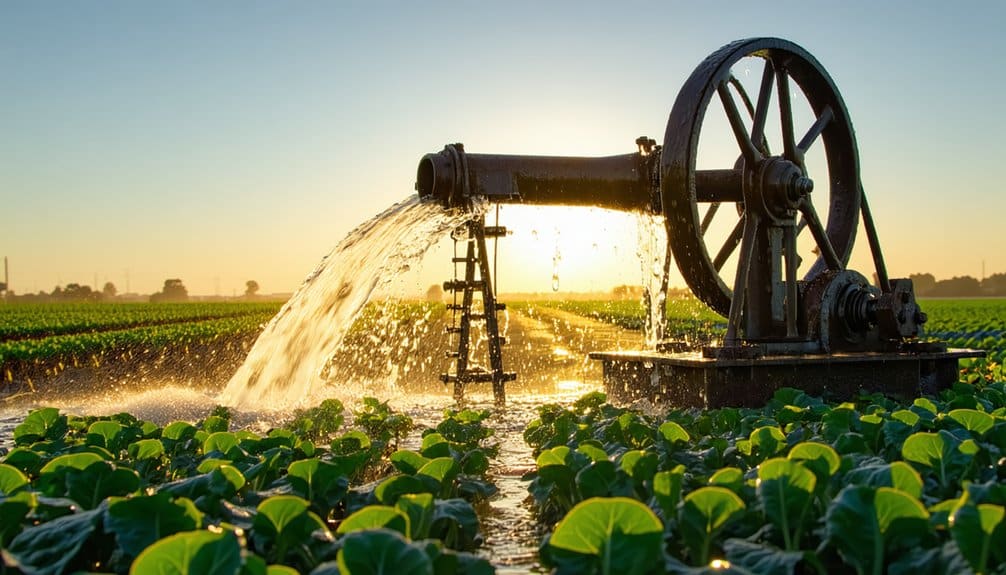
Turbine pumps are essential for efficient water distribution in agricultural irrigation systems. They are designed to lift water from deep sources, making them particularly useful in areas with significant water table fluctuations.
These pumps operate by utilizing a series of impellers to increase water pressure, allowing for optimal flow rates.
- High efficiency: Turbine pumps can deliver large volumes of water with minimal energy consumption.
- Durability: Constructed from robust materials, they can withstand harsh environmental conditions, ensuring longevity.
- Versatility: Suitable for various applications, including surface and submersible installations, turbine pumps can adapt to different irrigation needs.
Solar-Powered Pumps
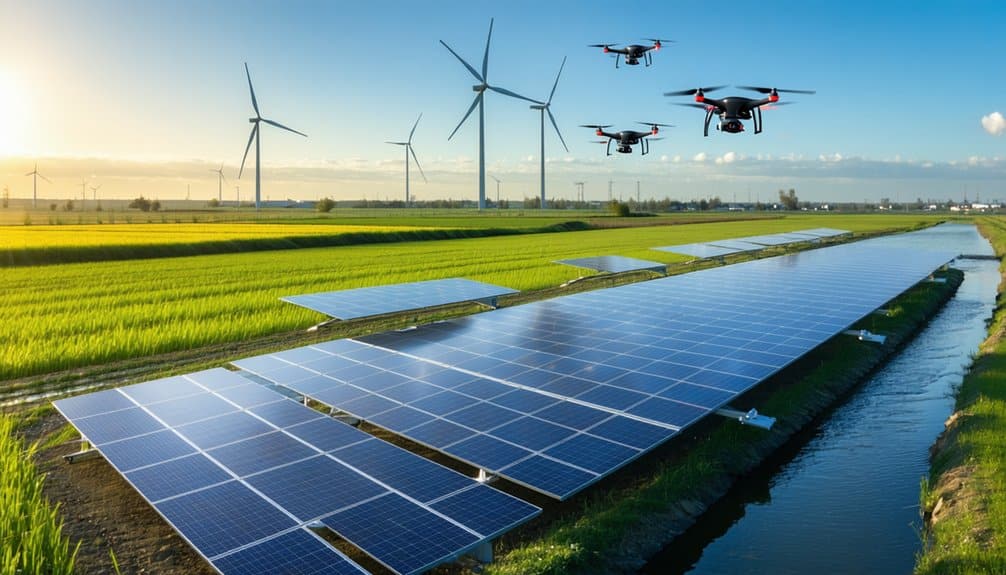
Solar-powered pumps represent an innovative solution for agricultural irrigation, harnessing renewable energy to facilitate water distribution. These pumps are particularly beneficial in remote areas where electricity access is limited. By converting solar energy into mechanical power, they reduce reliance on fossil fuels and lower operating costs. The efficiency and sustainability of solar-powered pumps make them an attractive option for farmers seeking to optimize their irrigation systems.
| Advantages | Considerations |
|---|---|
| Renewable energy source | Initial installation costs |
| Low operating expenses | Weather-dependent efficiency |
| Environmentally friendly | Maintenance requirements |
End Suction Pumps
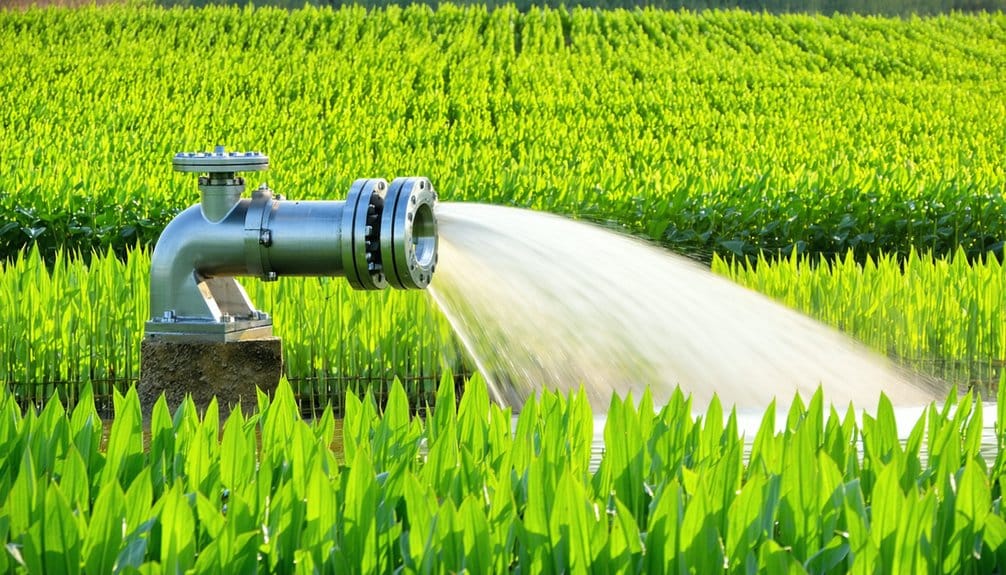
End suction pumps are widely utilized in agricultural irrigation systems due to their simple design and efficient operation. These pumps are designed to draw water in from one end and discharge it from the other, making them particularly effective for moderate flow and pressure requirements. They are often selected for their reliability and versatility in various applications.
- Durability: Constructed from corrosion-resistant materials, end suction pumps can withstand challenging environmental conditions.
- Maintenance: Their straightforward design allows for easier maintenance and repair, minimizing downtime.
- Energy Efficiency: These pumps typically operate with lower energy consumption, contributing to cost savings in irrigation operations.
Booster Pumps
Booster pumps play a crucial role in enhancing water pressure within agricultural irrigation systems, particularly when the existing pressure is insufficient for effective water distribution.
These pumps are specifically designed to increase the water flow rate and pressure, enabling farmers to efficiently deliver water to crops, even in large fields or elevated areas.
By improving pressure, booster pumps ensure that irrigation systems operate optimally, reducing water waste and promoting healthy plant growth.
They are often used in conjunction with other pump types, like end suction pumps, to create a well-rounded irrigation solution.
Additionally, selecting the right booster pump involves considering factors such as flow rate, energy efficiency, and compatibility with existing infrastructure, ensuring long-term reliability and performance.
Conclusion
In conclusion, the selection of the appropriate pump type is pivotal for achieving success in agricultural irrigation. Each pump, whether centrifugal, submersible, or solar-powered, offers distinct advantages tailored to specific irrigation needs and conditions. By understanding the unique capabilities of diaphragm, gear, turbine, end suction, and booster pumps, farmers can optimize water efficiency and enhance crop yields. Ultimately, informed choices in pump technology play a crucial role in sustainable and productive agricultural practices.