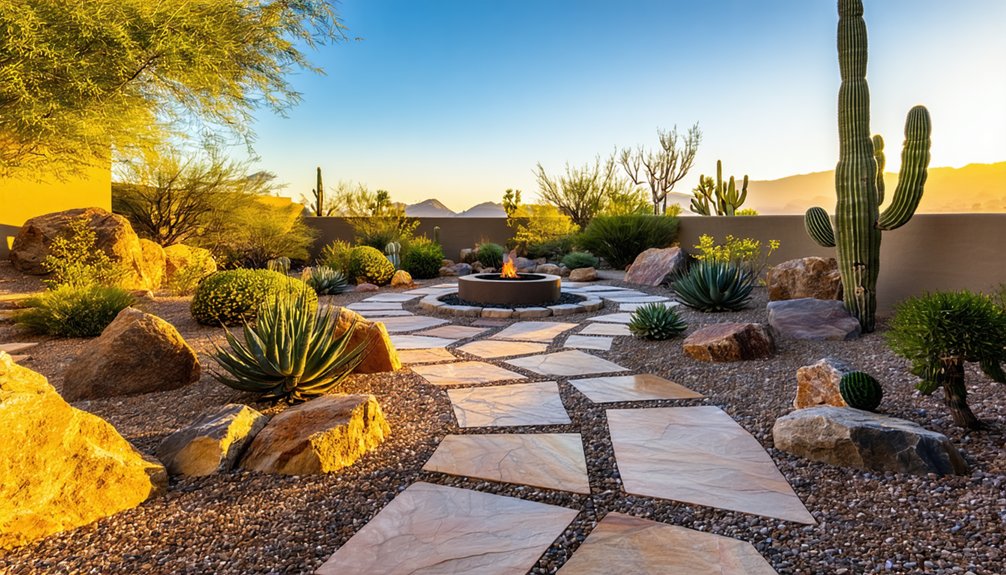

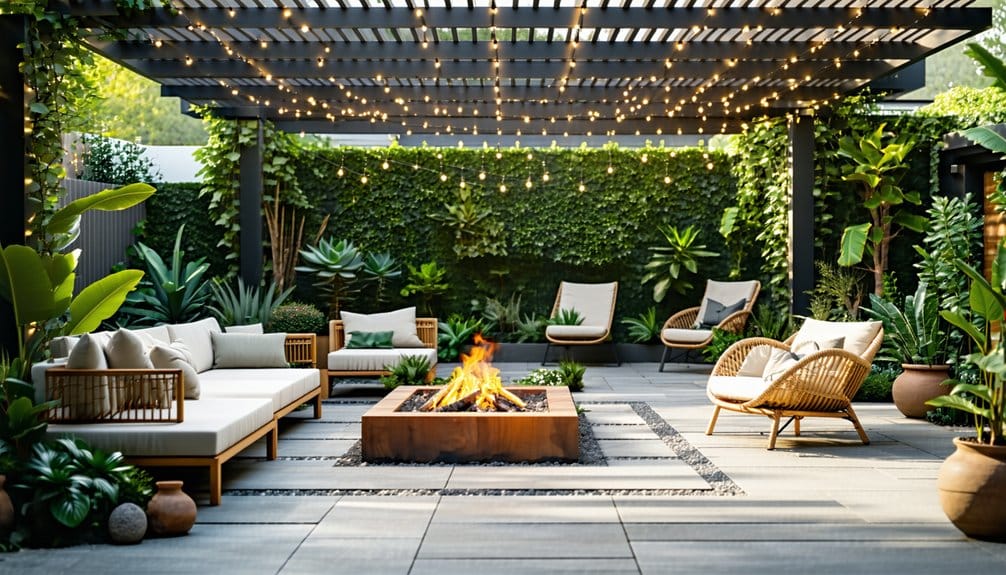
Outdoor living areas are evolving as homeowners seek designs that balance aesthetics and practicality. Current trends emphasize sustainability, multifunctionality, and natural materials to create inviting and adaptable patios. Thoughtful integration of elements such as fire features, greenery, and lighting further enhances these spaces. Exploring these approaches offers insight into how patios can be transformed into personal retreats with lasting appeal and utility.
Key Takeaways
- Use sustainable materials like bamboo and permeable pavers to create eco-friendly patios that reduce environmental impact.
- Incorporate multi-functional furniture to optimize space and easily adapt your patio for various activities.
- Choose natural stone and wood for timeless, durable designs that blend harmoniously with outdoor surroundings.
- Integrate outdoor kitchens and built-in fire features with thoughtful layouts for social and functional entertaining areas.
- Add vertical gardens, shaded pergolas, and ambient lighting to enhance comfort, aesthetics, and usability day and night.
Embracing Sustainable Materials for Eco-Friendly Patios
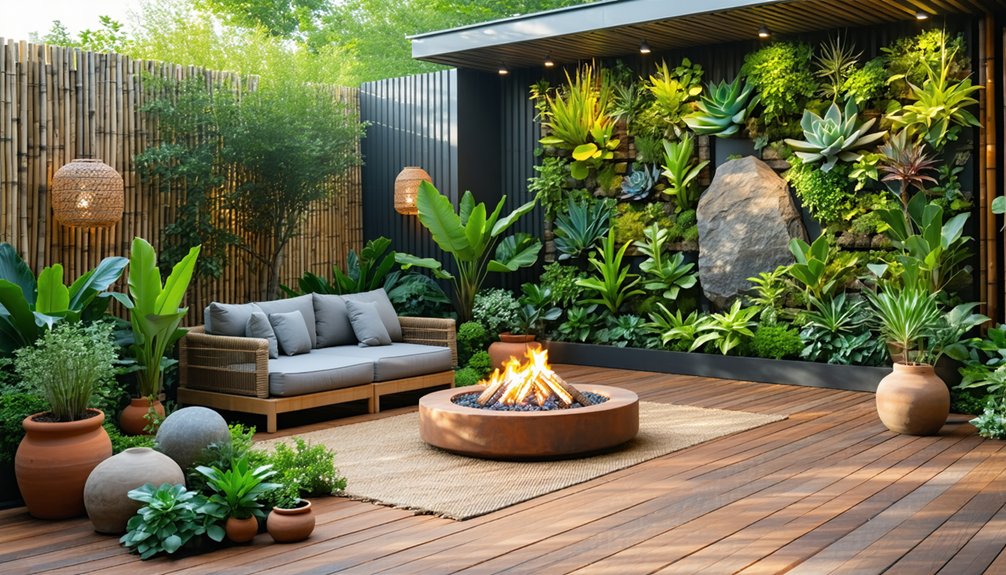
Although many patio designs prioritize aesthetics, incorporating sustainable materials significantly enhances environmental responsibility.
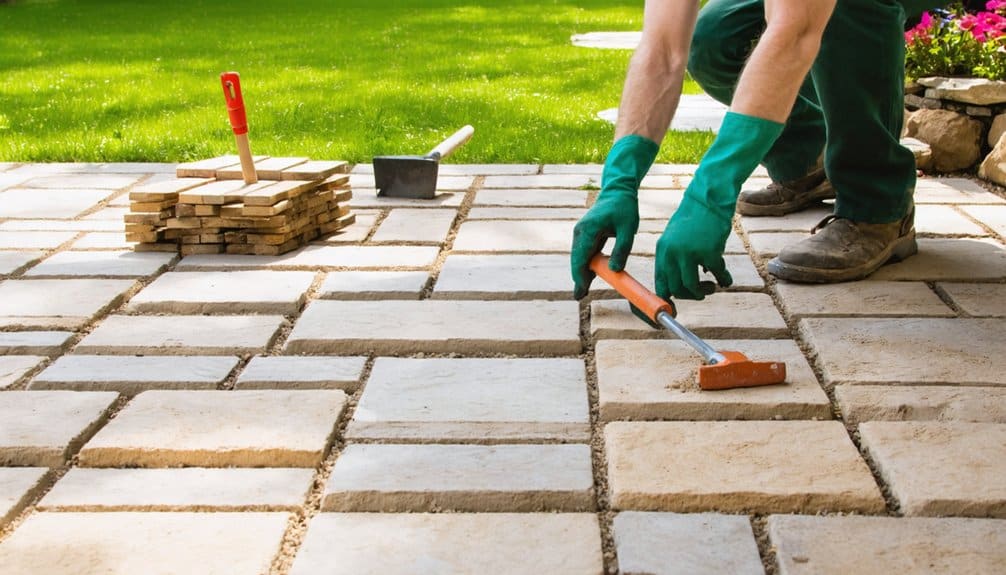
Eco-friendly patio design integrates recycled, reclaimed, or locally sourced materials, reducing the carbon footprint associated with production and transportation. Using materials such as bamboo, composite decking, or permeable pavers supports sustainability while maintaining durability and style. Choosing the right patio material can also ensure that the outdoor space is functional and suited to the local climate.
These choices contribute to water conservation and soil health in patio landscaping, promoting natural drainage and minimizing runoff. Additionally, incorporating native plants and organic mulches aligns with outdoor space ideas that emphasize ecological balance.
By prioritizing sustainable materials, homeowners create patios that are both visually appealing and environmentally conscious, demonstrating how thoughtful design can harmonize with nature without sacrificing functionality or beauty.
This approach to patio landscaping fosters long-term ecological benefits in outdoor living areas.
Incorporating Multi-Functional Furniture for Versatile Spaces
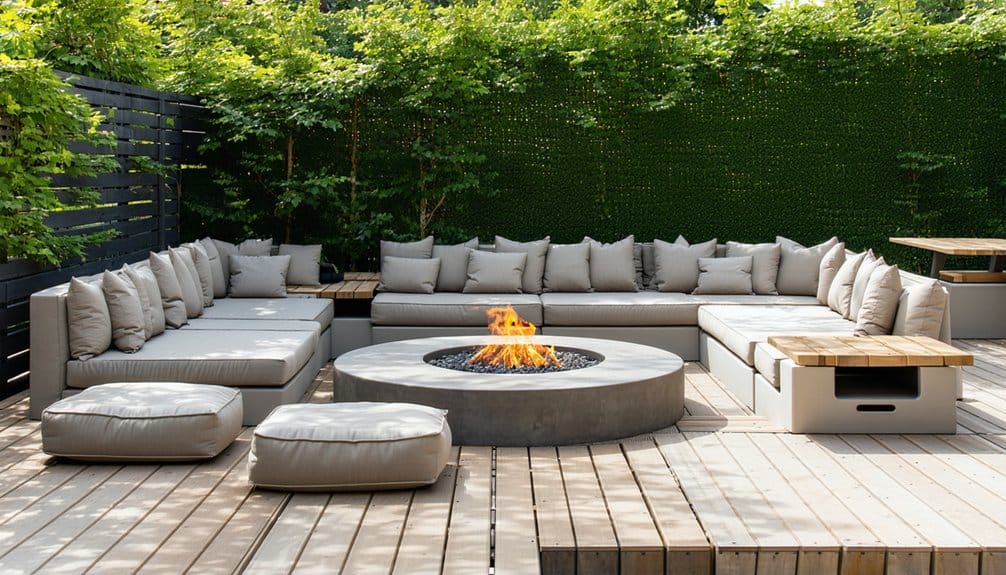
Sustainable materials set a thoughtful foundation for patio design, but functionality remains equally important in creating enjoyable outdoor spaces.
Incorporating multi-functional furniture aligns with trending patio trends, offering flexibility and maximizing limited areas. Pieces that serve dual purposes—such as benches with hidden storage or tables that convert into seating—enhance usability without sacrificing style.
This approach supports a seamless patio transformation, adapting to various activities from dining to relaxation. By selecting versatile furniture, homeowners can easily reconfigure their outdoor space to accommodate guests or solo leisure, promoting efficiency and aesthetic appeal.
Integrating such elements ensures the patio remains both practical and inviting, embodying modern outdoor living ideals. Multi-functional furniture thus plays a critical role in evolving patio designs toward greater adaptability and comfort. Additionally, sustainable design practices can elevate the overall aesthetic while contributing to environmental well-being.
Using Natural Stone and Wood for Timeless Appeal
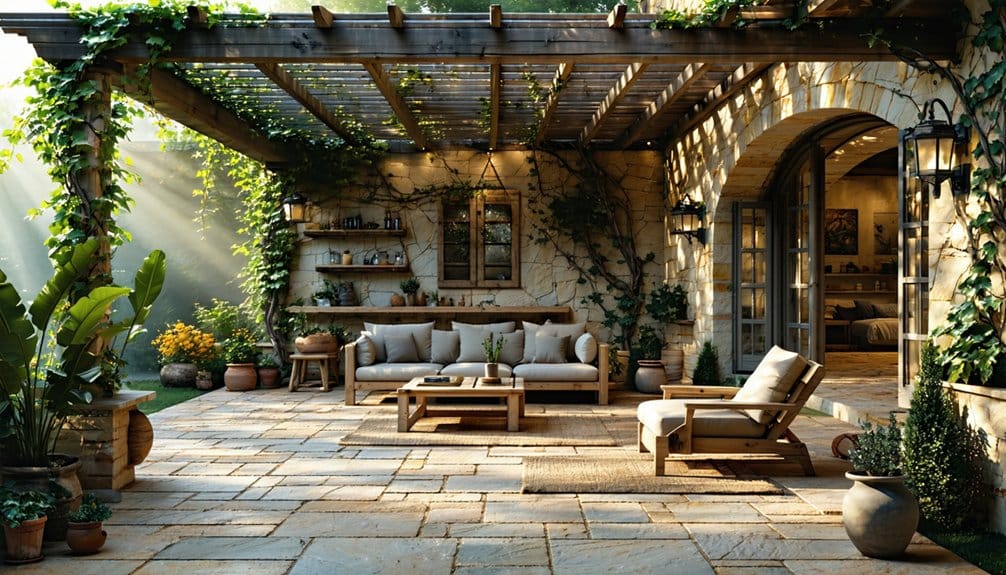
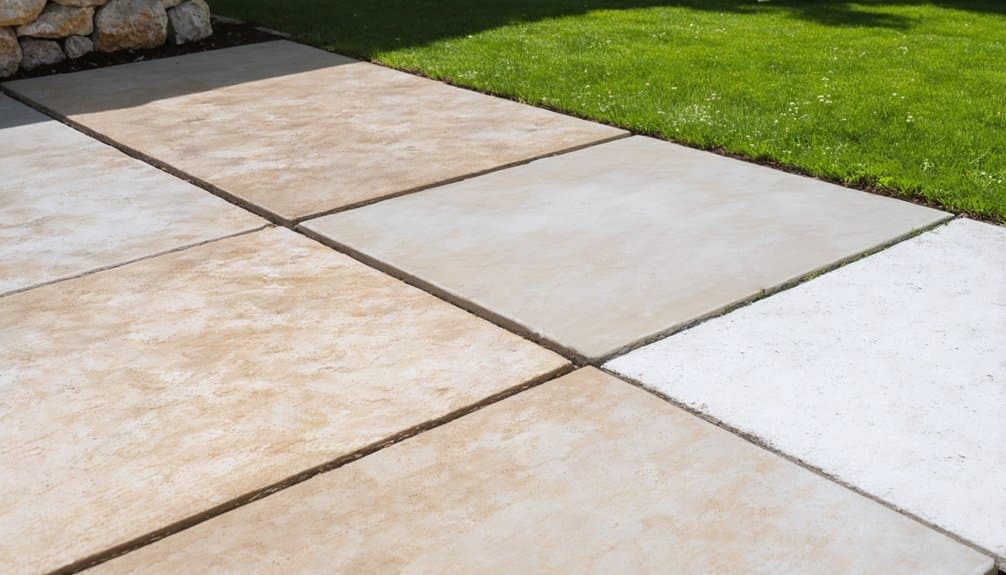
When combined thoughtfully, natural stone and wood introduce enduring elegance to patio designs. These materials offer a timeless aesthetic that blends seamlessly with outdoor environments, creating spaces that feel both organic and sophisticated.
Natural stone provides durability and texture, while wood adds warmth and character. Together, they enhance the sensory experience of an outdoor retreat.
Key benefits of using natural stone and wood include:
- Visual Harmony – Earth tones complement surrounding landscapes.
- Longevity – Both materials withstand weather changes effectively.
- Textural Contrast – Stone’s ruggedness balances wood’s softness.
- Sustainability – Responsibly sourced options promote eco-friendliness.
Additionally, incorporating chic patio design ideas can elevate the overall aesthetic and functionality of your outdoor space.
Incorporating these elements results in patios that remain stylish and inviting for years to come.
Integrating Outdoor Kitchens and Dining Areas
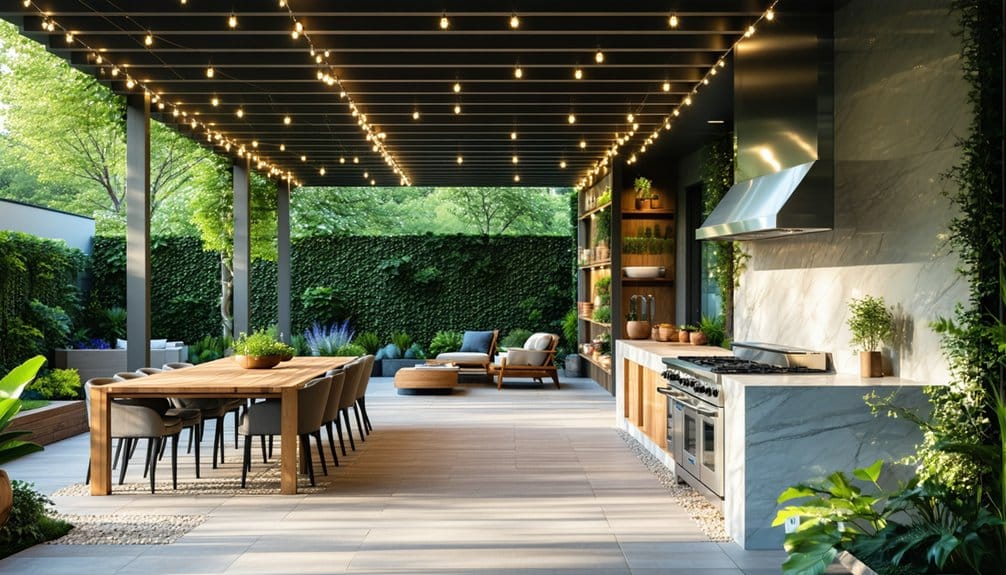
Integrating outdoor kitchens and dining areas requires careful planning to ensure a functional layout that supports cooking and socializing.
Selecting durable materials is essential to withstand weather conditions and maintain longevity.
Additionally, ambient lighting enhances usability and creates a welcoming atmosphere for evening gatherings.
Functional Layout Planning
Although outdoor kitchens and dining areas serve distinct purposes, their placement within a patio must be carefully coordinated to promote ease of movement and social interaction.
Thoughtful layout planning ensures a seamless flow between cooking, serving, and dining spaces, enhancing functionality and comfort.
Key considerations include:
- Positioning the kitchen near utility connections while maintaining proximity to dining for convenience.
- Creating clear walkways to prevent congestion and encourage natural traffic patterns.
- Incorporating seating arrangements that foster conversation and connection.
- Allowing flexible space for entertaining, accommodating both intimate gatherings and larger groups.
Durable Materials Selection
Selecting durable materials is essential for outdoor kitchens and dining areas to withstand varying weather conditions while maintaining aesthetic appeal.
Materials such as stainless steel are favored for appliances and countertops due to their resistance to rust and corrosion. Natural stone, including granite and slate, offers robust surfaces that endure heat and moisture without degrading. Weather-resistant woods like teak or cedar provide warmth and durability, especially when properly sealed.
Additionally, concrete and composite decking materials offer longevity and minimal maintenance. The choice of materials directly influences both functionality and design longevity, ensuring the space remains attractive and practical over time.
Proper selection balances durability with style, accommodating outdoor elements like sun exposure, rain, and temperature fluctuations, thereby enhancing the overall user experience in integrated outdoor kitchens and dining spaces.
Ambient Lighting Options
Several ambient lighting options enhance outdoor kitchens and dining areas by creating a warm, inviting atmosphere while ensuring functionality.
Thoughtful lighting extends usability after sunset and highlights design elements, fostering comfort and elegance.
Key options include:
- String Lights: Evoke a cozy, festive mood with soft, twinkling illumination.
- Recessed Floor Lights: Provide subtle path guidance and enhance safety without overpowering brightness.
- Pendant Lamps: Offer focused light over dining tables, combining style and practicality.
- LED Strip Lights: Accentuate countertops and cabinetry with modern, energy-efficient glow.
Each choice balances aesthetic appeal and practical needs, transforming outdoor spaces into captivating environments perfect for entertaining or relaxing.
Incorporating these lighting techniques elevates the patio experience, making it both functional and enchanting.
Designing With Built-In Fire Features for Cozy Ambiance
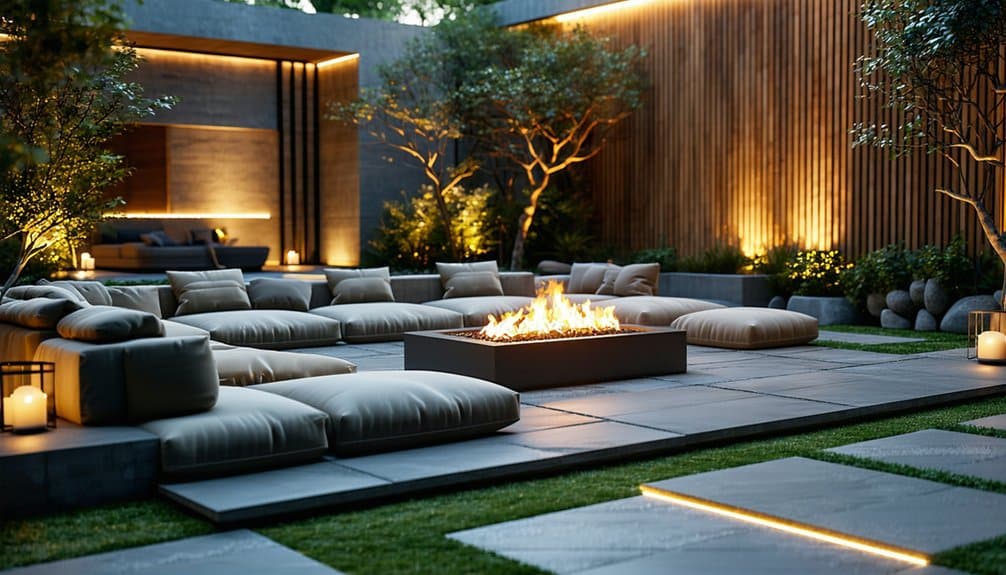
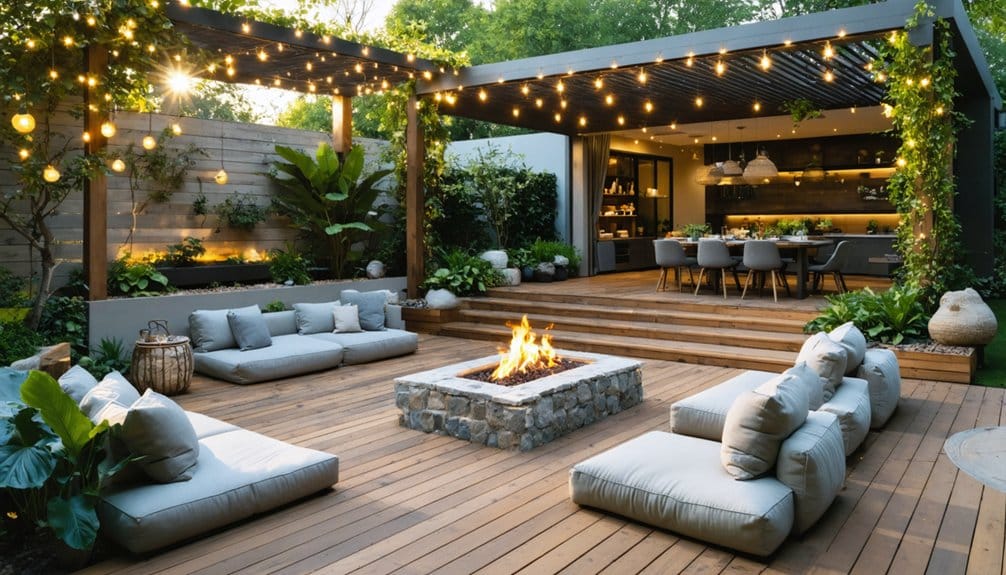
Built-in fire features come in various forms, including fire pits, fireplaces, and fire tables, each offering unique aesthetic and functional benefits.
Proper placement is essential to ensure both safety and optimal enjoyment, considering factors like wind direction and clearance from flammable materials.
Adhering to safety guidelines helps create a secure environment while enhancing the patio’s cozy ambiance.
Types of Fire Features
Fire features such as fire pits, fireplaces, and fire tables serve as focal points in patio design, providing warmth and an inviting atmosphere.
These elements elevate outdoor spaces, blending functionality with aesthetic appeal.
Common types include:
- Fire Pits – Versatile and social, ideal for gatherings around an open flame.
- Built-In Fireplaces – Provide a classic, permanent structure offering both heat and visual drama.
- Fire Tables – Combine utility and ambiance, perfect for dining or casual seating areas.
- Chimineas – Compact and decorative, they bring rustic charm with efficient heat distribution.
Each type caters to different design preferences and space constraints, allowing homeowners to create a cozy ambiance tailored to their outdoor lifestyle.
Placement and Safety Tips
When designing with built-in fire features, careful consideration of placement is essential to ensure both safety and comfort.
Fire elements should be positioned away from flammable materials, including wooden structures, overhanging branches, and fabric furnishings. Maintaining a minimum clearance of three feet around the fire feature helps prevent accidental contact and allows for easy movement.
It is also important to consider prevailing wind directions to minimize smoke exposure to seating areas. Installing fire features on stable, non-combustible surfaces, such as stone or concrete, further enhances safety.
Additionally, accessibility to fire extinguishing tools and adherence to local fire codes and regulations are crucial. Thoughtful placement not only creates a cozy ambiance but also ensures a secure environment for outdoor gatherings.
Adding Greenery With Vertical Gardens and Planters
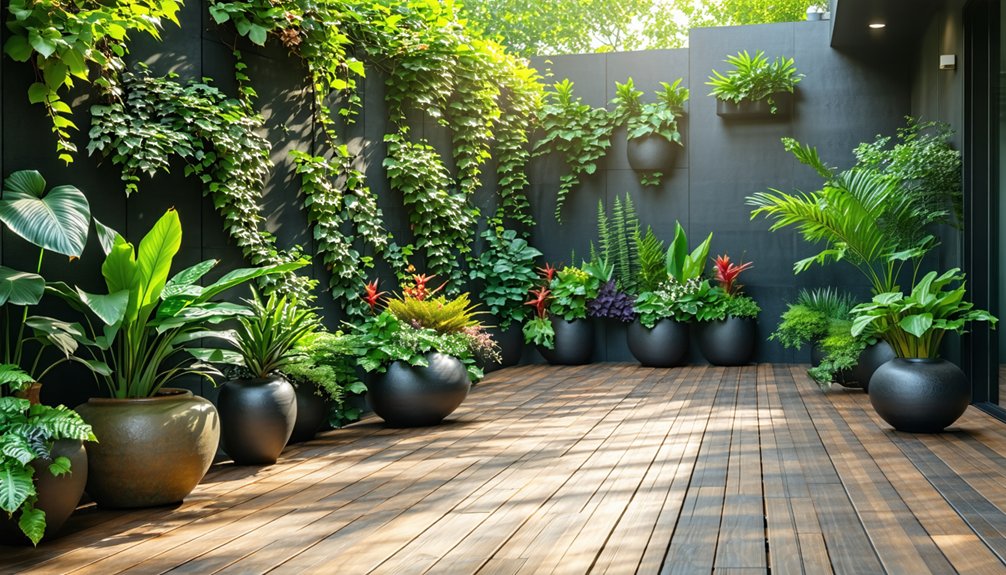
Incorporating vertical gardens and planters transforms patio spaces by maximizing greenery without occupying valuable floor area.
These living walls and container arrangements introduce nature’s vibrancy, enhancing visual appeal and fostering tranquility. Vertical gardens create lush, textured backdrops, while planters offer flexibility in design and placement.
Benefits include:
- Increased privacy through natural screening.
- Improved air quality and cooling effects.
- Opportunities for growing herbs and small vegetables.
- A dynamic, customizable aesthetic that adapts seasonally.
Creating Shaded Retreats With Pergolas and Awnings
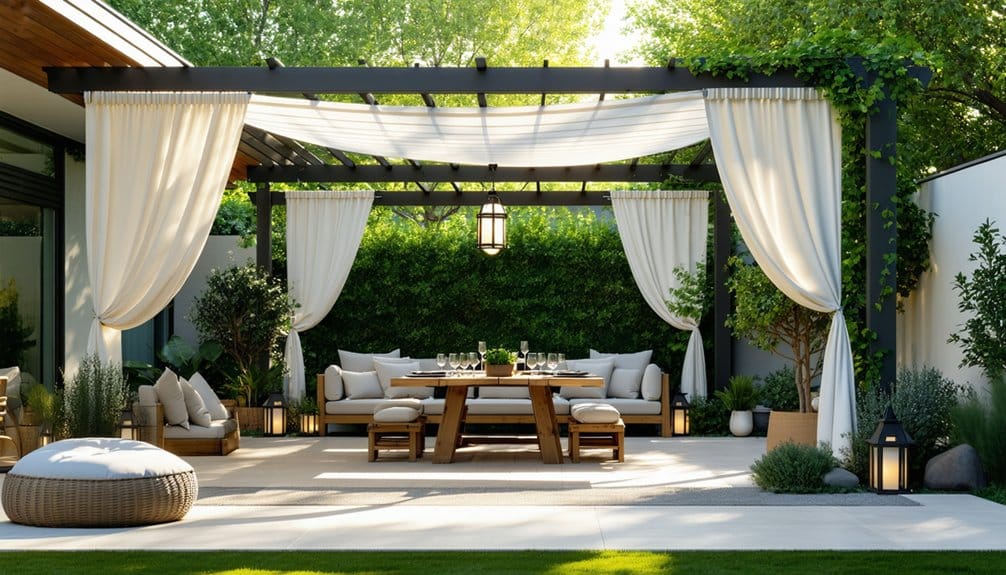
Although patios offer open-air enjoyment, shaded retreats provide essential comfort and protection from the sun’s intensity. Pergolas and awnings serve as popular solutions, blending functionality with aesthetic appeal.
Pergolas, with their open lattice roofs, create a defined outdoor room that filters sunlight while allowing airflow. They can be enhanced with climbing plants or retractable canopies for adjustable shade.
Awnings, typically fabric extensions anchored to walls, offer versatile coverage that can be extended or retracted as needed. Both options reduce heat and glare, extending patio usability during peak sun hours.
Selecting materials that withstand weather conditions ensures durability and low maintenance. Thoughtful integration of these structures transforms patios into inviting, cooler spaces suited for relaxation and social gatherings.
Enhancing Lighting for Evening Enjoyment
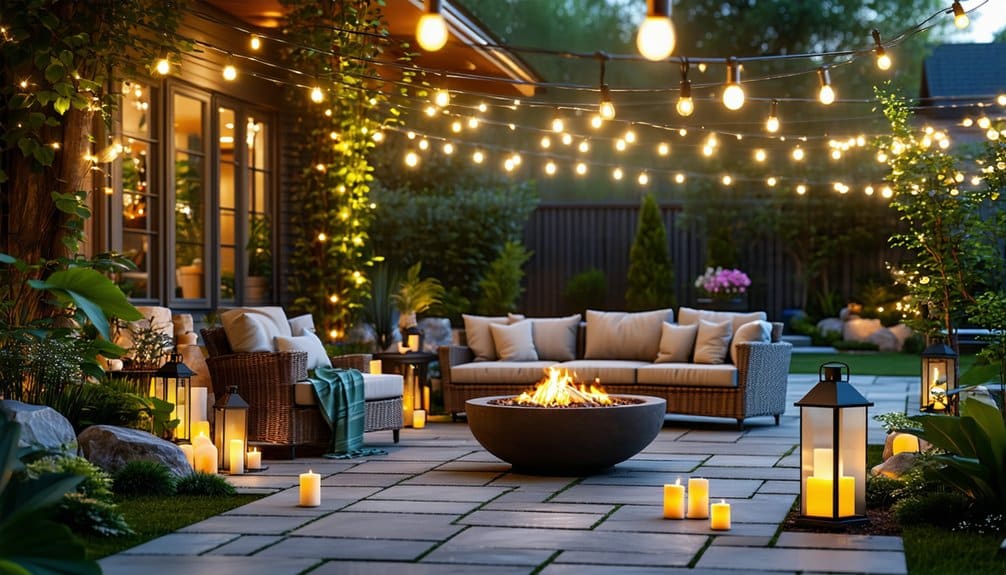
Proper lighting transforms patios into inviting spaces that extend usability beyond daylight hours.
Thoughtful illumination enhances ambiance, safety, and functionality, creating an enchanting outdoor retreat after sunset.
Key lighting strategies include:
- String lights: Soft, warm bulbs evoke a cozy, festive atmosphere perfect for gatherings.
- Lanterns: Portable and charming, they add rustic elegance and gentle illumination.
- Pathway lights: Define walkways, increasing safety while guiding guests comfortably.
- Recessed lighting: Subtle and modern, it highlights architectural features without overwhelming the scene.
Blending Modern and Rustic Styles for Unique Patios
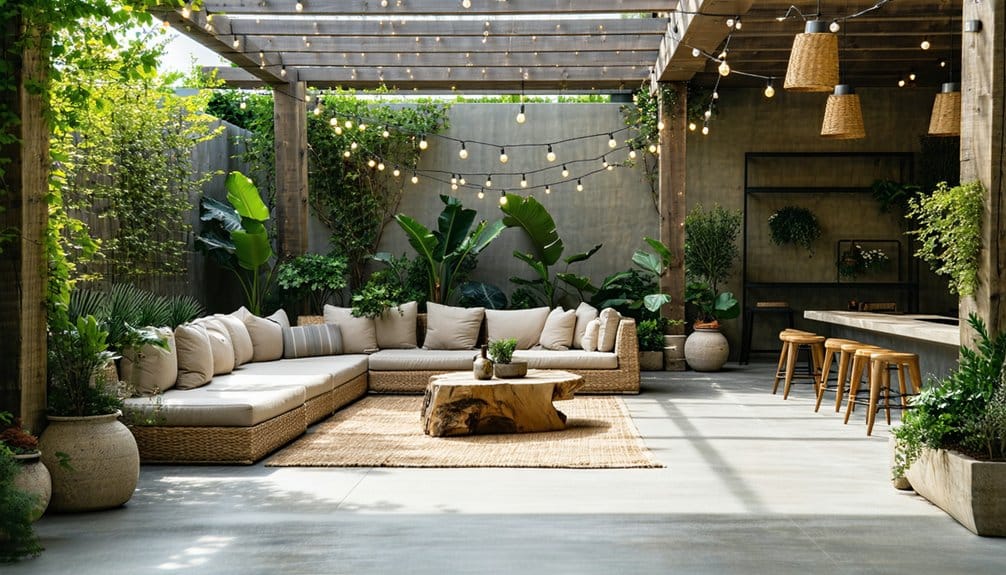
Lighting choices can set the tone for a patio, but the overall style defines its character. Blending modern and rustic elements creates unique outdoor spaces that balance sleek sophistication with natural warmth.
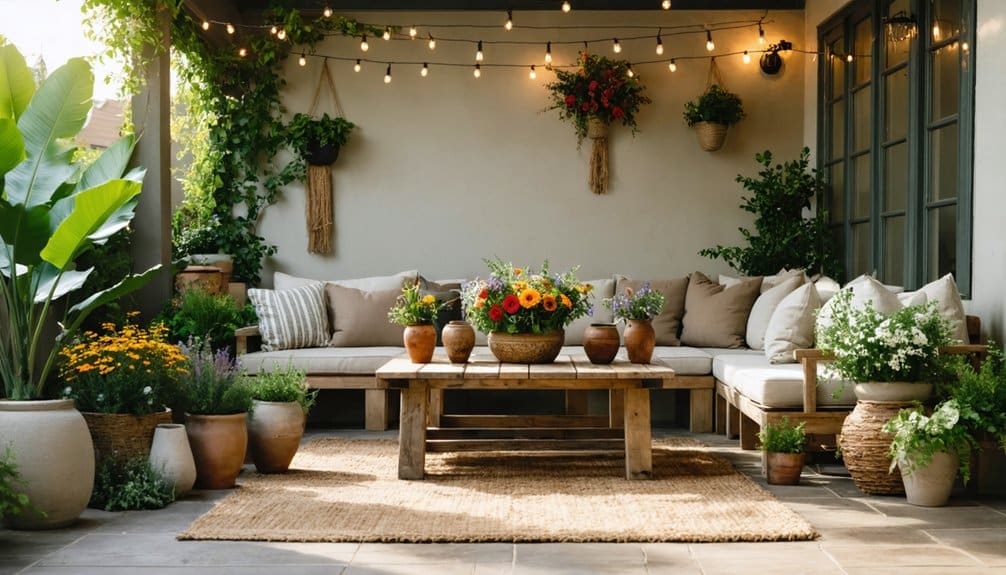
This design approach often pairs clean lines and minimalist furniture with reclaimed wood, stone accents, or wrought iron details. The contrast between contemporary materials like metal and glass alongside organic textures enhances visual interest and invites a welcoming atmosphere.
Neutral color palettes unify the styles while allowing individual elements to stand out. Functional modern features such as built-in seating or integrated fire pits complement rustic touches, making patios both stylish and practical.
This fusion appeals to homeowners seeking originality, comfort, and timeless appeal in their outdoor environments.
Conclusion
Trending patio designs emphasize a harmonious blend of style, sustainability, and functionality. By incorporating eco-friendly materials, versatile furniture, natural elements, and thoughtful features like outdoor kitchens and fire elements, outdoor spaces become inviting and practical. Adding greenery, shaded areas, and ambient lighting further enhances comfort and aesthetic appeal. Together, these elements create timeless, adaptable patios that serve as perfect retreats for relaxation and social gatherings, reflecting both modern and rustic influences.