
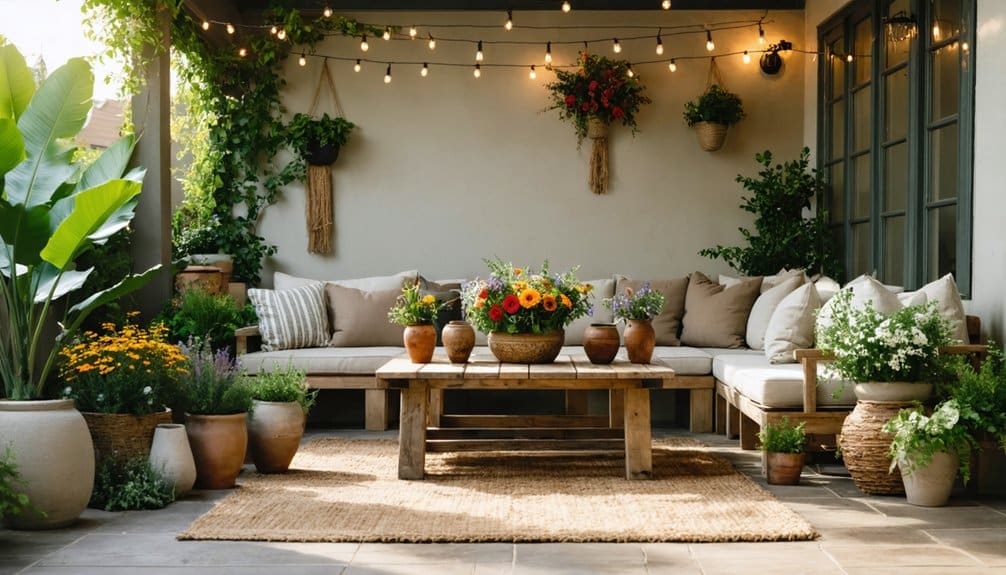
Creating an inviting outdoor space requires more than just placing furniture on a patio. The process involves selecting pieces that balance comfort with aesthetic appeal, while considering materials that withstand various weather conditions. Thoughtful additions, such as lighting and greenery, contribute to a welcoming atmosphere. Equally important is the arrangement of these elements to ensure ease of movement and functional use. Understanding these aspects is essential before transforming an outdoor area into a true extension of living space.
Key Takeaways
- Choose comfortable, ergonomic furniture that fits your patio size and complements your design style for a balanced outdoor living space.
- Use weather-resistant materials like teak, aluminum, and solution-dyed acrylic fabrics to ensure durability against moisture and UV exposure.
- Incorporate layered lighting such as string lights and solar fixtures, combined with accessories like rugs and fire pits for ambiance and function.
- Select climate-appropriate, low-maintenance plants in varied heights and containers to add greenery, warmth, and privacy.
- Arrange furniture to create distinct zones with clear pathways, focusing seating around focal points to enhance flow and social interaction.
Choosing the Right Patio Furniture for Comfort and Style
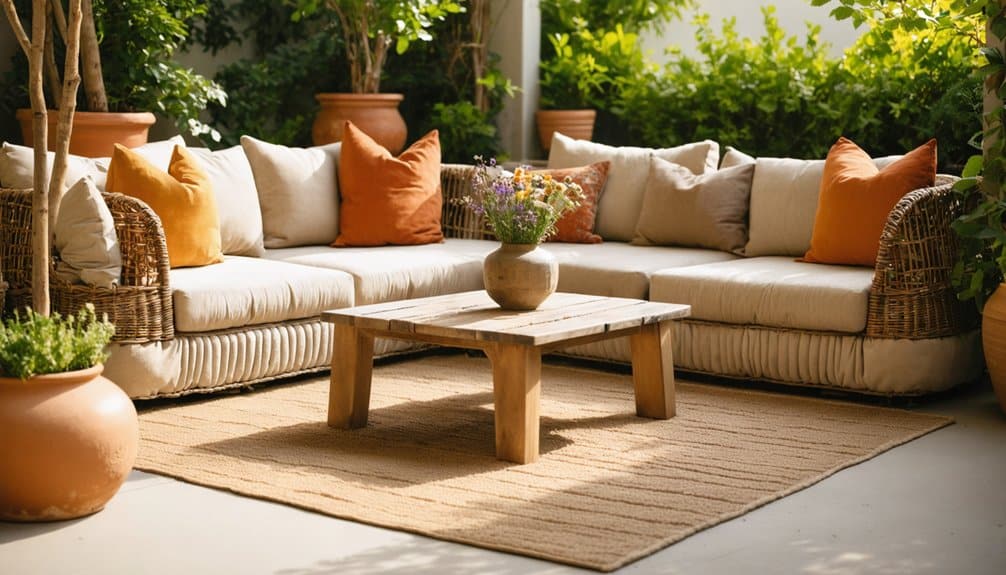
How can one balance comfort and style when selecting patio furniture? The key lies in evaluating both functional needs and aesthetic preferences.
Patio furniture should provide ample support and cushioning to ensure relaxation during outdoor gatherings. Ergonomic designs paired with plush cushions enhance comfort without sacrificing visual appeal.
Simultaneously, the chosen pieces must complement the patio’s overall design theme, whether modern, rustic, or traditional. Opting for sleek lines or intricate detailing can elevate the space’s ambiance.
Proportions also matter; furniture should fit the patio size, allowing easy movement while maximizing seating.
Incorporating Weather-Resistant Materials for Durability
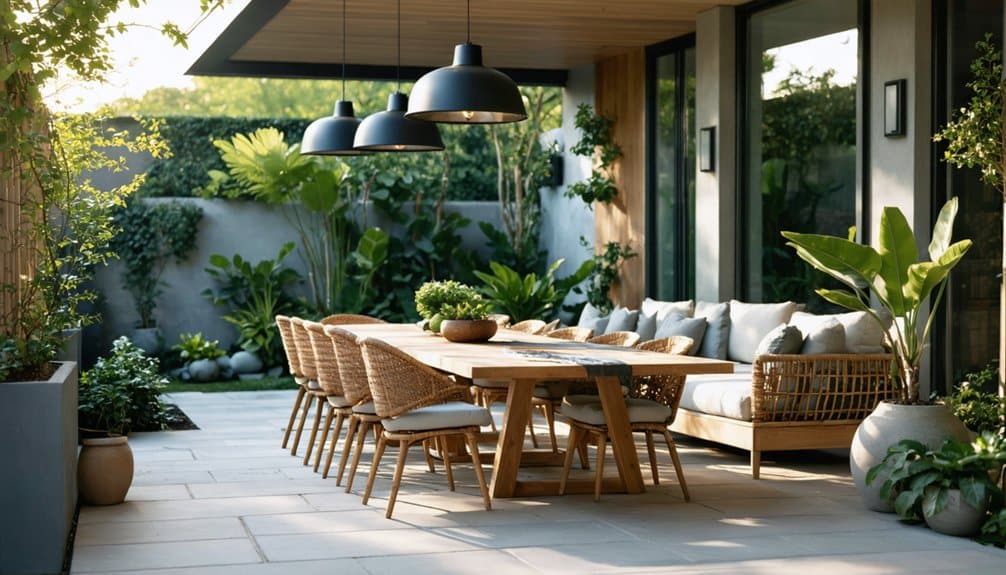
Selecting patio furniture that balances comfort and style sets the foundation for an inviting outdoor space, but ensuring its longevity requires attention to material durability.
Incorporating weather-resistant materials is essential for maintaining furniture integrity amid varying climates typical of outdoor living environments. Materials such as teak, aluminum, and synthetic wicker offer natural resistance to moisture, UV rays, and temperature fluctuations, reducing maintenance needs and preventing deterioration.
Additionally, fabrics designed for outdoor use, like solution-dyed acrylic, resist fading and mold. Choosing these durable materials not only extends the lifespan of patio furnishings but also preserves their aesthetic appeal.
Prioritizing weather-resistant components supports a functional and attractive outdoor living area, capable of withstanding seasonal changes while providing ongoing enjoyment.
Enhancing Your Patio With Lighting and Accessories
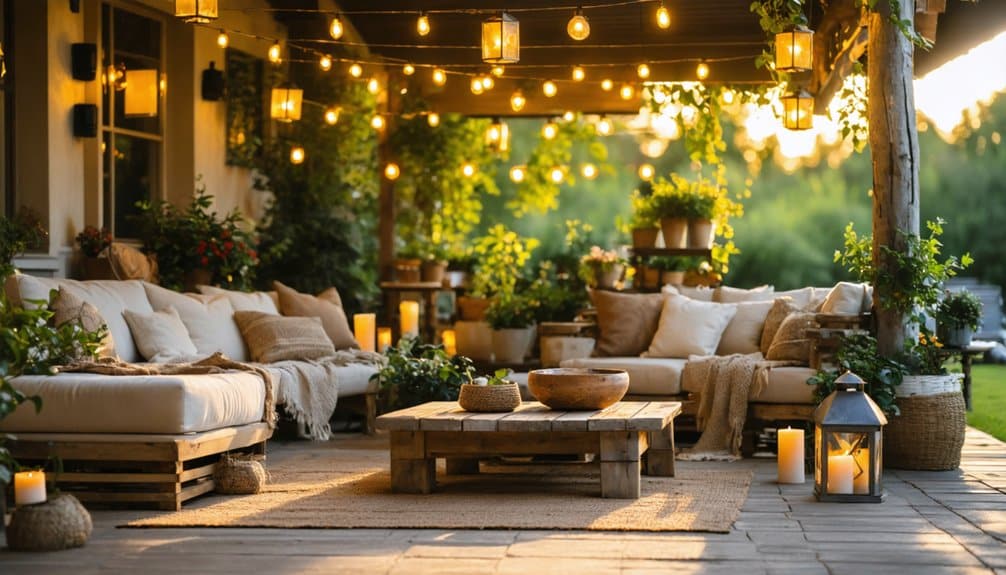
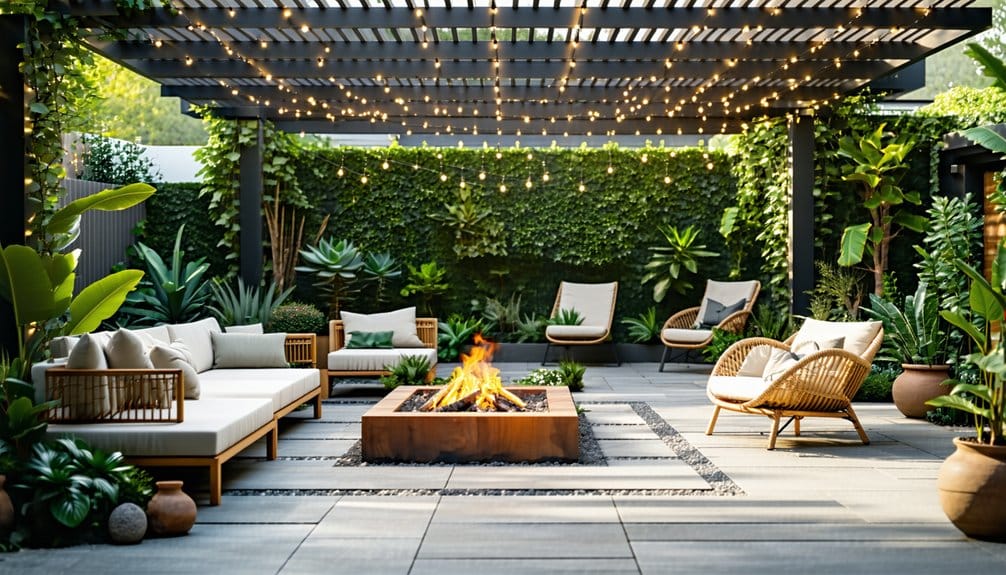
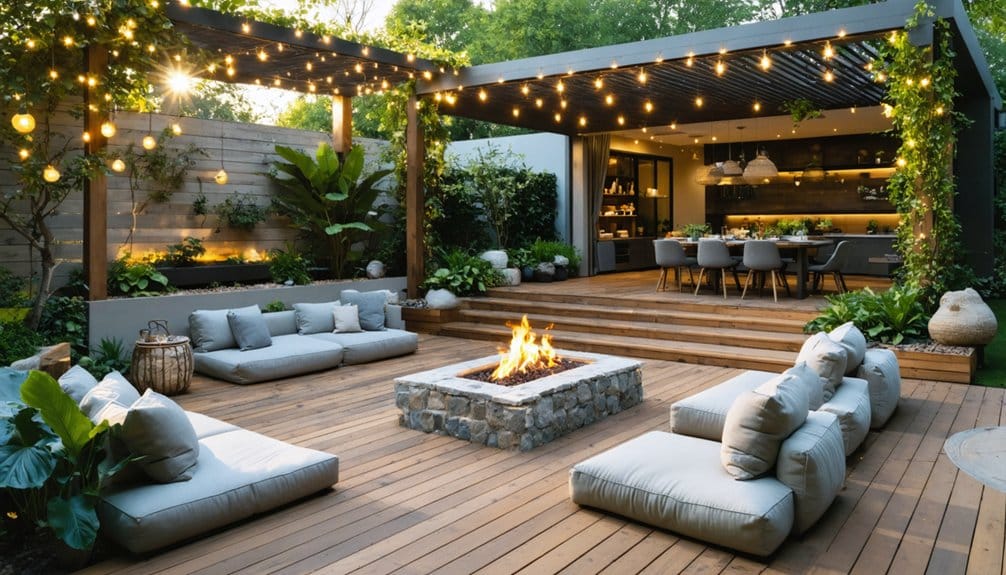
A variety of lighting options and carefully chosen accessories can significantly elevate the ambiance and functionality of a patio. Installing string lights, lanterns, or solar-powered fixtures provides both illumination and warmth, making the space inviting after dark.
Layered lighting enhances mood and usability, catering to different activities. Complementing lighting with tasteful patio decorations such as outdoor rugs, cushions, and weather-resistant art adds personality and comfort.
Accessories like stylish side tables or fire pits increase practicality while contributing to the overall aesthetic. Selecting cohesive colors and materials ensures a harmonious look.
Thoughtful placement of these elements avoids clutter, maintaining an open and welcoming environment. Together, lighting and accessories transform a simple patio into a versatile, appealing outdoor living area.
Selecting Plants and Greenery to Create a Cozy Atmosphere
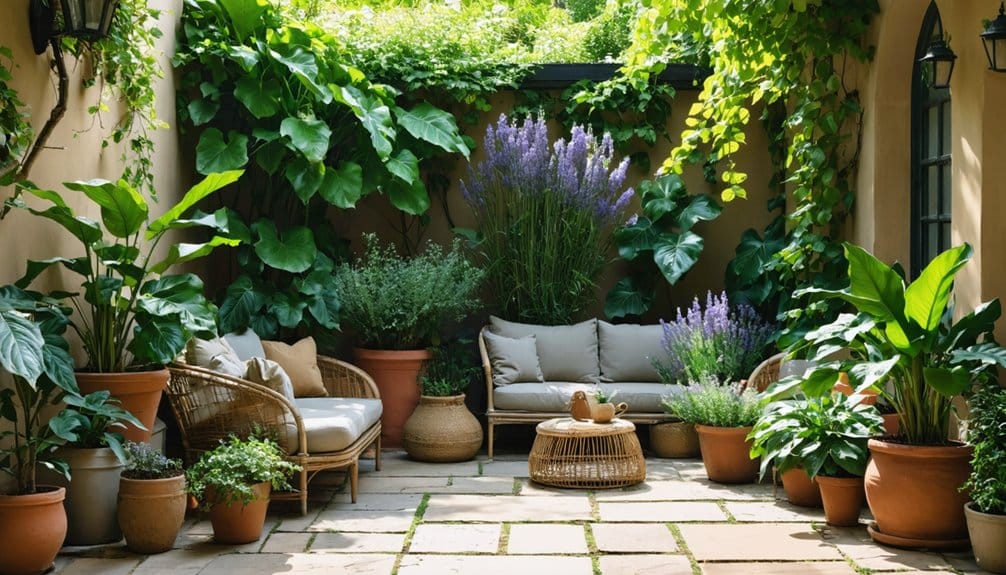
When thoughtfully incorporated, plants and greenery can transform a patio into a serene and inviting retreat. To decorate patio spaces effectively, selecting the right plants is essential for creating a cozy atmosphere.
Consider these three key factors:
- Climate and sunlight – Choose plants suited to the local environment and available light to ensure healthy growth.
- Variety and texture – Mix foliage types and heights to add depth and visual interest.
- Maintenance level – Opt for low-maintenance species if frequent care is impractical, ensuring the greenery remains vibrant.
Incorporating potted plants, hanging baskets, or vertical gardens can further enhance the space’s warmth and privacy.
Thoughtful plant selection balances beauty with practicality, making any patio a welcoming outdoor haven.
Arranging Your Patio Layout for Optimal Functionality and Flow
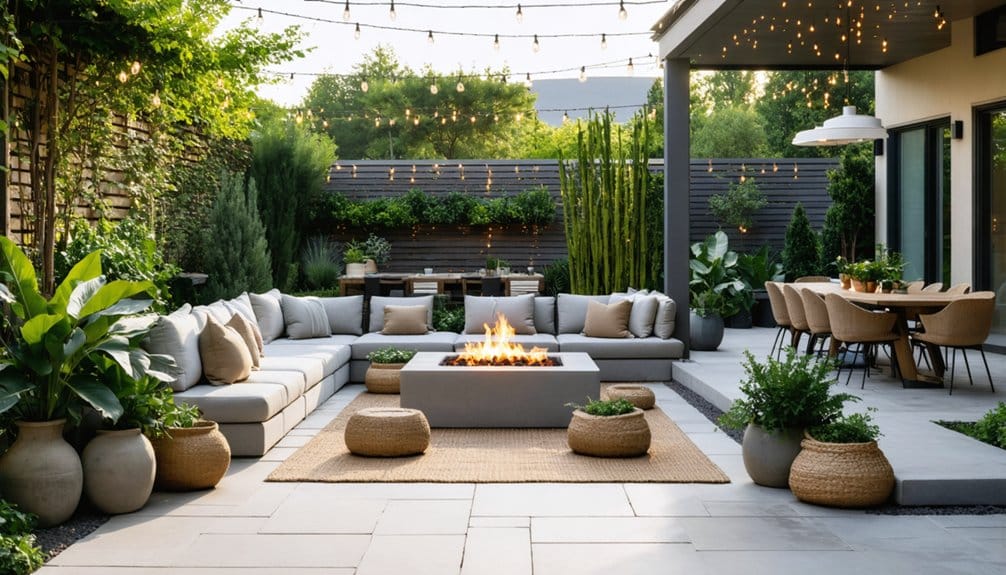
Although designing a patio layout requires careful consideration, prioritizing functionality and flow ensures the space remains both practical and inviting.
To furnish patio areas effectively, it is essential to arrange furniture in a way that encourages easy movement and defines distinct zones, such as dining, lounging, and cooking. Maintaining clear pathways prevents congestion and enhances accessibility.
Strategic placement of seating around focal points like fire pits or garden views promotes social interaction while maximizing comfort. Additionally, incorporating multi-functional pieces can optimize limited space without sacrificing style.
Thoughtful layout planning balances aesthetics with usability, transforming the patio into a cohesive outdoor living area that meets various needs.
Ultimately, an optimal arrangement fosters a seamless flow that enhances enjoyment and usability throughout the seasons.
Frequently Asked Questions
How Do I Maintain My Patio Furniture Throughout Different Seasons?
Maintaining patio furniture through seasons involves regular cleaning, applying protective coatings, and storing cushions indoors. Covering furniture during harsh weather and inspecting for damage ensures longevity and preserves appearance regardless of seasonal changes.
What Are the Best Pest Control Methods for Outdoor Patios?
Effective pest control on outdoor patios involves using natural repellents like citronella, maintaining cleanliness to avoid attracting insects, installing physical barriers such as screens or nets, and applying appropriate insecticides when necessary to ensure a pest-free environment.
Can I Use Outdoor Rugs on My Patio and How Do I Clean Them?
Outdoor rugs are suitable for patios, providing comfort and style. To clean, they should be shaken out, vacuumed, or hosed down. Stains require mild soap and water; ensure rugs dry completely to prevent mold.
What Are the Most Energy-Efficient Outdoor Lighting Options?
The most energy-efficient outdoor lighting options include LED bulbs, solar-powered lights, and motion sensor fixtures. These choices reduce electricity consumption, lower costs, and are environmentally friendly, providing effective illumination with minimal energy use.
How Can I Create a Patio Space That Is Child and Pet Friendly?
Creating a child and pet-friendly patio involves using non-toxic plants, rounded furniture edges, secure fencing, and soft, durable flooring. Including shaded areas and safe storage for tools ensures a comfortable, hazard-free environment for all family members.
Conclusion
Mastering outdoor living requires thoughtful selection and arrangement of patio furniture, prioritizing comfort and style with weather-resistant materials. Enhancing the space through layered lighting and carefully chosen accessories adds ambiance, while incorporating plants introduces warmth and visual appeal. A well-planned layout ensures easy movement and distinct zones, balancing functionality with aesthetics. Together, these elements transform any patio into an inviting retreat ideal for relaxation and social gatherings.