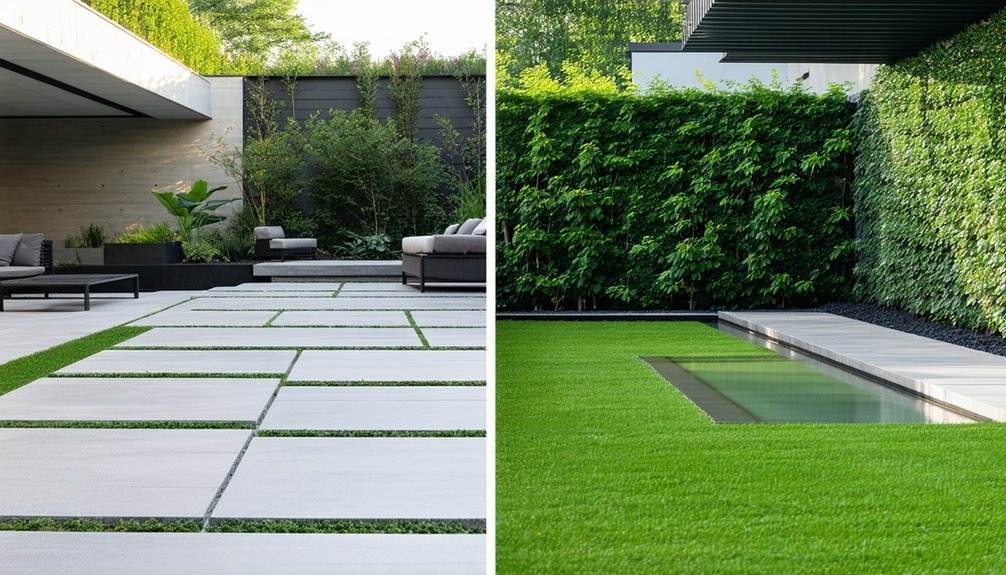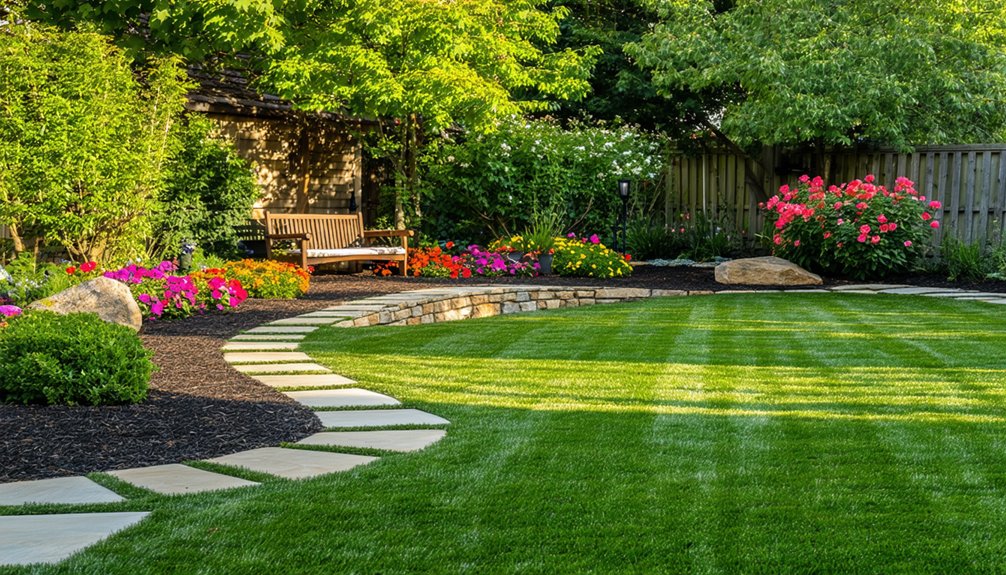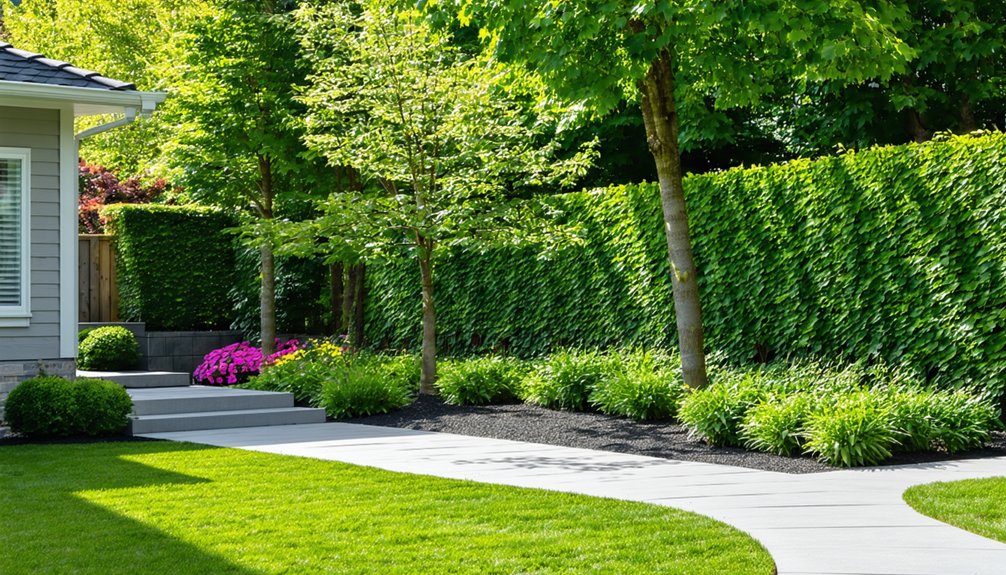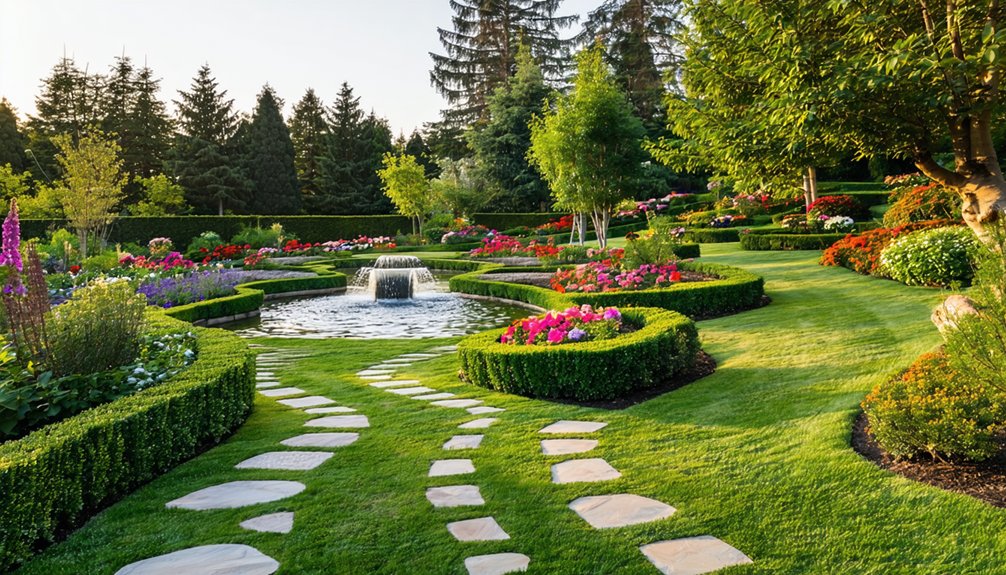
In landscape design, scale and proportion serve as fundamental principles that influence how spaces are perceived and experienced. Proper application ensures elements relate well to one another and to human dimensions, fostering a sense of balance and cohesion. Yet, achieving this harmony requires more than simple measurement; it involves nuanced judgment and an understanding of context. Exploring these concepts reveals strategies that can transform ordinary landscapes into thoughtfully composed environments.
Key Takeaways
- Scale ensures elements fit human dimensions and surroundings, preventing overpowering or underwhelming features in outdoor spaces.
- Proportion harmonizes relationships between plants, structures, and furniture to create balanced, accessible, and comfortable environments.
- Layering varied heights and repeating forms maintain visual interest and proportional unity throughout the landscape design.
- Strategic focal points anchor the design, guiding the viewer’s eye and establishing visual order and spatial hierarchy.
- Avoid common mistakes by researching mature plant sizes and maintaining spatial balance to ensure cohesive and functional landscapes.
Understanding Scale in Landscape Design

Scale in landscape design refers to the relative size of elements within a space and their relationship to human dimensions and the surrounding environment. It serves as a foundational landscape design principle, ensuring that features such as plants, structures, and pathways neither overwhelm nor underwhelm the viewer.
The careful consideration of scale in landscape design allows for a cohesive and functional outdoor space that feels balanced and comfortable. While scale focuses on size relationships, it works closely with proportion in landscape design to establish visual order.
Together, these principles guide designers in creating environments where each element complements the others, enhancing spatial experience without disrupting harmony. Mastery of scale in landscape design is essential for achieving aesthetically pleasing and practical outdoor compositions.
The Role of Proportion in Creating Visual Harmony

Proportion plays a crucial role in achieving visual balance within landscape design by ensuring elements relate harmoniously to one another.
Considering human scale helps create spaces that feel comfortable and accessible.
Proper ratios between plants and structures further enhance the overall sense of unity and coherence.
Visual Balance Essentials
How does one achieve a sense of visual harmony in landscape design? Visual balance is essential in designing gardens and is achieved by carefully applying landscape design techniques that consider proportion and scale.
Key elements include:
- Symmetry and Asymmetry – Symmetrical layouts provide formal balance, while asymmetrical arrangements create dynamic equilibrium by distributing visual weight unevenly yet harmoniously.
- Proportional Grouping – Grouping plants and features in related sizes helps maintain unity and prevents overwhelming the space.
- Focal Points – Strategically placing focal elements anchors the design, guiding the eye and balancing surrounding components.
Human Scale Considerations
Visual harmony in landscape design often hinges on the relationship between the environment and its human users.
Human scale considerations ensure spaces feel comfortable and accessible, aligning proportions with the average human body and movement patterns. Elements such as pathways, seating, and structures must reflect dimensions that accommodate human interaction without overwhelming or underwhelming the senses. Proper scaling fosters intuitive navigation and invites engagement, promoting a sense of belonging within the space.
Designers balance height, width, and spatial intervals to maintain visual coherence, avoiding extremes that disrupt harmony. By integrating human scale thoughtfully, landscapes become both functional and aesthetically pleasing, reinforcing a seamless connection between people and their surroundings.
This approach ultimately enhances user experience while preserving proportional integrity within the design.
Plant and Structure Ratios
When plants and structures are thoughtfully balanced, they establish a cohesive rhythm that guides the eye and defines the character of a landscape. Achieving the right ratios between vegetation and built elements is essential for visual harmony.
Proportion ensures that neither overwhelms the other, fostering a seamless integration. Key considerations include:
- Height Relationship: Taller plants complement vertical structures, while shorter shrubs align with low walls or benches.
- Mass and Volume: Dense plantings should balance solid structures without competing for attention.
- Spacing and Scale: Adequate spacing maintains clarity, preventing overcrowding and allowing each element to contribute meaningfully.
Techniques for Balancing Scale and Proportion
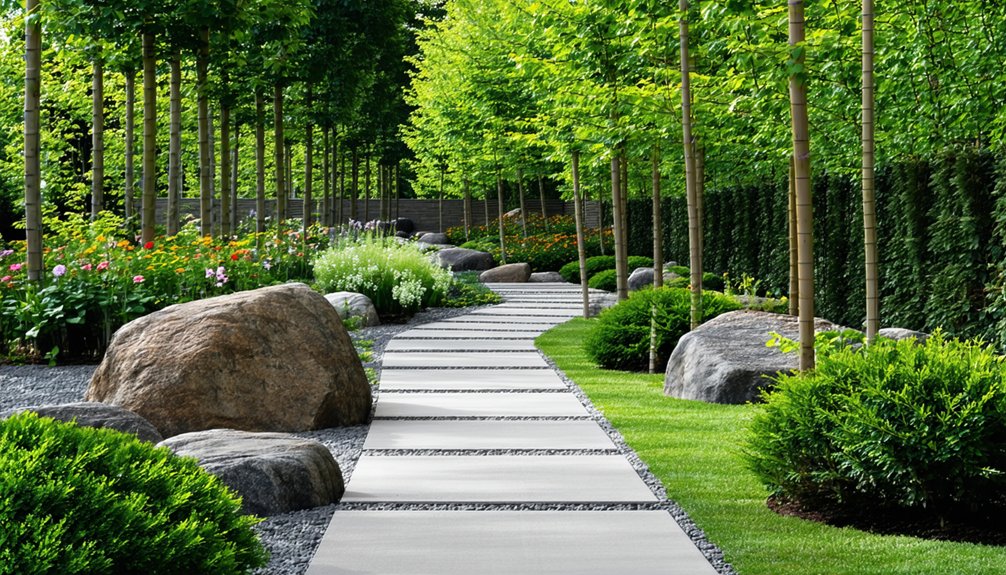
Achieving harmony in landscape design relies heavily on techniques that balance scale and proportion effectively. One fundamental approach involves layering elements of varying heights and sizes to create visual interest without overwhelming the space.
Repetition of shapes and forms can unify disparate components, maintaining proportional relationships. Utilizing focal points helps anchor the design, providing a reference for scale. Incorporating transitional elements, such as mid-sized plants or structures, eases the shift between large and small features.
Attention to context—such as the size of the surrounding architecture and natural landscape—ensures that design elements complement rather than compete. Careful measurement and comparison during planning prevent disproportionate compositions, enhancing overall aesthetic balance and functionality within the landscape setting.
Using Scale to Enhance Outdoor Spaces
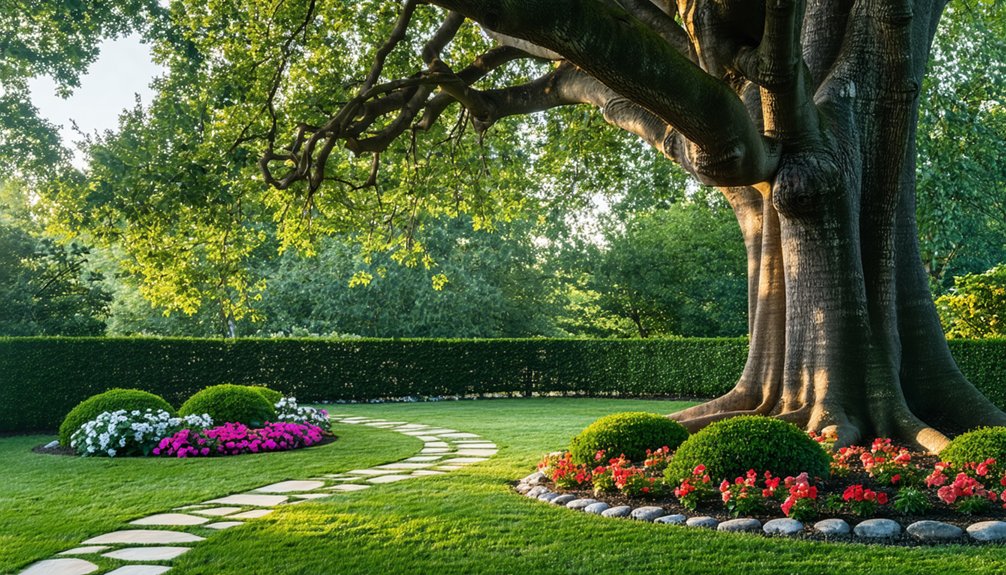
Numerous design strategies employ scale to transform outdoor spaces into cohesive and inviting environments. Proper use of scale establishes visual harmony and guides movement through the landscape.
Key approaches include:
- Focal Points: Incorporating large, striking elements like sculptures or specimen trees anchors the space and draws attention.
- Layering: Varying plant heights in successive layers creates depth and prevents monotony, enhancing spatial perception.
- Furniture and Structures: Selecting appropriately sized furniture and structures ensures comfort and balance, avoiding overwhelming or underwhelming the area.
These techniques collectively enhance usability and aesthetic appeal by respecting the relationship between objects and the overall environment, making outdoor spaces feel thoughtfully composed and proportionate.
Common Mistakes in Scale and Proportion and How to Avoid Them
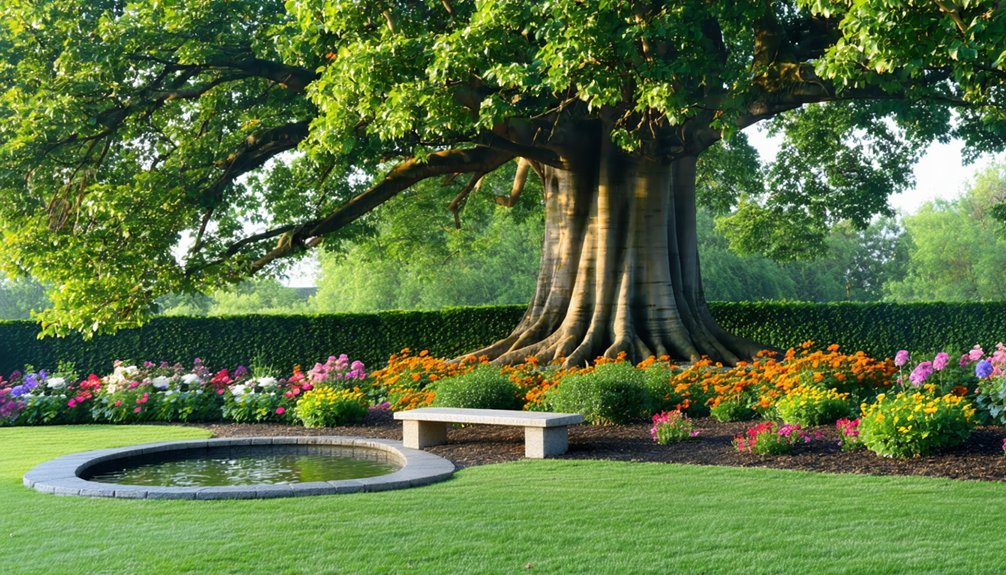
Common errors in landscape design often include overlooking the mature size of plants, which can disrupt intended proportions.
Additionally, neglecting to establish clear focal points may result in a disjointed visual flow.
Misjudging spatial balance between elements can further compromise the harmony of the overall design.
Overlooking Plant Size
One frequent error in landscape design involves neglecting the eventual size of plants, which can disrupt the harmony of scale and proportion in a space.
When designers fail to consider mature plant dimensions, overcrowding, imbalance, or underwhelming visuals often result.
To avoid such pitfalls, it is essential to:
- Research the mature height and spread of each plant species before planting.
- Plan spacing to accommodate growth without compromising pathways or structures.
- Regularly assess plant development and adjust pruning or replacement strategies accordingly.
Ignoring Focal Points
While understanding plant size is fundamental to maintaining balance, overlooking focal points can equally disrupt the intended scale and proportion of a landscape. Focal points serve as visual anchors, guiding the viewer’s eye and establishing hierarchy. Without them, landscapes may appear chaotic or flat, lacking depth and interest. Properly sized and placed focal elements create harmony and enhance spatial perception.
| Common Issue | Effect on Design | Solution |
|---|---|---|
| Absence of focal points | Visual confusion | Introduce distinctive features |
| Oversized focal points | Overpowering surroundings | Scale focal elements appropriately |
| Poor focal placement | Disjointed flow | Position focal points strategically |
| Multiple competing foci | Lack of hierarchy | Limit and prioritize focal points |
Misjudging Spatial Balance
Spatial balance is a critical component in landscape design that ensures elements are distributed harmoniously within a given area. Misjudging spatial balance often leads to cluttered or empty zones, disrupting the visual flow and functionality.
Common mistakes include:
- Overcrowding: Placing too many large features close together overwhelms the space and creates imbalance.
- Underutilization: Leaving vast empty areas causes the design to feel sparse and disconnected.
- Ignoring scale relationships: Failing to consider the size of plants, structures, and pathways relative to the overall space distorts perception and reduces cohesion.
Avoiding these errors requires careful measurement and thoughtful placement to maintain equilibrium, ensuring the landscape feels inviting and well-proportioned.
Case Studies: Successful Applications of Scale and Proportion in Landscapes
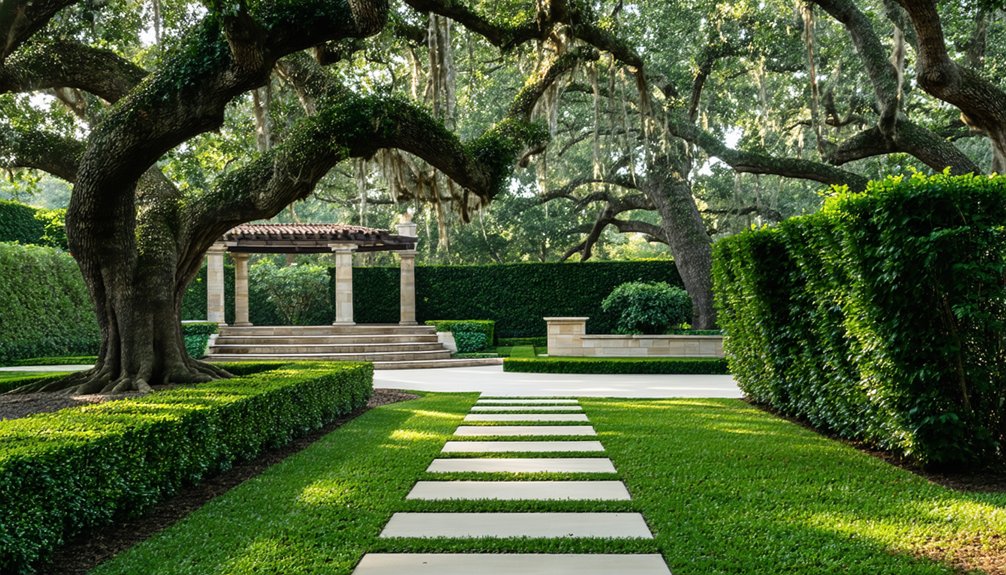
Examining real-world examples reveals how thoughtful manipulation of scale and proportion transforms landscape designs into harmonious and functional spaces.
In a renowned urban park, oversized trees paired with smaller understory plants create layered depth, enhancing both aesthetics and user experience.
Another case involves a residential garden where strategically placed sculptures balanced with low-growing shrubs prevent visual overcrowding, maintaining a sense of openness.
A corporate campus successfully uses scaled pathways and seating areas proportionate to foot traffic, ensuring comfort without excess space.
These instances demonstrate effective scale choices that respect human dimensions and natural elements, resulting in inviting environments.
Collectively, such case studies highlight the crucial role of scale and proportion in achieving balance, visual interest, and practical usability across diverse landscape contexts.
Conclusion
Mastering scale and proportion is fundamental to creating balanced and visually appealing landscapes. By carefully considering the relationships between elements and their surroundings, designers can craft spaces that feel both harmonious and functional. Proper application of these principles enhances aesthetic appeal while fostering user engagement and comfort. Avoiding common pitfalls ensures that outdoor environments complement their natural context, resulting in cohesive designs that stand the test of time and resonate with those who experience them.