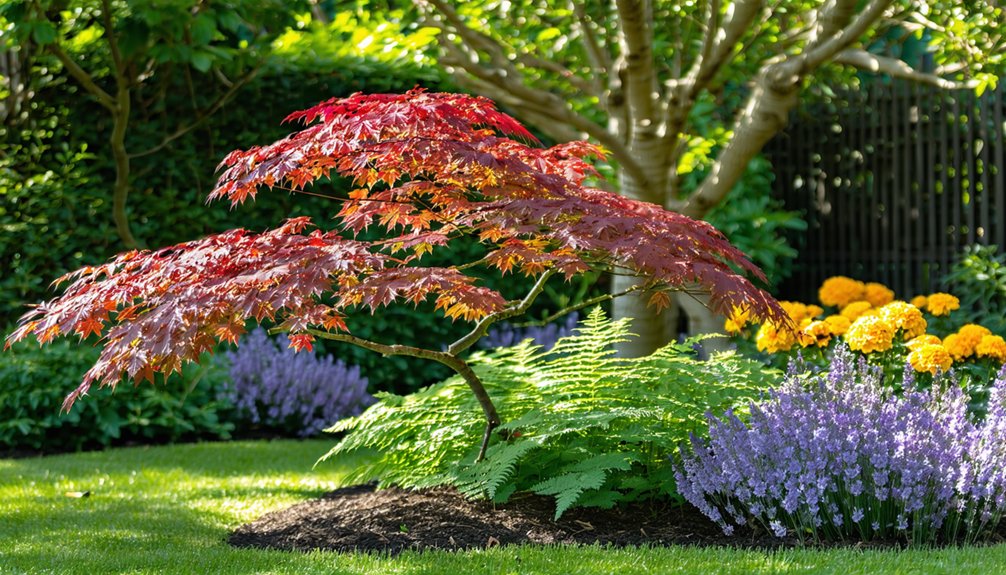

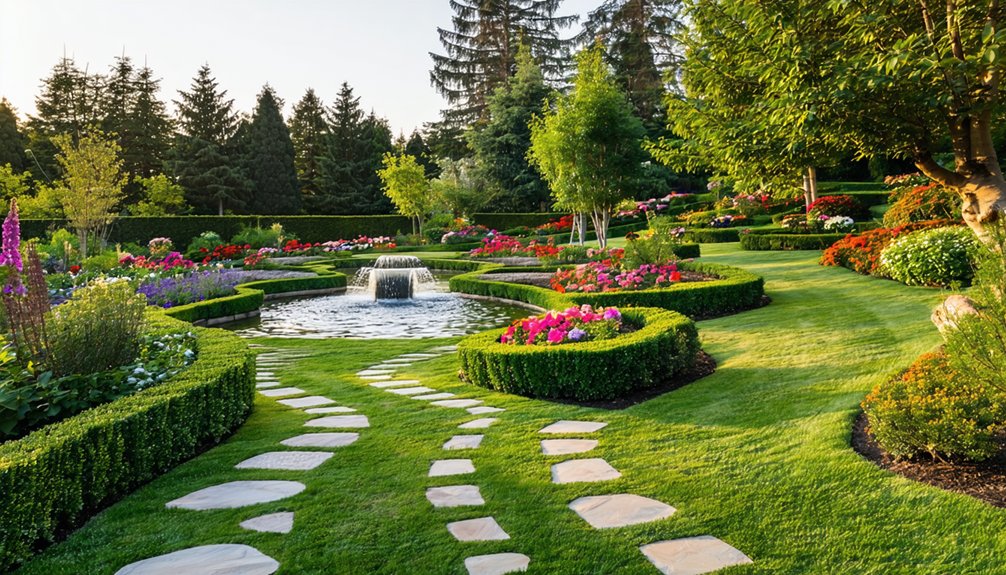
Landscape design demands a careful balance of aesthetics and practicality. Beginners often overlook fundamental principles that shape successful outdoor spaces. These core concepts guide the placement of elements, the flow of movement, and the overall harmony of the garden. Understanding these basics is crucial for creating environments that are both visually appealing and functional. The following discussion outlines ten key principles that form the foundation of effective landscape design.
Key Takeaways
- Balance visual weight using symmetrical, asymmetrical, or radial arrangements to create harmony and stability in your landscape design.
- Establish unity and harmony by consistently coordinating colors, materials, textures, and forms throughout the outdoor space.
- Use focal points like unique plants, sculptures, or water features to guide attention and add visual interest.
- Incorporate varied textures in both plantings and hardscaping to add depth and dynamic contrast without overwhelming the design.
- Plan scale and proportion carefully to ensure elements relate well to each other and to human scale for comfort and cohesion.
Understanding Balance in Landscape Design
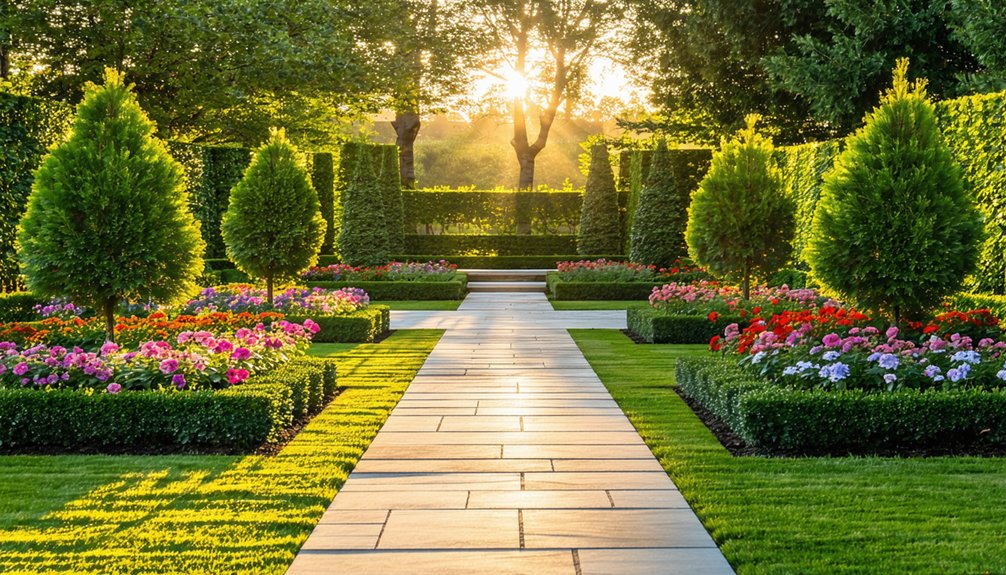
Although often overlooked, balance is a fundamental principle in landscape design that ensures visual stability and harmony.
In the context of landscape design basics, balance refers to the distribution of visual weight within a space, achieved through symmetrical, asymmetrical, or radial arrangements. This principle guides the placement of plants, structures, and other elements to create a cohesive and pleasing environment.
For beginners, understanding balance is crucial as it prevents a landscape from feeling chaotic or lopsided. Effective application of balance enhances the overall aesthetic and functionality of outdoor spaces.
Beginner landscaping tips often emphasize starting with balance to build a strong foundation, allowing other principles of landscape design to complement and support a unified composition.
Mastery of balance is essential for successful landscape design projects.
The Role of Unity and Harmony
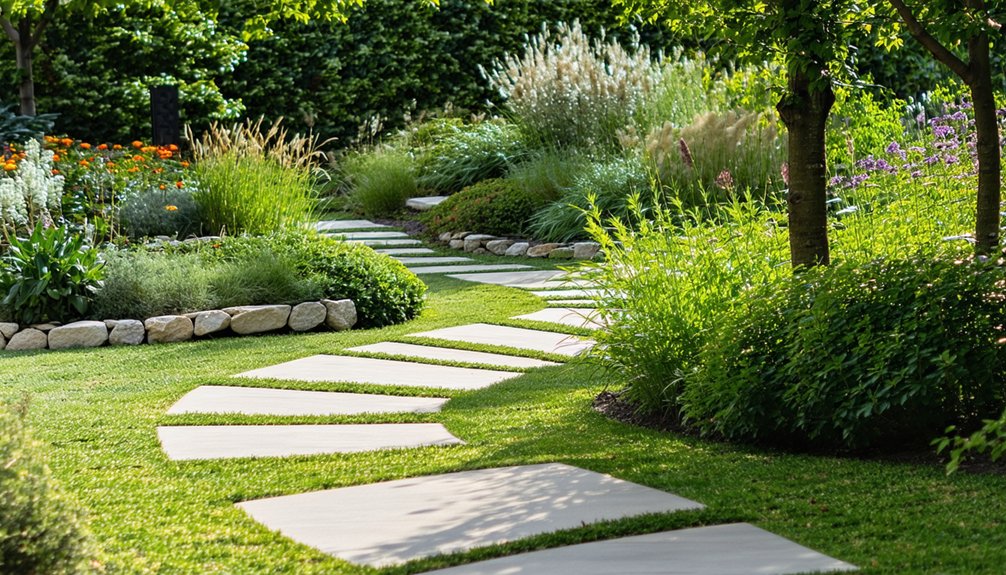
Unity and harmony in landscape design arise from the careful use of consistent elements that create a cohesive look.
Effective color coordination helps to tie different areas together, while balancing texture and form adds depth without disrupting flow.
These principles work together to produce a unified and pleasing outdoor space.
Consistent Design Elements
Consistency in design elements plays a crucial role in creating a cohesive and visually pleasing landscape. For those exploring landscape design for beginners, understanding essential landscape techniques involves maintaining uniformity in materials, shapes, and textures. This unity fosters harmony, making the outdoor space feel intentional and balanced rather than fragmented.
| Design Element | Consistency Tip |
|---|---|
| Materials | Use similar stone, wood, or metal types |
| Shapes | Repeat geometric or organic forms |
| Textures | Balance rough and smooth surfaces |
Applying consistent design elements ensures a seamless flow throughout the landscape, reinforcing unity and harmony. This approach simplifies decisions and enhances the overall aesthetic, key principles in effective landscape design for beginners.
Color Coordination Strategies
A variety of color coordination strategies contribute significantly to achieving unity and harmony in landscape design. Utilizing a consistent color palette helps tie different areas together, creating a cohesive visual experience.
Designers often select complementary or analogous colors to maintain balance and prevent discordance. Repeating specific hues throughout the landscape fosters a sense of rhythm and connection among diverse elements.
Additionally, considering the seasonal changes in plant colors ensures year-round harmony. Neutral tones can be employed to soften transitions and highlight focal points without overwhelming the overall scheme.
Balancing Texture and Form
Numerous landscape designs achieve visual appeal by carefully balancing texture and form, which play crucial roles in establishing unity and harmony.
Texture refers to the surface quality of plants and materials, ranging from smooth to coarse, while form denotes the shape and structure of landscape elements. When combined thoughtfully, these aspects create a cohesive environment that feels intentional and balanced.
For example, pairing fine-textured foliage with bold, sculptural forms can add interest without overwhelming the space. Maintaining consistency in texture and form across the design helps unify disparate elements, fostering a harmonious atmosphere.
Disruptions in this balance may lead to visual confusion or imbalance. Thus, mastering the interplay of texture and form is essential for beginners aiming to produce aesthetically pleasing and unified landscape designs.
Creating Focal Points in Your Garden
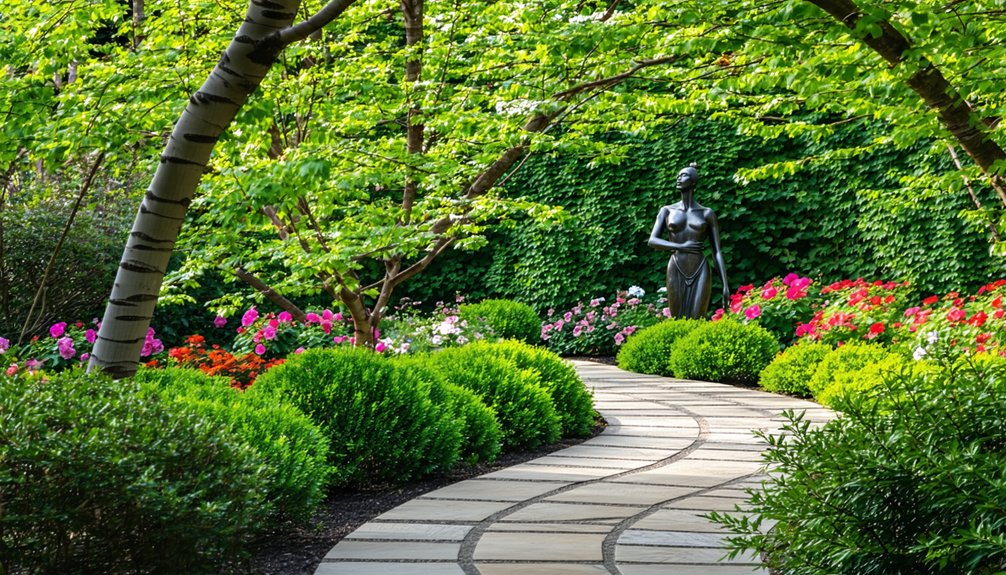
Where should the eye naturally rest when entering a garden? Creating focal points guides visual attention and adds interest. A well-placed focal point anchors the design and enhances the overall experience.
Effective focal points can be achieved through:
- Unique Plants: Use a striking tree or flowering shrub that contrasts with surrounding greenery.
- Garden Art: Sculptures, birdbaths, or decorative pots create visual intrigue.
- Water Features: Fountains or small ponds draw attention through movement and sound.
- Architectural Elements: Arbors, benches, or trellises provide structure and a resting place for the eye.
Using Scale and Proportion Effectively
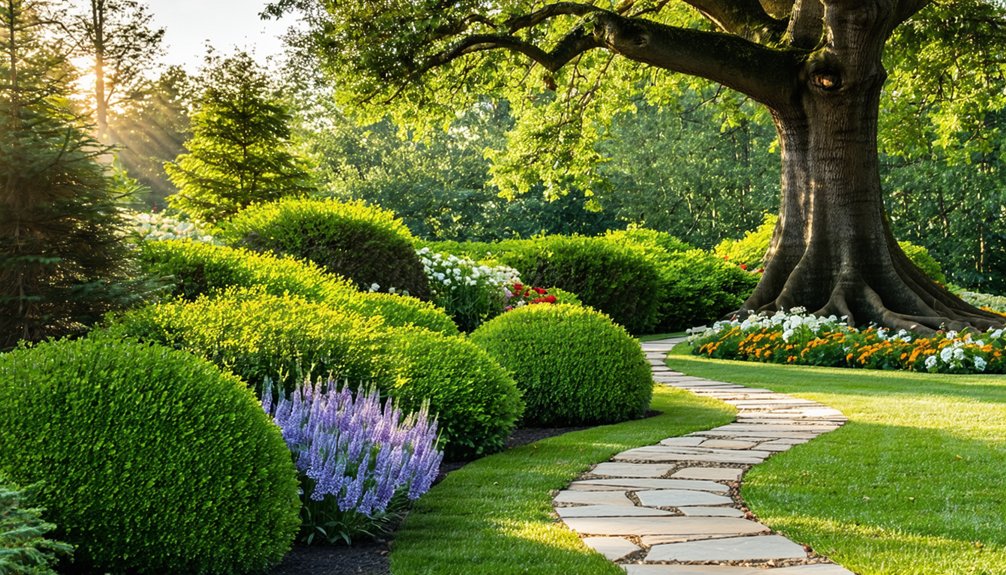
Scale and proportion serve as fundamental principles in landscape design, influencing how different elements relate to each other and to the surrounding space. Proper use of scale ensures that plants, structures, and features fit harmoniously within the garden’s overall size.
Proportion governs the size relationships between these components, creating visual balance. For example, a large tree paired with smaller shrubs maintains a pleasing proportion, avoiding overwhelming or underwhelming the area.
Designers must consider human scale to ensure comfort and accessibility, selecting elements that feel appropriate in size when experienced up close. Effective scale and proportion help establish a cohesive, inviting environment, preventing clutter or emptiness.
Mastery of these principles allows for a well-structured landscape that feels both balanced and purposeful.
Incorporating Texture for Visual Interest
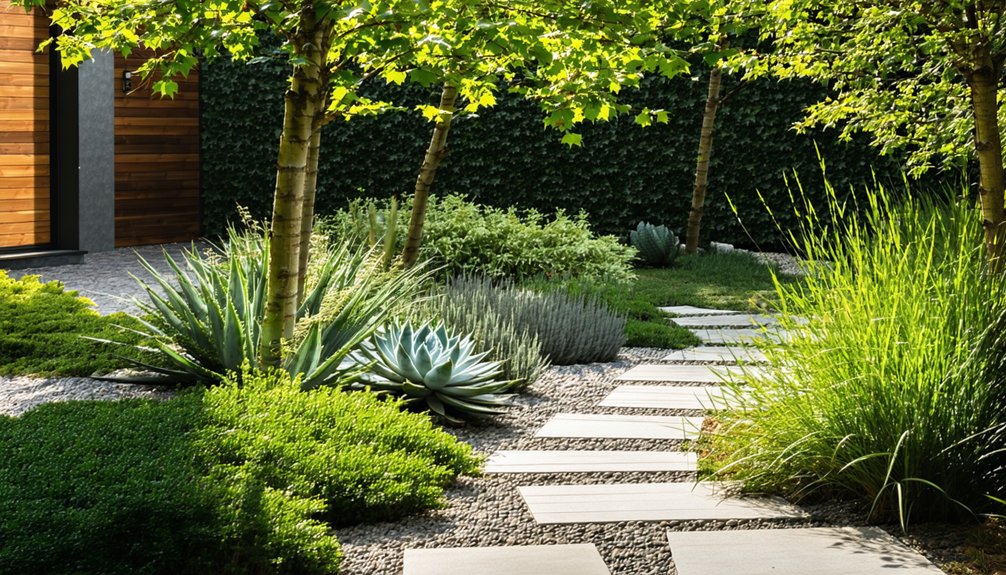
Texture plays a crucial role in enhancing the visual appeal of a landscape by adding depth and contrast.
Different plant textures, such as rough and smooth foliage, can be combined to create dynamic interest.
Additionally, incorporating textured materials in hardscaping elements further enriches the overall design.
Types of Plant Textures
Plant surfaces vary widely, creating distinct visual effects that enhance landscape design. Understanding types of plant textures helps designers select foliage that contributes to the desired aesthetic and mood.
Texture influences perception of scale and depth within a garden.
Common plant texture categories include:
- Fine Texture – Small, delicate leaves or needles that create a soft, intricate appearance.
- Medium Texture – Leaves or flowers of moderate size, offering balance and versatility.
- Coarse Texture – Large, bold leaves or flowers that command attention and provide strong visual weight.
- Glossy Texture – Shiny, reflective surfaces that add brightness and contrast to the composition.
Combining Rough and Smooth
Visual interest in landscape design often arises from the interplay between contrasting surface qualities. Combining rough and smooth textures creates dynamic visual appeal and depth.
Rough textures, such as coarse leaves or rugged bark, provide a tactile, natural feel that contrasts effectively with smooth elements like glossy foliage or soft, fine grasses. This contrast prevents monotony and guides the viewer’s eye through the landscape.
Thoughtful pairing enhances focal points and adds dimension without overwhelming the design. It also balances the composition, ensuring no single texture dominates.
Successful integration requires attention to scale and proportion, so rough textures do not overpower smooth ones. Incorporating varied textures in planting schemes encourages a harmonious yet stimulating environment, enriching the overall sensory experience in landscape settings.
Texture in Hardscaping
An essential aspect of hardscaping design lies in the careful selection and combination of surface finishes to enhance spatial interest.
Texture plays a vital role in defining the character and feel of outdoor spaces. Integrating varied textures can create depth and contrast, making the environment more engaging.
Key considerations for effective texture use in hardscaping include:
- Mixing materials such as rough stone with polished concrete to balance tactile qualities.
- Utilizing patterned pavers or stamped concrete to introduce subtle visual complexity.
- Combining natural textures like bark or gravel with manufactured surfaces for organic appeal.
- Ensuring texture variety complements plantings and overall landscape style for cohesion.
Thoughtful texture incorporation elevates hardscaping, enriching both functionality and aesthetic appeal.
The Importance of Color in Landscape Design
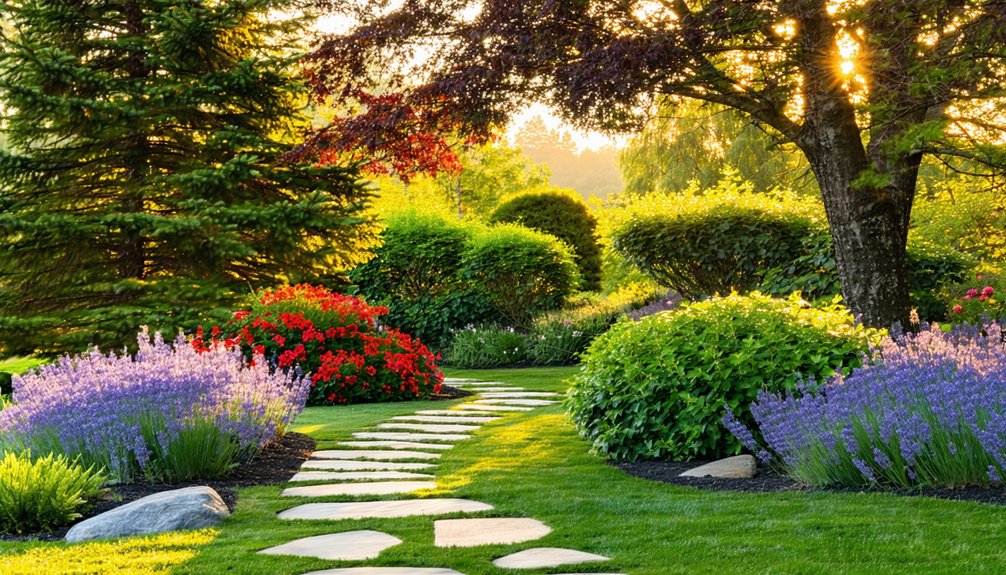
Color plays a crucial role in shaping the atmosphere and emotional impact of a landscape design. It guides the viewer’s eye, creates focal points, and establishes mood. Warm colors like reds and oranges evoke energy and excitement, while cool colors such as blues and greens promote calm and relaxation.
The strategic use of complementary colors enhances contrast and visual interest, preventing monotony. Additionally, color can influence perceived space; lighter hues make areas feel larger, whereas darker tones provide intimacy.
Seasonal changes in plant color add dynamic variety throughout the year, maintaining engagement. Thoughtful color selection integrates the landscape with its surroundings, reinforcing harmony.
Ultimately, understanding and applying color principles elevates the overall aesthetic quality of a landscape design.
Designing for Functionality and Flow
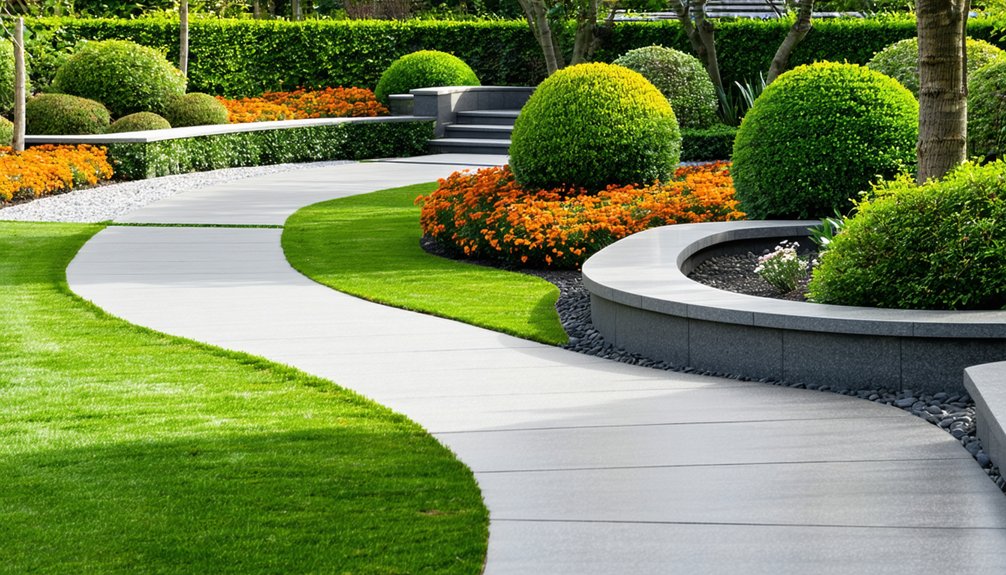
Beyond aesthetic considerations, landscape design must prioritize how spaces function and connect. Effective design ensures that each area serves a purpose while facilitating smooth movement between zones. Clear pathways and logical layouts enhance usability and comfort.
Key aspects to consider include:
- Pathway Planning – Design routes that naturally guide movement without obstruction.
- Zoning Spaces – Allocate areas for specific activities, such as relaxation, dining, or gardening.
- Accessibility – Ensure all parts of the landscape are easily reachable for all users.
- Transition Areas – Use buffers like hedges or low walls to create seamless flow between different zones.
Focusing on these elements enhances both the practicality and enjoyment of outdoor spaces.
Utilizing Repetition to Create Rhythm
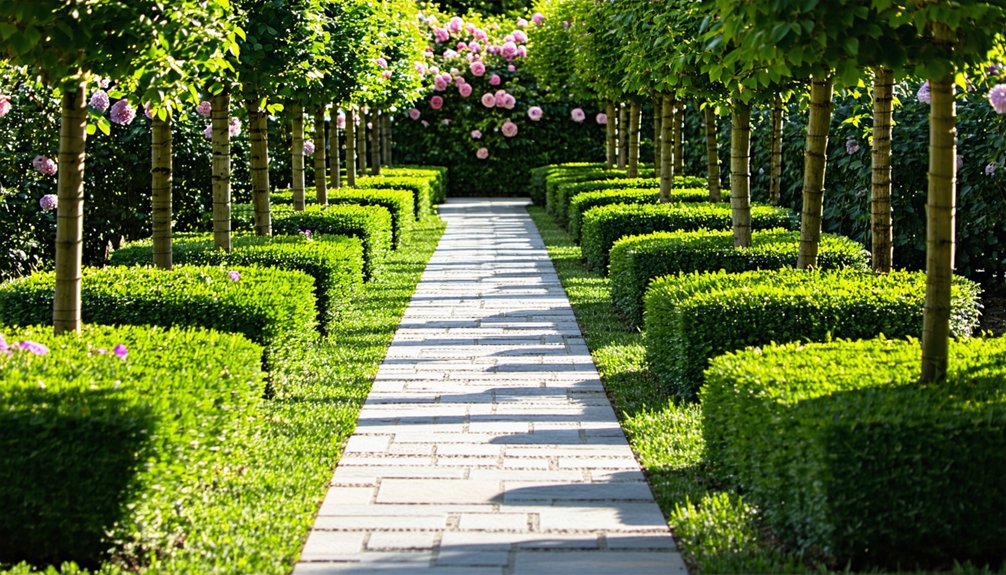
When elements are repeated thoughtfully throughout a landscape, a sense of rhythm naturally emerges, guiding the eye and unifying the design. Repetition can involve plants, colors, shapes, or textures, strategically placed to establish visual continuity. This principle helps create a cohesive experience, making the space feel organized rather than chaotic.
For example, repeating a particular flower or shrub at intervals can lead the observer along a path or highlight specific areas. It also reinforces the overall theme and strengthens the garden’s identity.
However, balance is crucial; excessive repetition may result in monotony, while too little can cause disjointedness. Skillful use of this principle harmonizes diverse elements, enhancing the landscape’s flow and aesthetic appeal without overwhelming the senses.
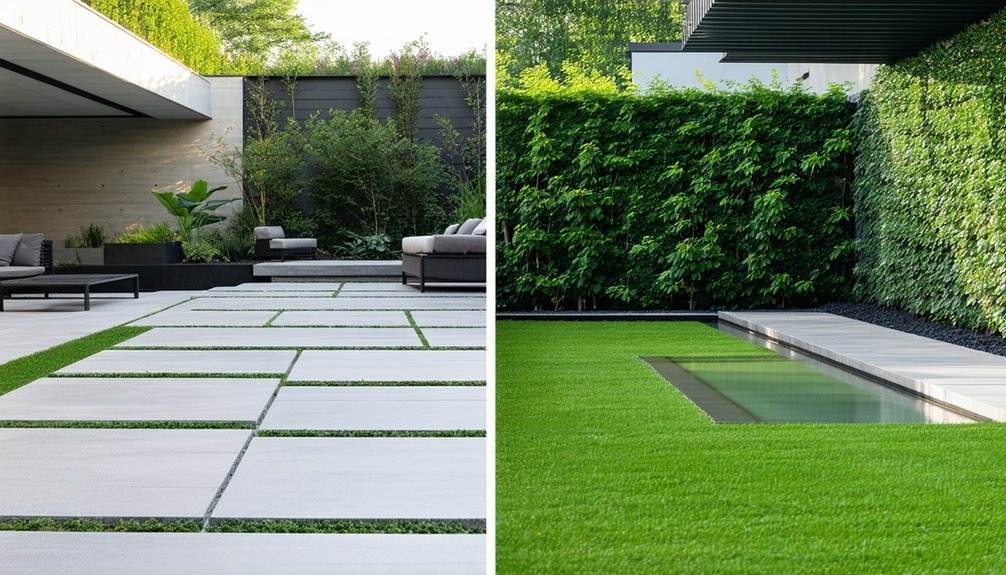
Emphasizing Simplicity and Minimalism
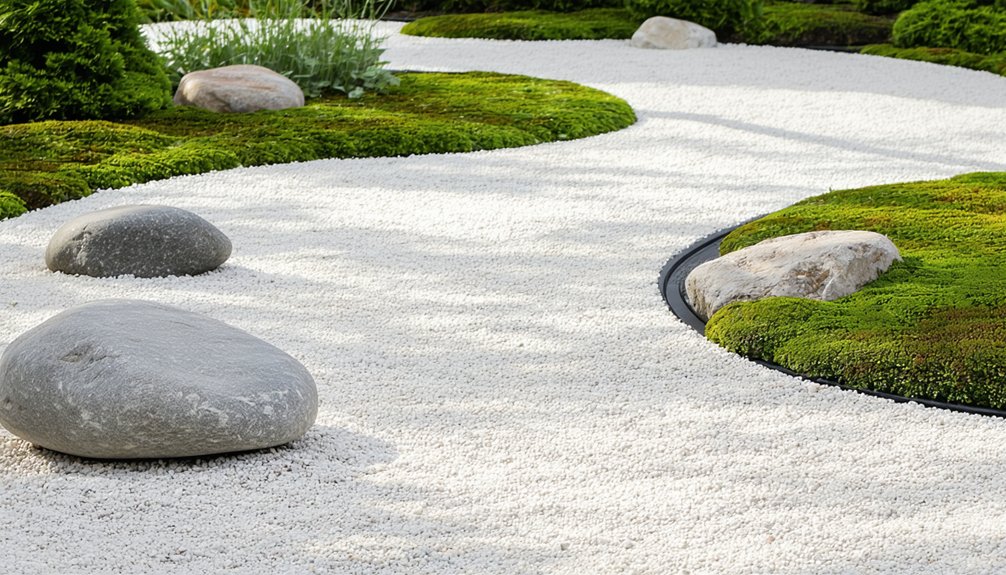
Repetition can establish rhythm and unity, but overuse risks visual clutter, making simplicity a valuable counterbalance in landscape design.
Emphasizing simplicity and minimalism helps create clean, calm spaces that feel organized and inviting. By limiting the number of elements and focusing on essential features, the design avoids chaos and enhances visual impact. Minimalist landscapes prioritize quality over quantity, using space strategically.
Key aspects of simplicity and minimalism in landscape design include:
- Selecting a restrained plant palette to reduce complexity.
- Using clean lines and geometric shapes for structure.
- Limiting ornamentation and unnecessary decorative elements.
- Incorporating open spaces to provide breathing room and focus.
This approach fosters harmony and clarity, making the landscape accessible and aesthetically pleasing.
Planning for Seasonal Changes and Maintenance
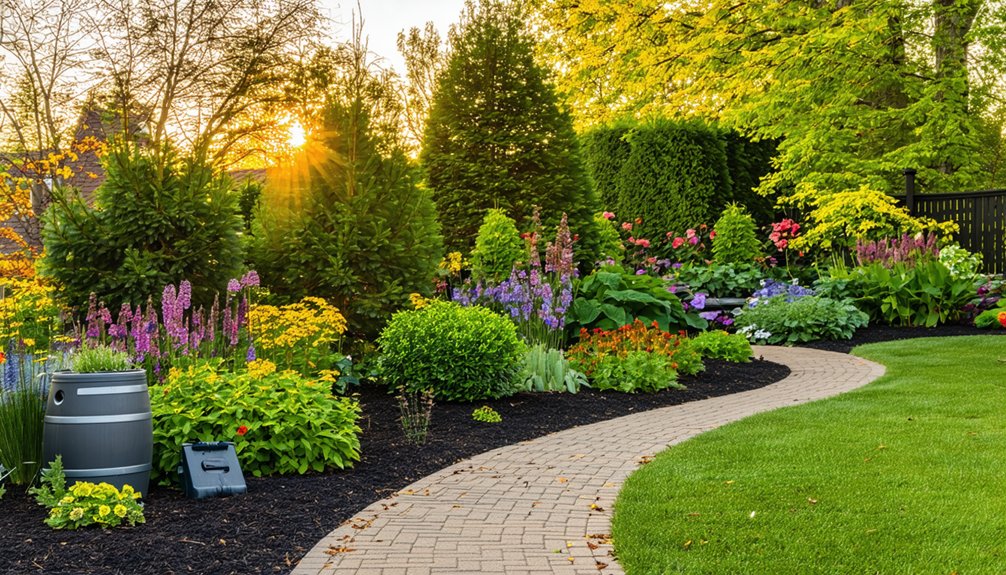
Although a landscape may appear vibrant in one season, effective design accounts for changes throughout the year and the ongoing maintenance required to sustain its beauty.
Successful planners select plants with complementary seasonal interest, ensuring color, texture, and form evolve to maintain visual appeal. Incorporating evergreens, deciduous trees, and perennials creates dynamic shifts while providing structure during dormant months.
Additionally, considering maintenance needs, such as pruning, watering, and pest control, helps prevent overgrowth and plant stress. Designing with accessibility in mind facilitates routine care, reducing long-term labor and costs.
Anticipating seasonal challenges, including frost or drought, allows for resilient plant choices and irrigation strategies.
Conclusion
Mastering the ten essential principles of landscape design equips beginners with the foundation needed to create harmonious and functional outdoor spaces. By understanding balance, unity, focal points, scale, texture, flow, repetition, and simplicity, novice designers can enhance both aesthetics and user experience. Emphasizing these fundamentals encourages thoughtful planning and creativity, ensuring each element complements the whole. Ultimately, these principles guide beginners toward successful, enduring landscape designs that adapt gracefully through seasons.