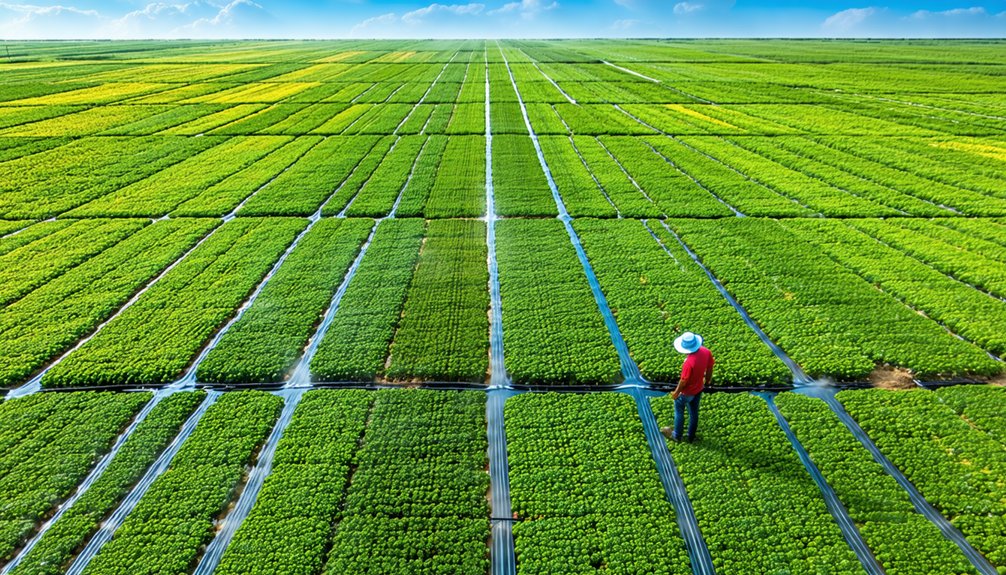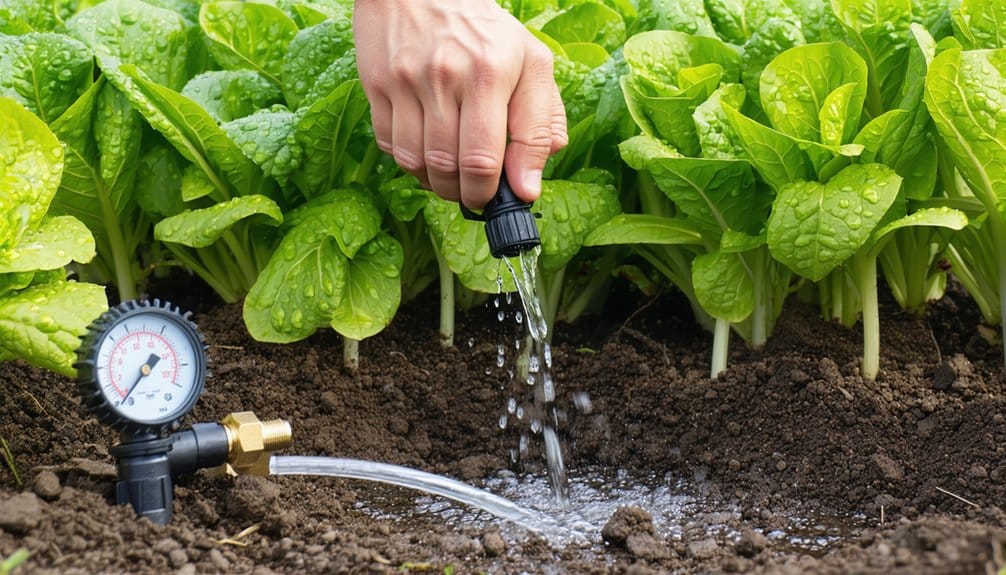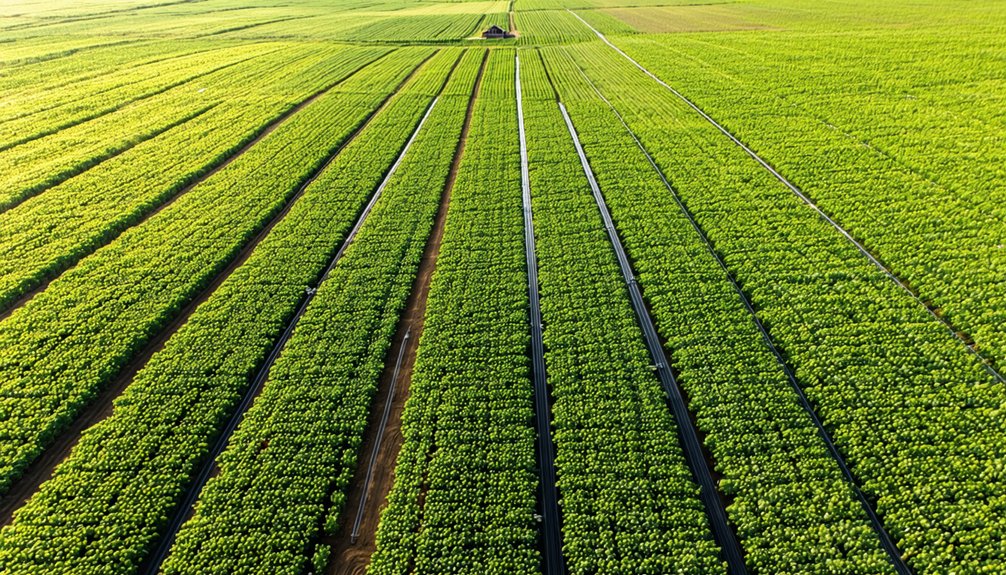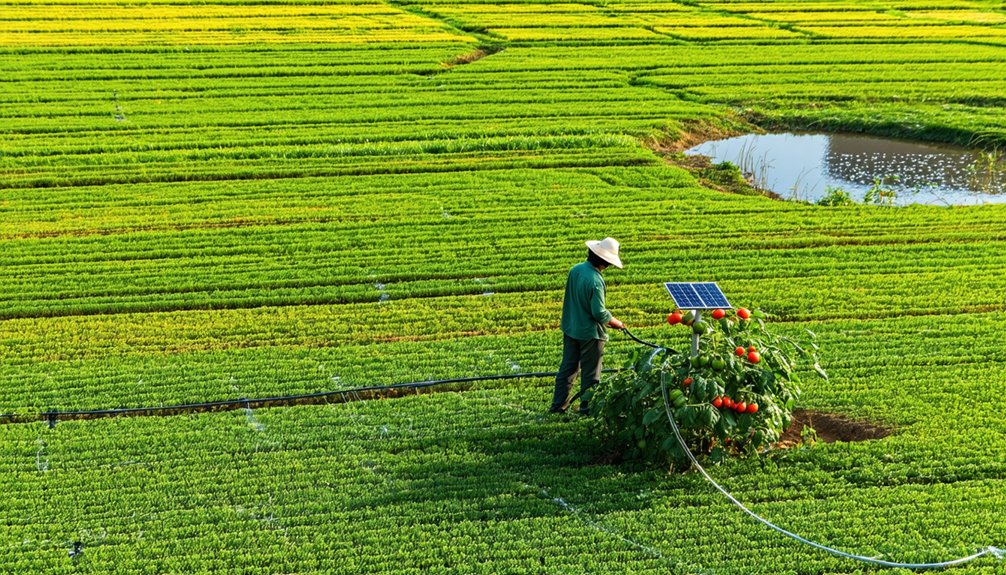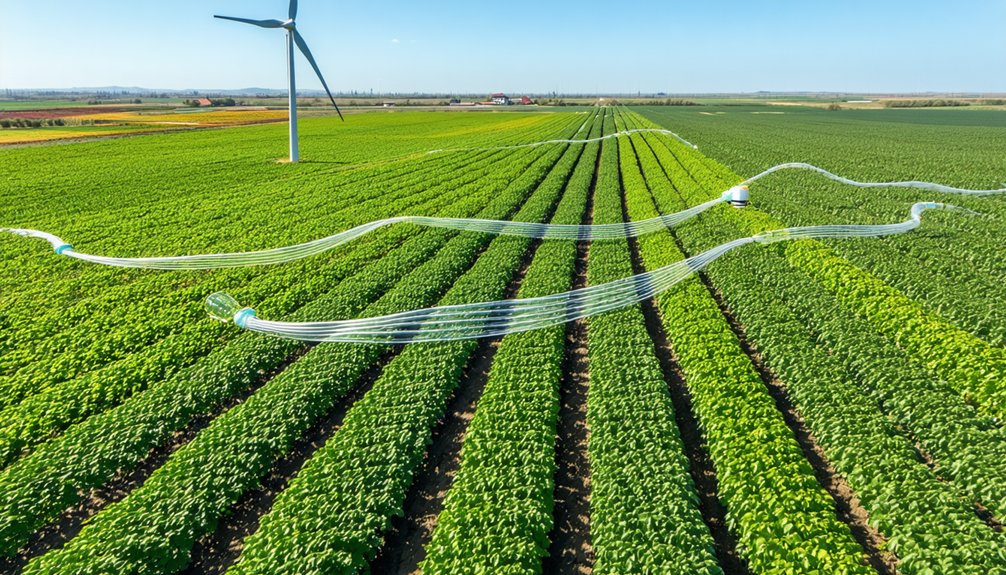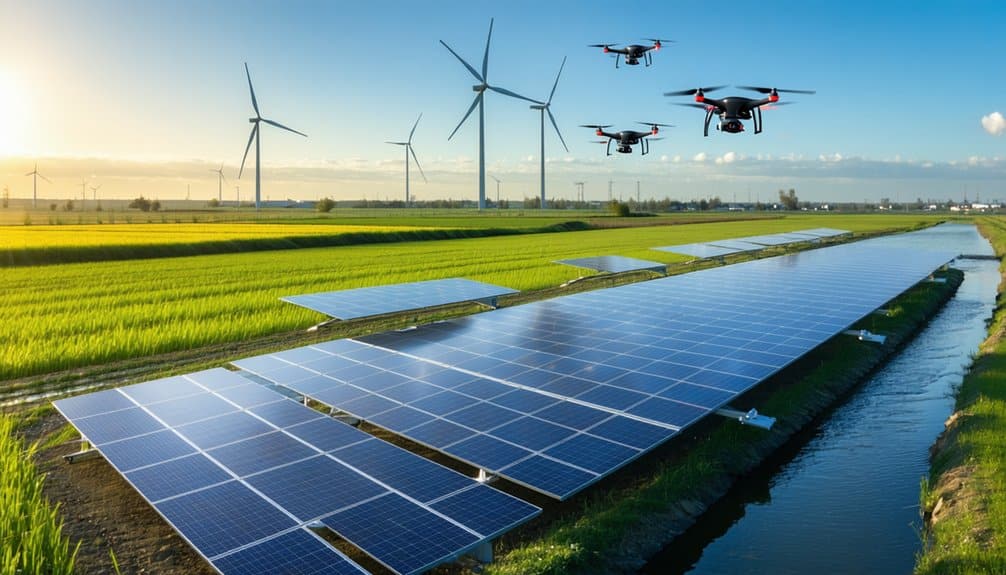

When it comes to maximizing crop yield, commercial drip irrigation systems can be a game changer. By delivering precise amounts of water directly to plant roots, you can enhance water efficiency and promote healthier growth. But it’s not just about the water; there are strategic elements that play a crucial role in achieving optimal results. Let’s explore how you can implement these systems effectively to boost your farming productivity.
Understanding Commercial Drip Irrigation Systems
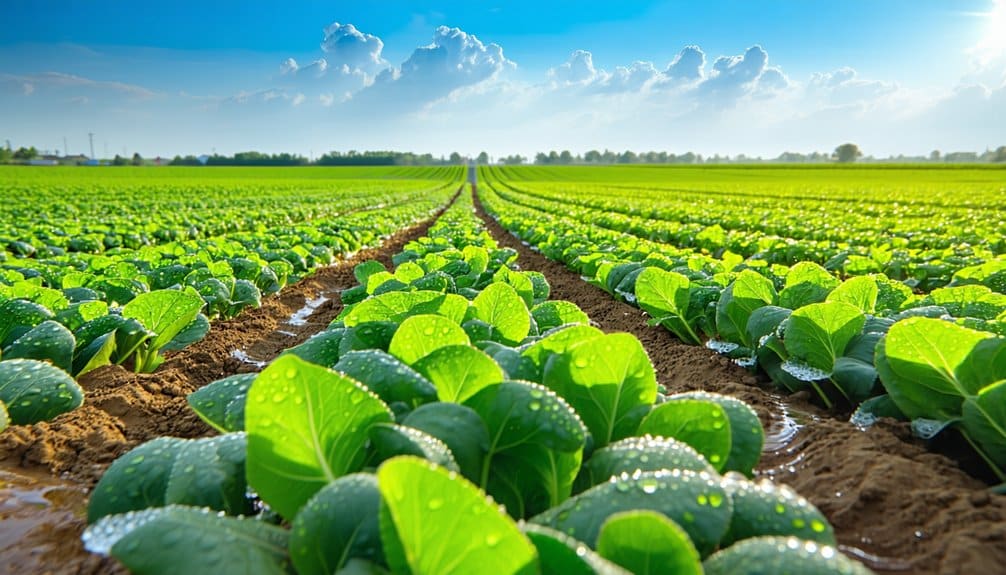
Commercial drip irrigation systems are a game changer for farmers looking to optimize water use and boost crop yields. These systems deliver water directly to the plant roots, ensuring efficient moisture distribution.
By using a commercial drip irrigation system, you can significantly reduce water waste, promoting effective water conservation. This targeted approach prevents over-saturation and minimizes evaporation, allowing your crops to thrive.
Furthermore, you can customize the system to fit your specific crop needs, enhancing overall efficiency. Whether you’re growing vegetables, fruits, or other crops, this irrigation system adapts to various soil types and climates.
As a result, you’re not just conserving water, but also ensuring a healthier growing environment for your plants. Investing in drip irrigation is essential for sustainable farming.
Benefits of Drip Irrigation for Crop Yield
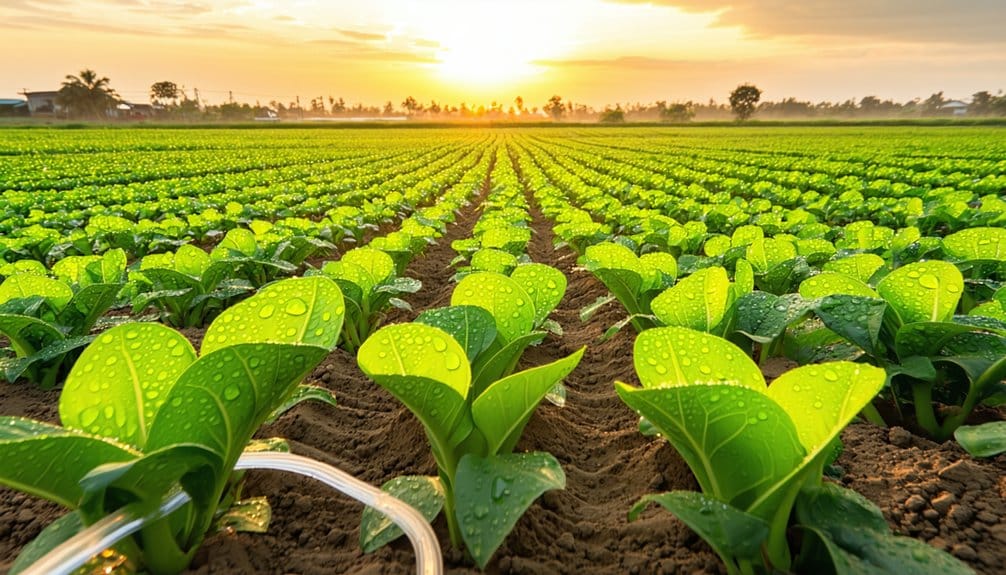
Drip irrigation can significantly boost your crop yield by improving water efficiency, ensuring that every drop counts.
You’ll also benefit from precise nutrient delivery, allowing your plants to absorb what they need without waste.
Plus, maintaining optimal soil moisture helps promote healthy growth and increases overall productivity.
Water Efficiency Improvement
When you choose drip irrigation, you’ll tap into a highly efficient way of delivering water directly to your crops’ roots. This method minimizes evaporation and runoff, ensuring that every drop counts towards enhancing your crop yield.
By using modern farming techniques, you’ll optimize water usage, reducing waste and lowering costs in the long run. Unlike traditional irrigation, which can lead to overwatering, drip systems provide a steady, controlled supply of water, allowing your plants to thrive.
This precision not only enhances growth but also promotes healthier crops that can withstand drought conditions. Ultimately, embracing drip irrigation means you’ll harness the full potential of your land, making it a smart investment for sustainable agriculture.
Nutrient Delivery Precision
By optimizing water delivery, you also enhance nutrient absorption in your crops.
Drip irrigation systems allow you to apply nutrients directly to the root zone, ensuring that your plants receive exactly what they need when they need it. This targeted approach minimizes waste and reduces the likelihood of nutrient runoff, which can be harmful to the environment.
With precise nutrient delivery, you’ll notice improved crop health and vigor, leading to higher yields. You can easily adjust the nutrient mix based on your crops’ specific requirements, making it easier to respond to any deficiencies.
Soil Moisture Regulation
Effective soil moisture regulation is crucial for achieving optimal crop yields, and drip irrigation excels in this area.
With drip systems, you can deliver water directly to the root zone, minimizing evaporation and runoff. This targeted approach ensures that your plants receive consistent moisture without being overwatered, which can lead to root rot or nutrient leaching.
You’ll also find that maintaining the right moisture levels helps improve soil structure and increases microbial activity, both essential for healthy plant growth.
As a result, you can maximize your crop yield while conserving water resources. By implementing drip irrigation, you’ll be investing in a sustainable solution that enhances both productivity and efficiency in your farming practices.
Key Components of Drip Irrigation Systems
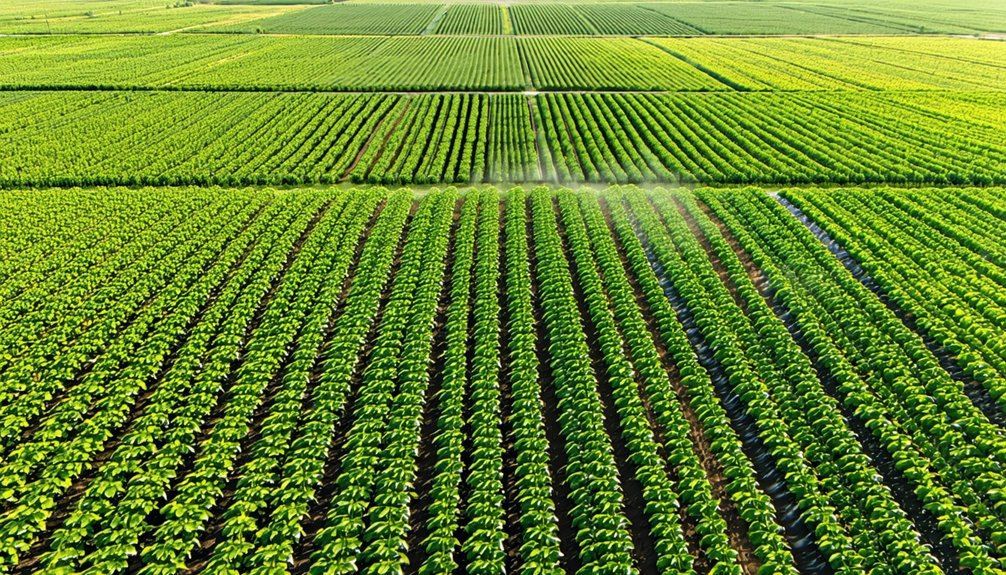
Drip irrigation systems rely on several key components that work together to deliver water efficiently to crops.
First, the water source, often a pump or reservoir, provides the necessary supply. Next, filters remove debris to prevent clogging in the system.
Pressure regulators ensure consistent water flow, while tubing delivers water directly to the plants’ root zones. Emitters, or drippers, are crucial as they control the rate at which water is released.
Additionally, connectors and fittings link the various parts, maintaining a seamless operation. Finally, a control system—whether manual or automated—helps you manage watering schedules and durations.
Designing an Efficient Drip Irrigation Layout
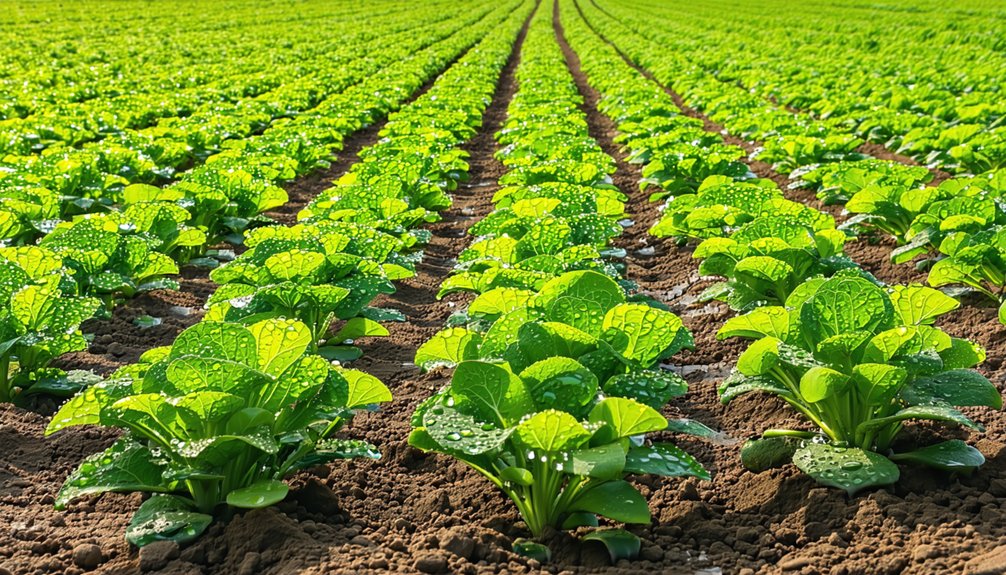
An efficient drip irrigation layout is key to maximizing water use and crop productivity.
Start by mapping your field to identify crop types and their water needs. Position your mainlines strategically to minimize pressure loss and ensure even water distribution. Use emitter spacing that matches the plant’s root zone, allowing for optimal moisture retention.
Make sure to arrange lateral lines parallel to the crop rows for easy access and maintenance. Consider incorporating pressure regulators to maintain consistent flow rates.
Lastly, be mindful of topography; adjust your layout to account for slopes and drainage. By carefully designing your irrigation system, you’ll enhance water efficiency and support healthier, more productive crops.
Water Management Strategies for Drip Irrigation
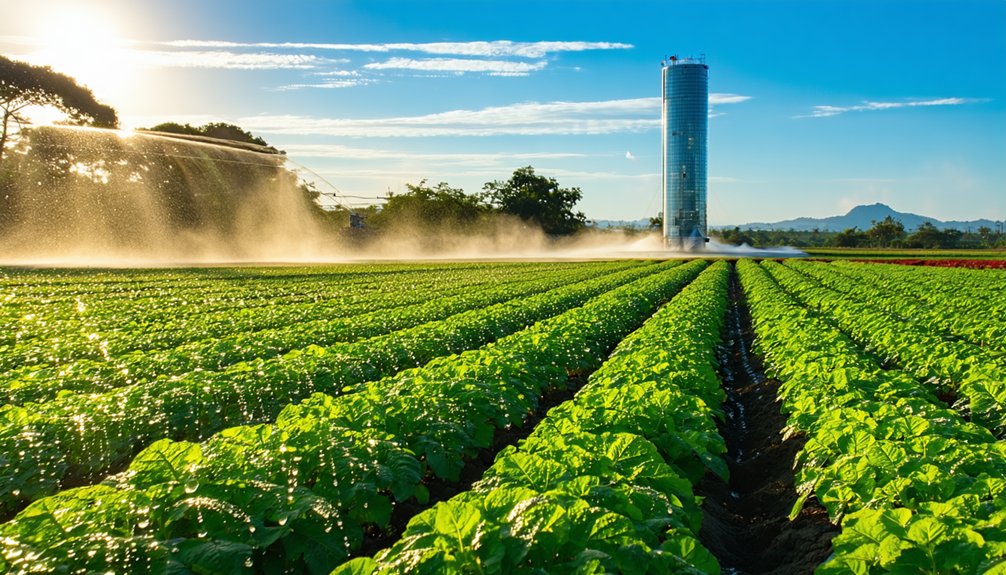
To maximize the effectiveness of your drip irrigation system, you’ll want to focus on efficient water distribution techniques.
Implementing soil moisture monitoring systems and adhering to best practices for irrigation scheduling can significantly enhance your crop yield.
Let’s explore these strategies to ensure your plants get the right amount of water at the right time.
Efficient Water Distribution Techniques
When implementing drip irrigation, effective water distribution techniques are crucial for maximizing efficiency and crop yield. Start by designing an appropriate layout, ensuring that your emitters are spaced to deliver water evenly across your field.
Use pressure regulators to maintain consistent pressure, preventing uneven flow and ensuring each plant receives adequate moisture. You can also incorporate flow rate adjustments based on crop needs and soil type—this ensures optimal water usage.
Regularly check for clogs and leaks in your system to maintain distribution efficiency. Finally, consider using automation to control irrigation schedules, allowing for precise water application based on real-time needs.
Soil Moisture Monitoring Systems
Integrating soil moisture monitoring systems into your drip irrigation strategy can significantly enhance water management and crop health.
These systems provide real-time data on soil moisture levels, allowing you to make informed decisions about irrigation timing and amounts. By continuously monitoring moisture, you can avoid overwatering, which can lead to root rot and nutrient leaching.
You’ll also save water and reduce costs, making your operation more sustainable. Additionally, precise moisture data helps you understand your crops’ needs better, promoting optimal growth and yield.
With accurate readings, you can tailor your irrigation practices to specific areas in your field, ensuring every plant gets the moisture it requires. This targeted approach ultimately leads to healthier crops and increased productivity.
Irrigation Scheduling Best Practices
Effective irrigation scheduling is crucial for maximizing the benefits of your drip irrigation system, especially since it directly influences crop health and yield.
Start by monitoring soil moisture regularly; this helps you determine when your crops need water. Use weather forecasts to adjust your schedule based on rainfall and temperature changes. Aim for early morning or late afternoon watering to minimize evaporation.
Consider crop-specific needs, as different plants have varying water requirements. Implementing a timer can automate your system and ensure consistency.
Finally, keep an eye on the health of your crops; if you notice signs of stress, adjust your irrigation schedule accordingly.
Common Challenges and Solutions in Drip Irrigation
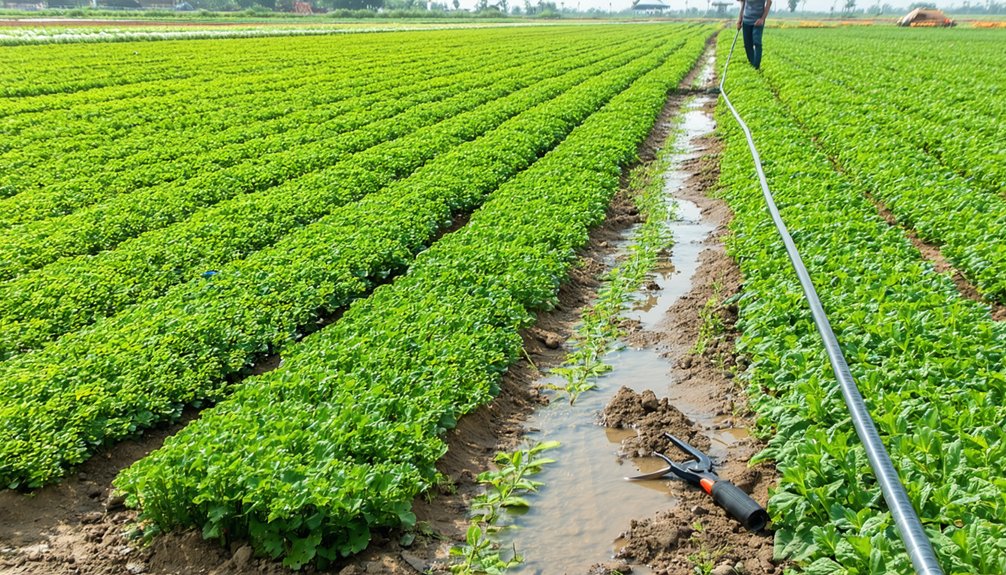
While drip irrigation offers numerous benefits for maximizing crop yield, it also presents several challenges that farmers need to address.
Clogging is a common issue, often caused by debris or mineral buildup. Regular maintenance and filtration systems can help prevent this problem.
Additionally, uneven water distribution can occur, especially in varying soil types. To tackle this, consider adjusting emitter sizes and spacing based on your specific field conditions.
Another challenge is the initial setup cost, which can be high. However, investing in a quality system often pays off through increased efficiency and crop yield.
Lastly, monitoring soil moisture levels is crucial; using sensors can optimize your irrigation schedule and ensure your crops receive the right amount of water.
Case Studies: Success Stories in Commercial Farming
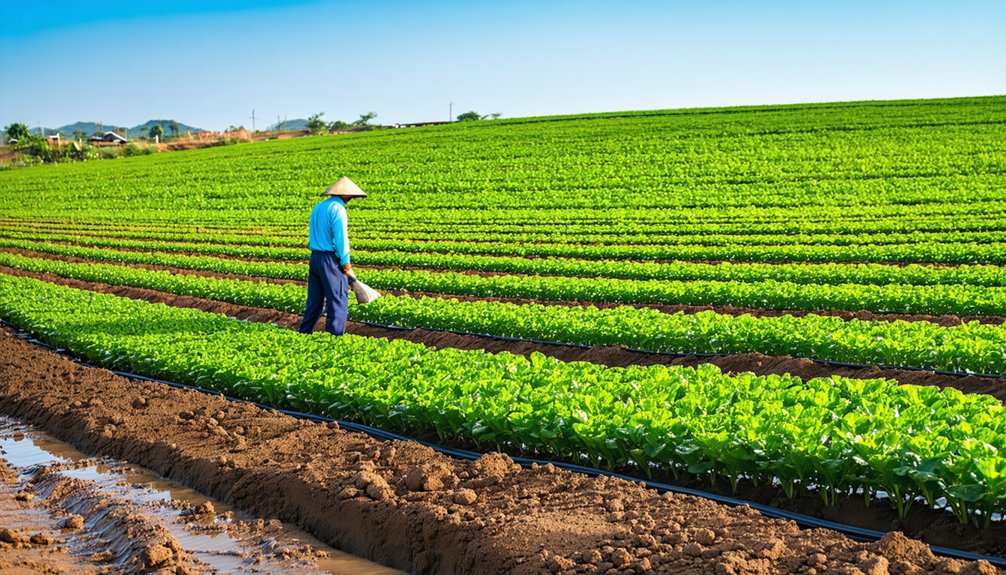
Across various regions, farmers have successfully harnessed drip irrigation to boost their crop yields and improve water efficiency.
For instance, in California, a tomato grower implemented a drip system that increased production by 30% while cutting water usage by 40%.
Similarly, in Florida, a citrus farm adopted drip irrigation, resulting in healthier trees and a 25% rise in fruit quality.
In Texas, a cotton farmer reported a 20% yield increase due to precise water delivery.
These case studies highlight how tailored drip irrigation systems not only enhance productivity but also promote sustainable farming practices.
Future Trends in Drip Irrigation Technology
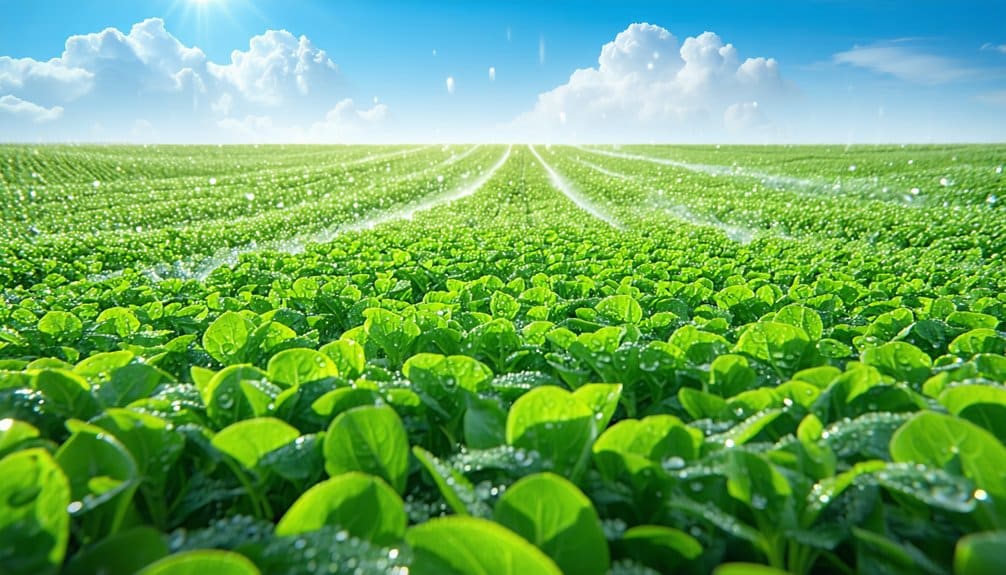
As technology continues to evolve, the future of drip irrigation promises to bring innovative solutions that can further enhance crop yields and water efficiency.
Smart irrigation systems, equipped with sensors and IoT technology, will allow you to monitor soil moisture and weather conditions in real-time. This data-driven approach enables you to make informed decisions about water application, ensuring optimal growth while conserving resources.
Additionally, advancements in biodegradable materials for drip lines will reduce environmental impact. Automation and AI will streamline operations, predicting needs and adjusting water flow accordingly.
By embracing these trends, you’ll not only maximize crop yields but also contribute to sustainable farming practices that benefit both your farm and the planet.
Stay ahead by integrating these cutting-edge technologies into your irrigation strategy.
Conclusion
In conclusion, adopting commercial drip irrigation systems can significantly boost your crop yields. By delivering water directly to your plants’ roots, you enhance moisture levels, reduce waste, and improve nutrient absorption. With the right design and management strategies, you can tackle challenges and create a thriving agricultural environment. Embracing this technology not only supports sustainable farming practices but also prepares you for future advancements in irrigation. Start maximizing your yields today with drip irrigation!