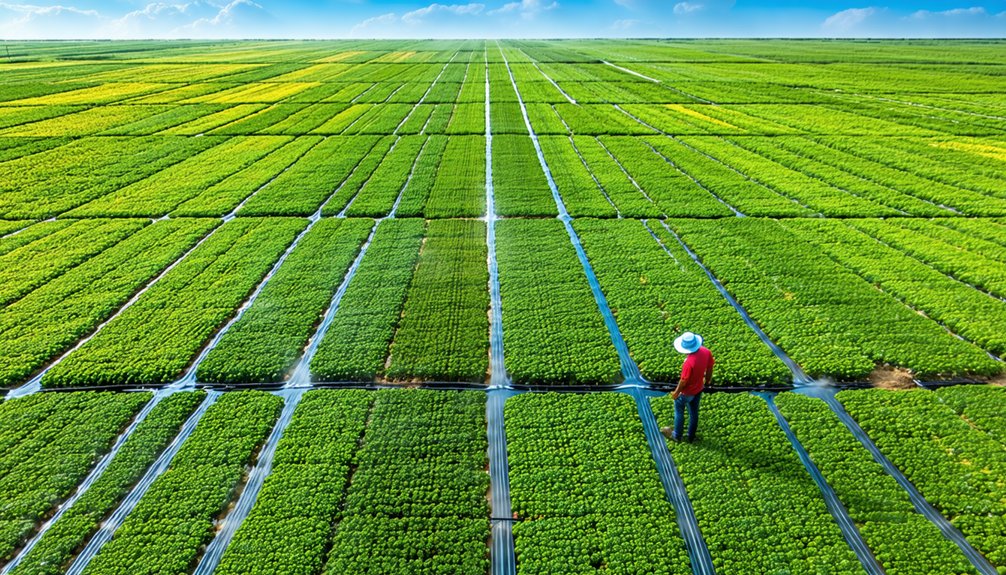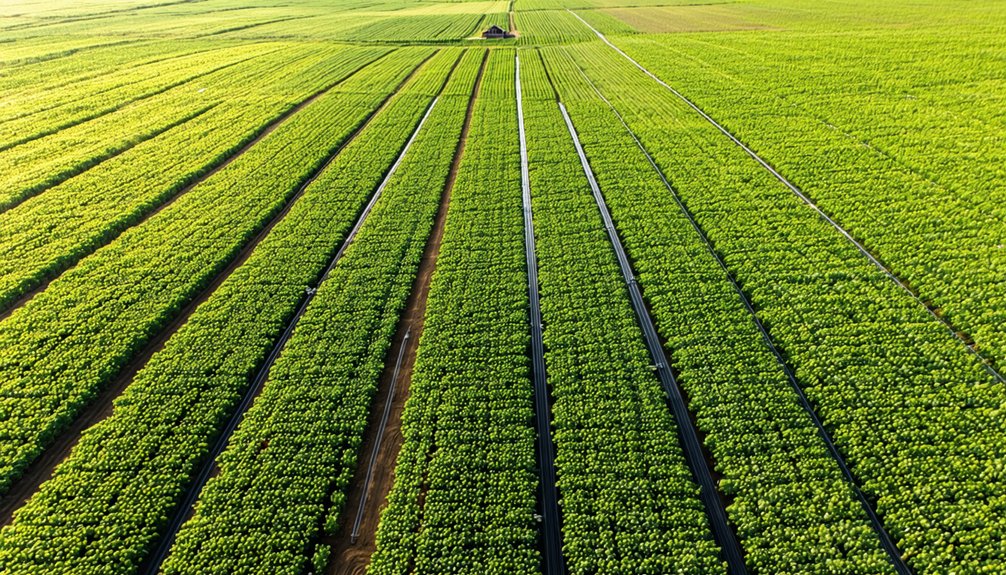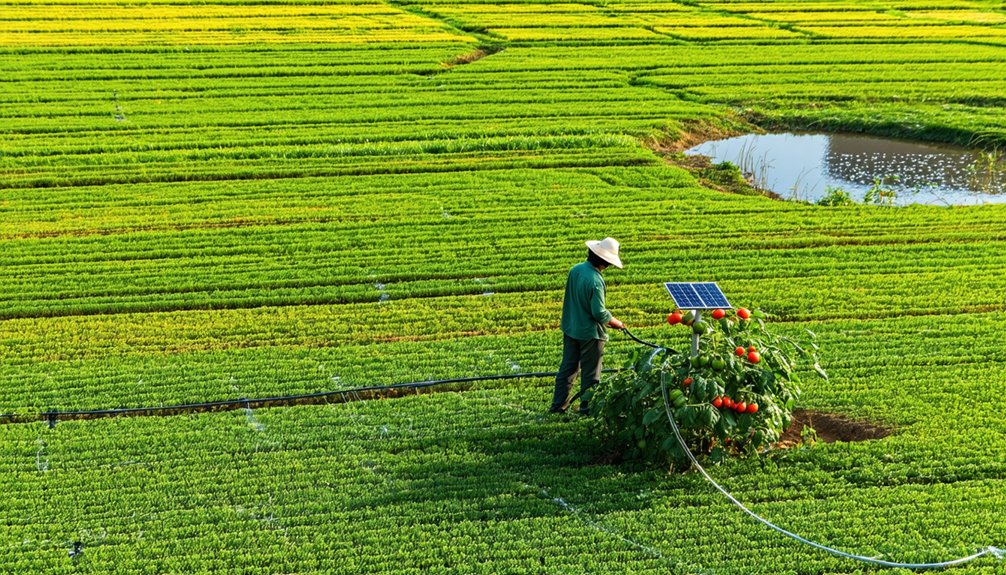
When it comes to optimizing your greenhouse’s water usage, mastering the drip irrigation system is essential. It not only enhances the efficiency of water delivery but also promotes healthier plant growth. By understanding the key components and installation methods, you can tailor the system to your specific needs. But what are the critical steps you need to take to ensure success? Let’s explore the intricacies of drip irrigation that can transform your growing operation.
Overview of Drip Irrigation Systems
When you think about efficient watering methods for your greenhouse, drip irrigation systems stand out as a top choice.
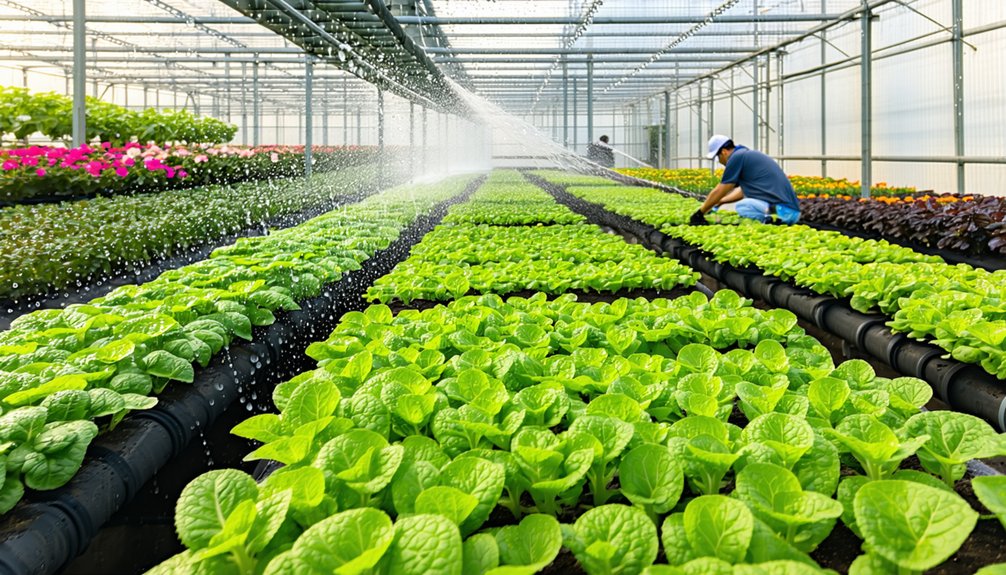
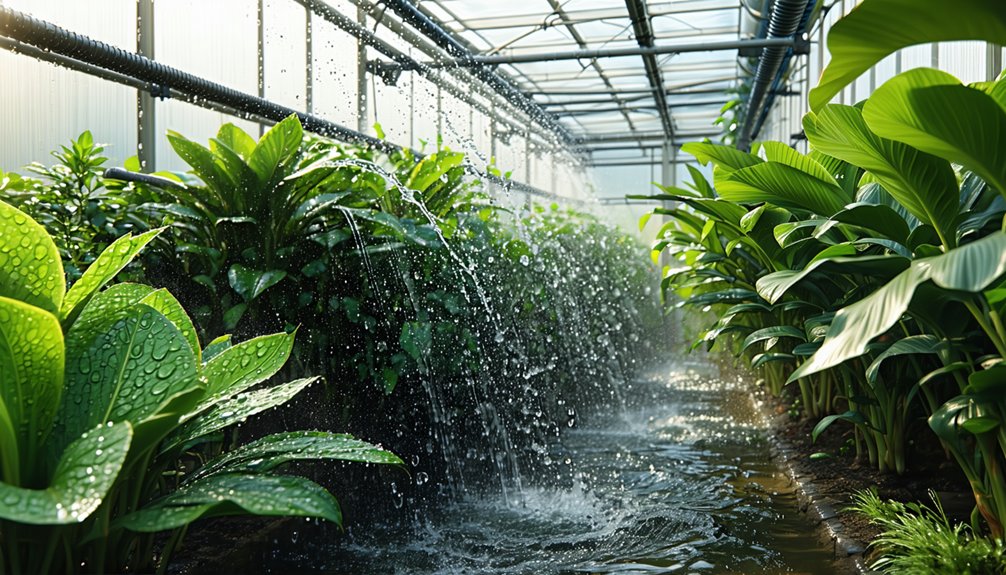
These systems deliver water directly to the plant roots, minimizing waste and ensuring your plants get exactly what they need. By using a drip irrigation system, you can maintain optimal moisture levels while reducing the risk of overwatering or underwatering.
Installing drip irrigation in your greenhouse involves setting up a network of tubes and emitters, allowing you to customize the flow rates for different plants. This precision makes greenhouse irrigation more effective and saves you time and effort.
Benefits of Drip Irrigation in Greenhouses
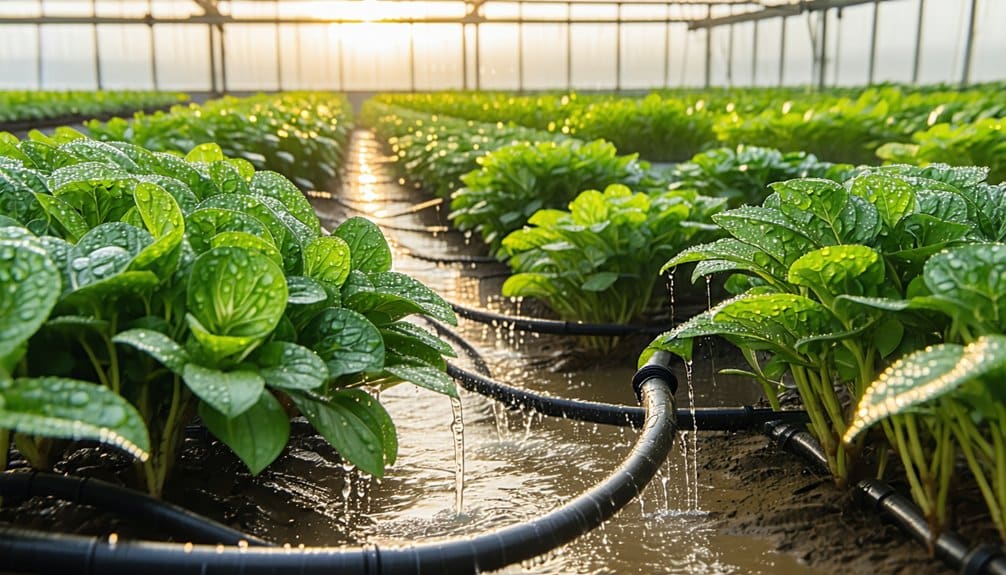
By implementing drip irrigation in your greenhouse, you unlock numerous benefits that can enhance your gardening experience. This system delivers water directly to the plant roots, improving irrigation efficiency and ensuring your plants receive just the right amount of moisture.
You’ll notice healthier growth and higher yields as a result. Additionally, drip irrigation minimizes water waste, so you’re conserving this precious resource while reducing your overall costs.
With less water on the foliage, you can also lower the risk of fungal diseases. Plus, irrigation maintenance becomes easier—fewer moving parts and less frequent adjustments mean more time to enjoy your garden.
Key Components of a Drip Irrigation System
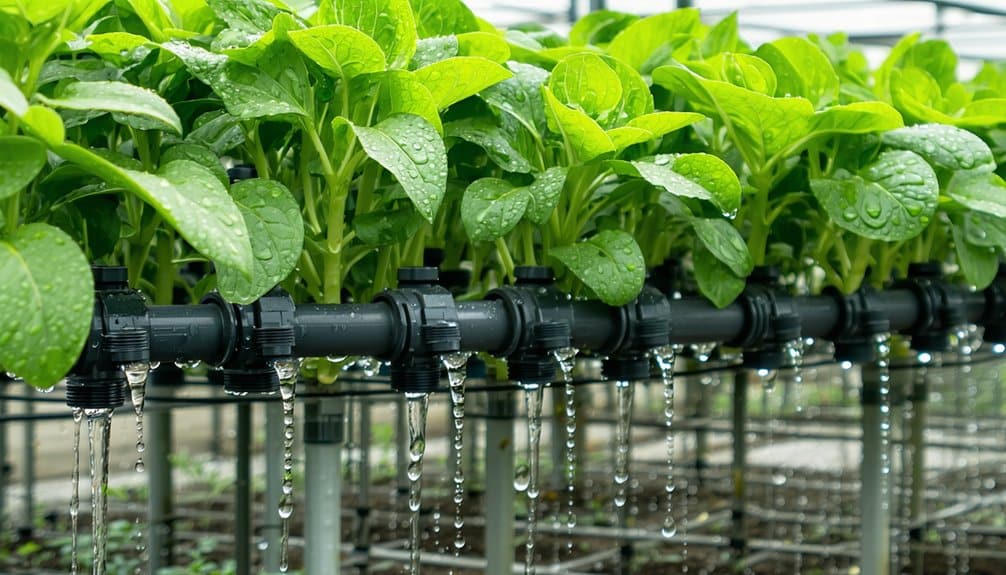
When setting up your drip irrigation system, understanding the key components is essential.
You’ll want to familiarize yourself with different types of irrigation tubing, as well as how emitters and drippers function.
Each part plays a crucial role in ensuring your plants receive the right amount of water efficiently.
Irrigation Tubing Types
Choosing the right irrigation tubing is crucial for an effective drip irrigation system. You’ll find various types of tubing to suit your needs, including polyethylene, PVC, and vinyl.
Polyethylene tubing is popular due to its durability and flexibility, making it easy to install in various garden layouts. PVC tubing is more rigid and works well for permanent installations, while vinyl tubing is lightweight and ideal for temporary setups.
Consider the diameter of the tubing as well; larger diameters allow for higher flow rates, while smaller ones conserve water.
Also, pay attention to wall thickness, as thicker walls offer better resistance to pressure and wear. By selecting the appropriate tubing, you’ll enhance your system’s efficiency and longevity.
Emitters and Drippers
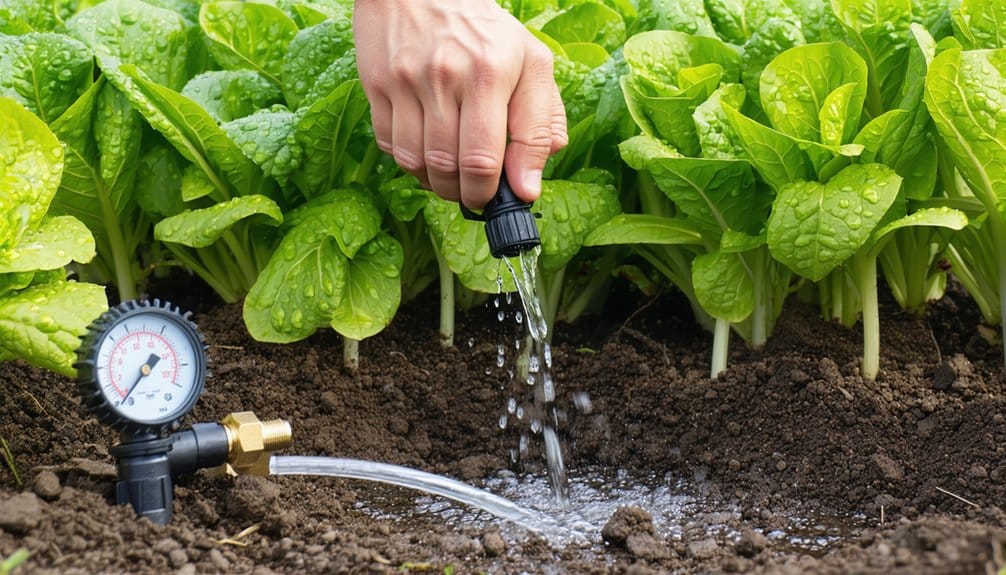
After selecting the right irrigation tubing, the next step involves understanding emitters and drippers, which are key components of a drip irrigation system. Emitters deliver water directly to the plant’s root zone, ensuring efficient moisture distribution.
You can choose between pressure-compensating and non-pressure-compensating emitters based on your greenhouse’s needs. Drippers, on the other hand, are often used interchangeably with emitters but may refer to specific designs or styles, such as inline or standalone options.
When installing, make sure to space them appropriately to match your plants’ requirements. Regularly check for clogs or damage to maintain optimal performance.
Planning Your Drip Irrigation Layout
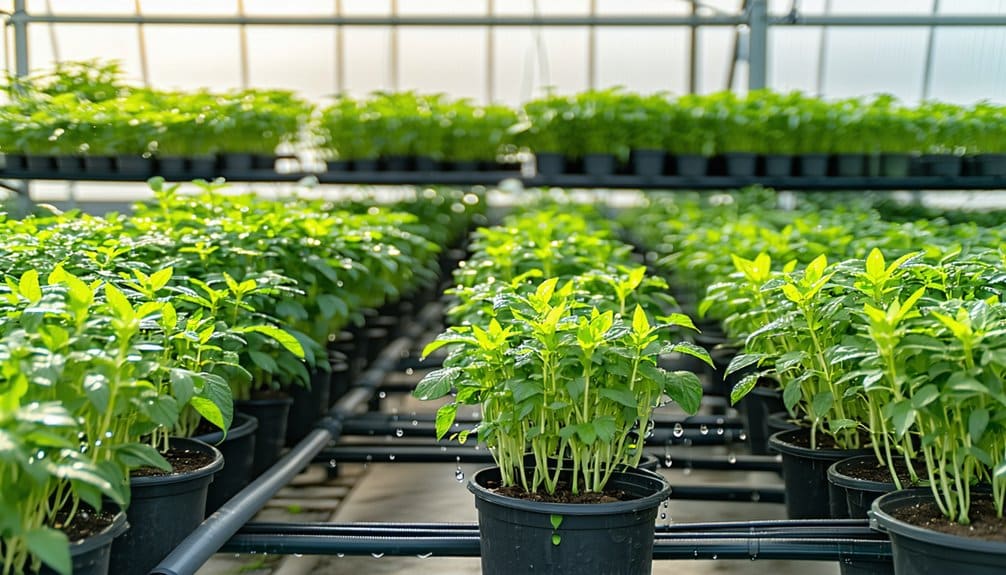
When planning your drip irrigation layout, start by assessing the water needs of your plants to ensure they get the right amount.
Next, design efficient pipe routes to minimize waste and maximize coverage.
Finally, consider zone layout to effectively manage different plant types and their specific requirements.
Assessing Plant Water Needs
How do you determine the water needs of your plants before setting up a drip irrigation system? Start by considering the type of plants you’re growing, as each has unique water requirements.
Research their specific needs, including factors like growth stage, climate, and soil type. Observe your plants closely; yellowing leaves or wilting can signal underwatering, while excessive moisture might indicate overwatering.
Also, consider environmental factors such as temperature and humidity, which can affect evaporation rates.
Conduct a soil moisture test to gauge how quickly the soil drains and retains water. By understanding these elements, you can tailor your drip irrigation system to deliver the right amount of water, ensuring your plants thrive throughout their growth cycle.
Designing Efficient Pipe Routes
Designing efficient pipe routes is crucial for maximizing the effectiveness of your drip irrigation system. Start by mapping out your greenhouse layout, ensuring you account for plant placement and water needs.
Use a combination of mainlines and laterals to distribute water evenly, minimizing wasted space. Keep your pipes as short and direct as possible to reduce pressure loss; avoid sharp turns that can impede flow.
Use appropriate pipe sizes based on your system’s requirements, and consider elevation changes within your greenhouse. Regularly check for leaks and clogs, as they can disrupt your water delivery.
Finally, plan access points for easy maintenance and adjustments. An efficient design not only saves water but also promotes healthier plants.
Zone Layout Considerations
With an efficient pipe routing system in place, the next step is planning your drip irrigation layout through zoning.
Start by dividing your greenhouse into zones based on plant types, water needs, and growth stages. Consider factors like sunlight exposure and soil type to optimize water distribution. Each zone should have its own valve for better control over watering schedules.
Use emitters that match the specific needs of your plants, ensuring consistent moisture levels. Don’t forget to account for pressure variations across zones; you may need pressure regulators or filter systems.
Finally, mark your layout clearly, so you can easily monitor and adjust as needed, ensuring your plants thrive under optimal conditions.
Installation Process for Drip Irrigation
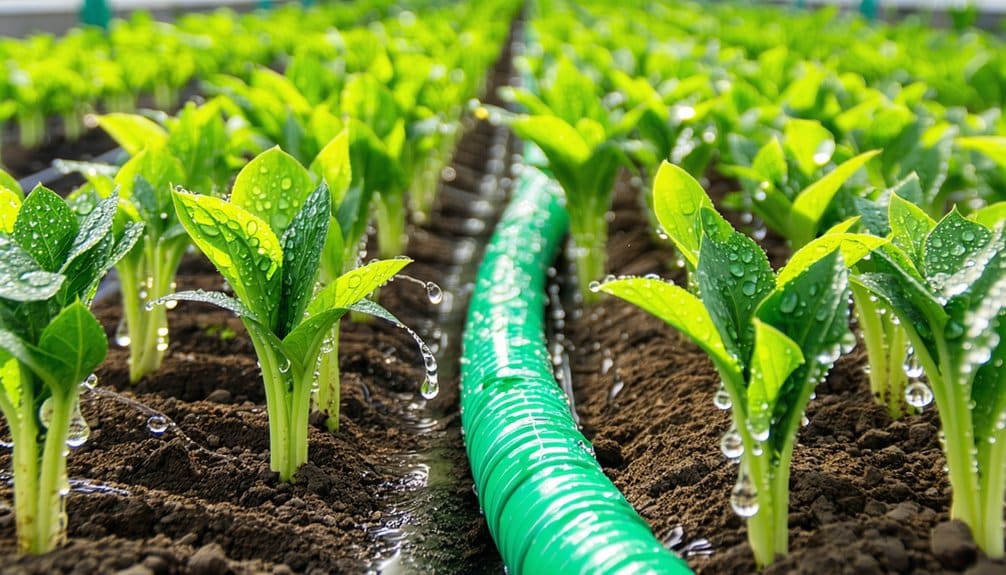
Installing a drip irrigation system involves several key steps that ensure efficient water delivery to your plants.
First, you’ll need to prepare the area by clearing debris and marking your layout.
Next, lay out the mainline tubing along your designated paths, ensuring it’s close to your plants but not obstructing growth.
Connect the emitter lines to the mainline, keeping them evenly spaced according to your plant needs.
Secure the tubing with stakes or anchors to prevent movement.
Once everything’s in place, check for leaks by turning on the water supply.
Finally, adjust the system to ensure uniform water distribution to each plant.
With these steps, you’ll set up a reliable and effective drip irrigation system for your greenhouse.
Selecting the Right Drip Emitters
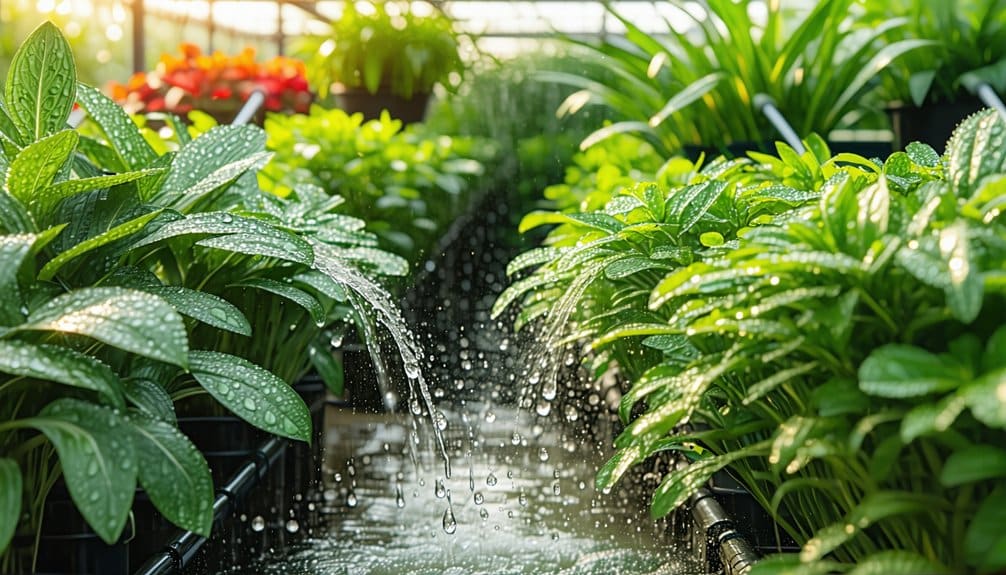
How do you choose the right drip emitters for your greenhouse?
Start by considering the plant types you’re growing. Different plants have varying water needs; some prefer a slow, steady drip while others thrive with a faster rate.
Check emitter flow rates, which typically range from 0.5 to 4 gallons per hour. You’ll want to match these rates to your plants’ requirements.
Also, think about the spacing of your emitters. A closer spacing provides more consistent moisture but may require more emitters, increasing costs.
Lastly, consider whether you want pressure-compensating emitters, which maintain consistent flow even with fluctuating water pressure.
Water Source and Filtration Requirements
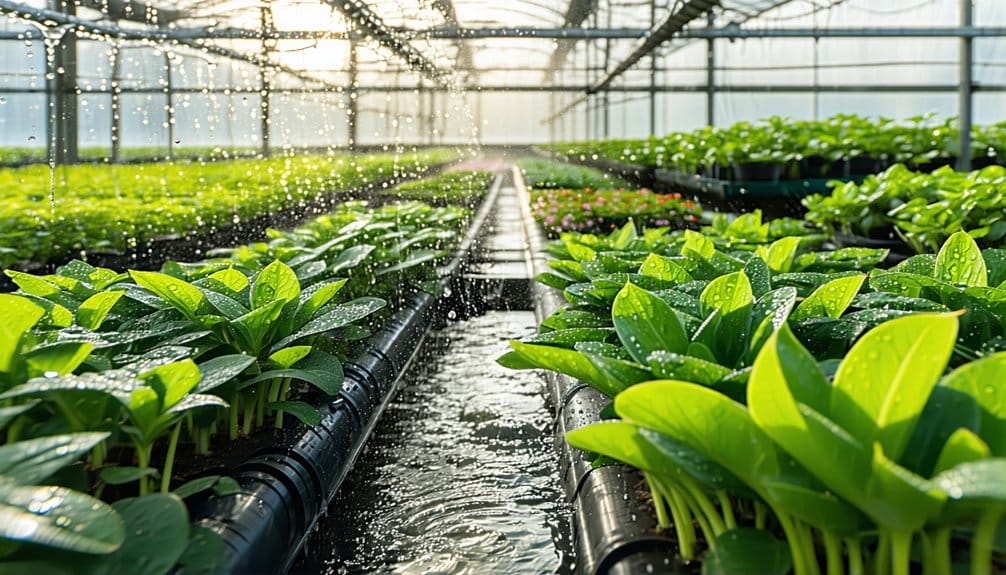
Choosing the right water source for your greenhouse is crucial, as it directly affects the efficiency of your drip irrigation system. You’ve got several options, like municipal water, well water, or rainwater collection. Each source has its pros and cons, so consider factors like availability, cost, and water quality.
Filtration is equally important. You need to prevent clogging in your drip emitters by filtering out debris and sediment. A well-designed filtration system, such as sand or screen filters, can save you time and headaches down the line.
Make sure to choose a filter that matches your water source and the specific needs of your plants. Proper water sourcing and filtration ensure your drip irrigation runs smoothly and your plants thrive.
Maintenance Tips for Drip Irrigation Systems
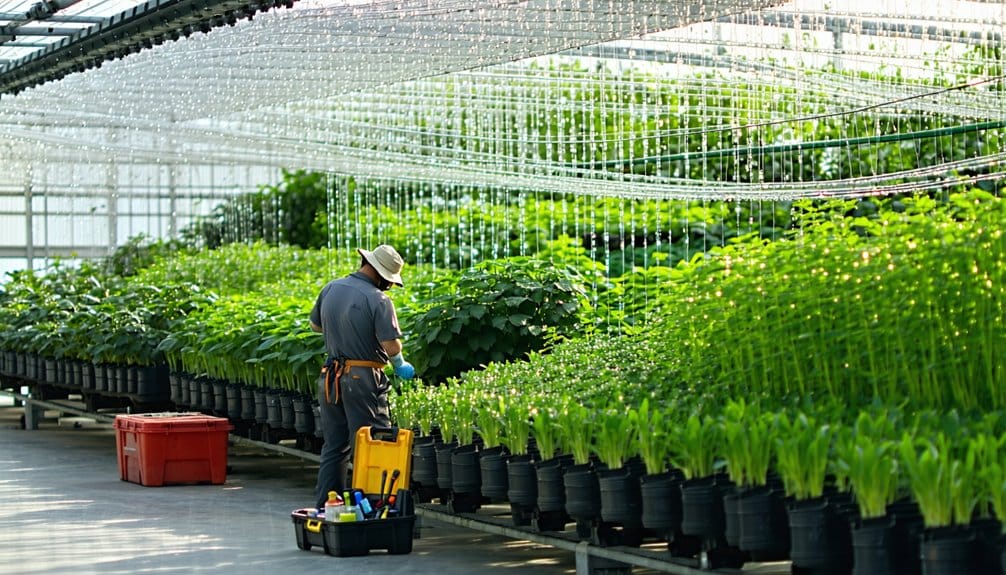
While a well-installed drip irrigation system can significantly reduce water waste, regular maintenance is essential to keep it functioning efficiently.
Start by checking for clogs in the emitters and tubing. Clean filters regularly to prevent debris buildup that can disrupt water flow. Inspect the system for leaks or damaged components, replacing them promptly to avoid water loss.
Monitor the pressure to ensure it stays within the recommended range, as high pressure can damage emitters. Additionally, flush the system periodically to clear any accumulated sediment.
Finally, make it a habit to observe your plants for signs of uneven watering, adjusting the system as needed. By following these tips, you’ll enhance the longevity and effectiveness of your drip irrigation system.
Monitoring and Adjusting Watering Schedules
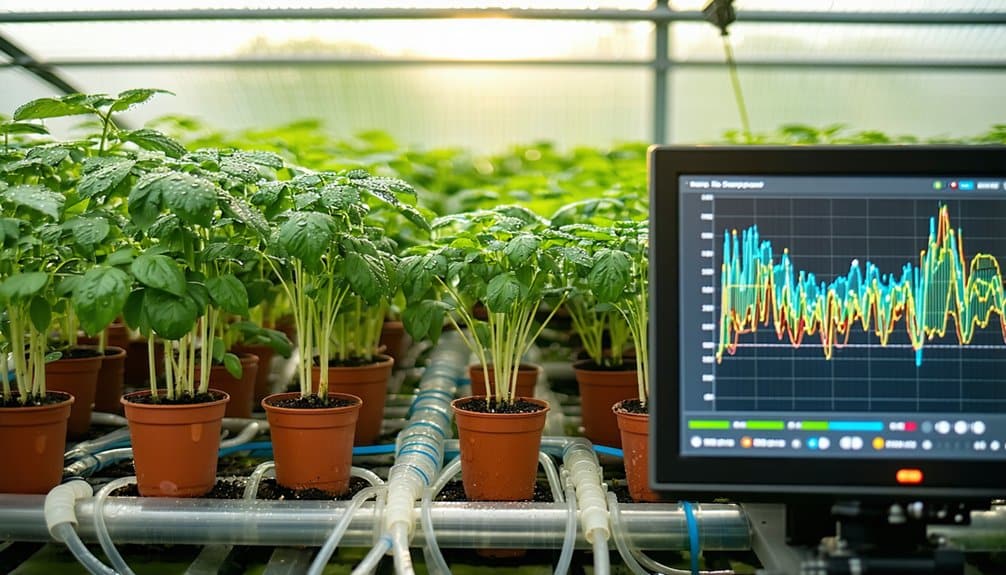
To keep your plants healthy, you need to regularly assess their water needs and adjust your watering schedules accordingly.
Seasonal changes can significantly impact how much water your plants require, so staying flexible is key.
Monitoring soil moisture levels will help you fine-tune your irrigation system for optimal results.
Assessing Plant Water Needs
How can you ensure your plants receive just the right amount of water? Start by observing your plants closely.
Look for signs of stress, like wilting or yellowing leaves, which indicate they need more water. Conversely, if you notice drooping or soggy soil, it might be time to cut back.
Use a moisture meter for precise readings; this tool helps you gauge soil moisture levels accurately. Adjust your watering schedule based on these observations, taking into account factors like plant type and growth stage.
Regularly check the weather too, as rain can affect your plants’ needs. By staying attentive and flexible, you’ll keep your greenhouse thriving and your plants happy with the right hydration.
Seasonal Adjustments Required
As seasons change, your watering schedule should adapt to meet the evolving needs of your greenhouse plants. In spring and summer, when temperatures rise and plants grow vigorously, you’ll need to increase watering frequency. Consider longer durations to ensure deep root hydration.
Conversely, as temperatures drop in fall and winter, reduce the amount of water. Plants often enter a dormant phase, requiring less moisture.
Keep an eye on weather patterns, too; unexpected rain can mean you should skip a watering session. Adjust your drip irrigation system accordingly to avoid overwatering, which can lead to root rot.
Monitoring Soil Moisture Levels
Why guess when you can measure? Monitoring soil moisture levels is crucial for optimizing your greenhouse drip irrigation system. Use a reliable moisture meter to get accurate readings, ensuring your plants receive just the right amount of water. Regularly check moisture levels at different soil depths, as they can vary significantly.
Based on your readings, adjust your watering schedule accordingly. If moisture levels are consistently high, consider reducing your watering frequency or duration. Conversely, if levels are too low, increase your watering.
Keep an eye on weather conditions, too; factors like temperature and humidity can affect moisture levels. By actively monitoring and adjusting, you’ll promote healthy plant growth and conserve water, making your greenhouse more efficient.
Troubleshooting Common Issues in Drip Irrigation
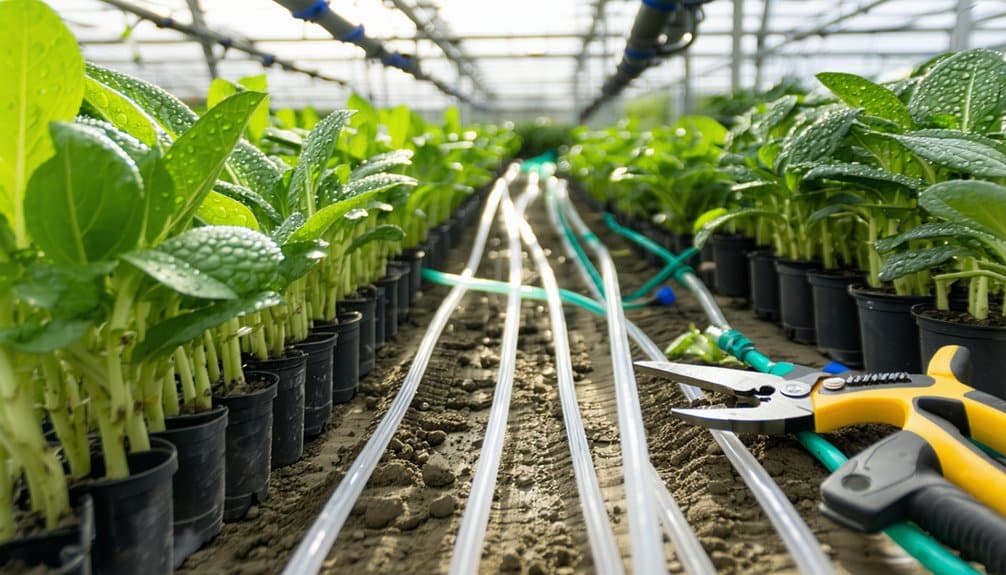
Drip irrigation systems can sometimes run into problems, but identifying and fixing these issues is often straightforward.
Start by checking for clogs in emitters, which can result from debris or algae buildup. Regularly clean filters and emitters to prevent this.
If you notice uneven watering, inspect your tubing for leaks or damage; replacing any faulty sections can restore proper flow.
Additionally, ensure your pressure is adequate; too low can hinder performance, while too high may cause leaks.
Monitor your water source for any changes in quality, as this can affect your system’s efficiency.
Conclusion
Mastering a greenhouse drip irrigation system can transform your growing operation. By understanding the benefits, key components, and installation processes, you’re well on your way to optimizing water usage and boosting crop yields. Regular maintenance and monitoring will ensure your system runs smoothly, addressing any issues that arise. With careful planning, you’ll create a sustainable environment that nurtures healthier plants and maximizes efficiency. Dive in and enjoy the rewards of an effective irrigation setup!