
Water management data analysis plays a vital role in ensuring sustainable resource use. It provides stakeholders with the insights needed to address inefficiencies and monitor water quality. Advanced techniques, such as IoT and remote sensing, enhance data collection capabilities. However, the application of these tools presents both opportunities and challenges. Understanding the implications of these advancements is essential for effective management strategies. What lies ahead in the evolution of water data analytics?
Key Takeaways
- Data-driven decision-making enhances efficiency and sustainability in water management practices, addressing challenges posed by urbanization and climate change.
- Key metrics like water usage efficiency and leakage rates provide critical insights into resource management and conservation efforts.
- Advanced data analytics, including predictive modeling and real-time monitoring, empower stakeholders to respond proactively to water demand and supply fluctuations.
- Integrating diverse data sources improves analysis capabilities, although challenges in compatibility and security must be addressed for effective utilization.
- Data visualization tools, such as GIS and dashboards, transform complex data into actionable insights, guiding informed decision-making in water management.
Importance of Data in Water Management
Data plays a critical role in effective water management, as it provides the necessary insights to inform decision-making processes. By employing data analysis techniques, water managers can assess current usage patterns, identify inefficiencies, and evaluate resource allocation. This information is vital for developing strategies aimed at efficiency improvement within water systems.
Moreover, accurate data collection enables the tracking of water quality and availability, ensuring that resources are utilized sustainably. As urbanization and climate change continue to impact water availability, the importance of data becomes even more pronounced.
Ultimately, leveraging data in water management not only enhances operational effectiveness but also fosters a proactive approach to addressing potential challenges and optimizing resource use in the long term.
Key Metrics for Water Resource Analysis
Effective water resource analysis relies on specific metrics that provide insight into system performance and sustainability. Key metrics include water usage efficiency, which measures the amount of water consumed relative to the output produced, and leakage rates that indicate system integrity.
Additionally, assessing the rate of water reclamation can highlight the effectiveness of water conservation efforts. Metrics such as precipitation and evaporation rates are essential for understanding natural water cycles and informing data-driven decision making.
Techniques for Data Collection and Monitoring
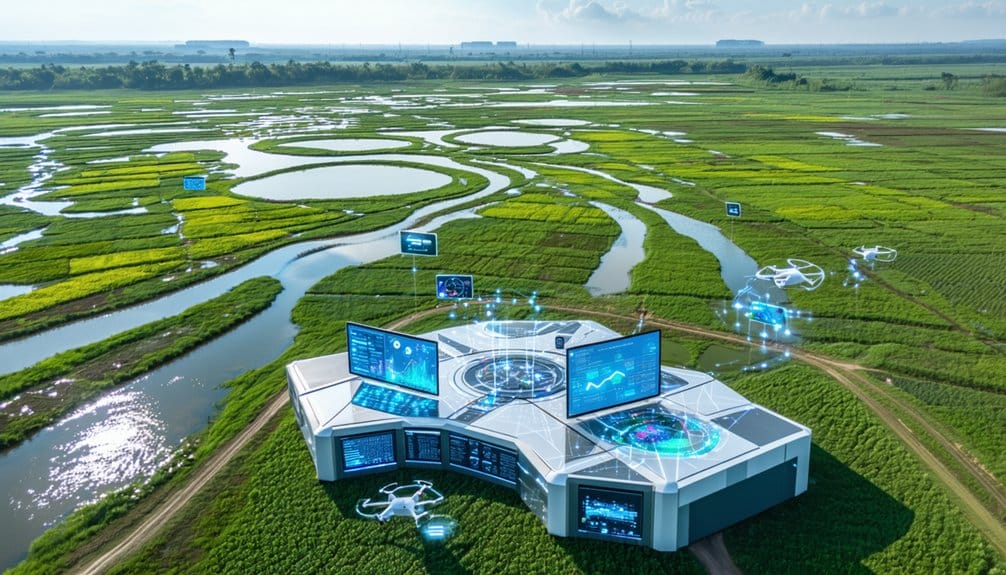
Although various methods exist for collecting and monitoring water management data, the choice of technique significantly influences the accuracy and reliability of the information gathered.
Common techniques include remote sensing, which utilizes satellite imagery to assess water bodies and land use, and in-situ measurements, where sensors collect data directly from the water source.
Additionally, automated data loggers can record parameters such as temperature and flow rate consistently over time.
Surveys and citizen science initiatives also play a role, engaging local communities in data collection.
Furthermore, integrating Internet of Things (IoT) devices enhances real-time monitoring capabilities.
Each method offers unique advantages and limitations, necessitating careful selection to ensure comprehensive data capture for effective water resource management.
Data Visualization Tools for Water Management
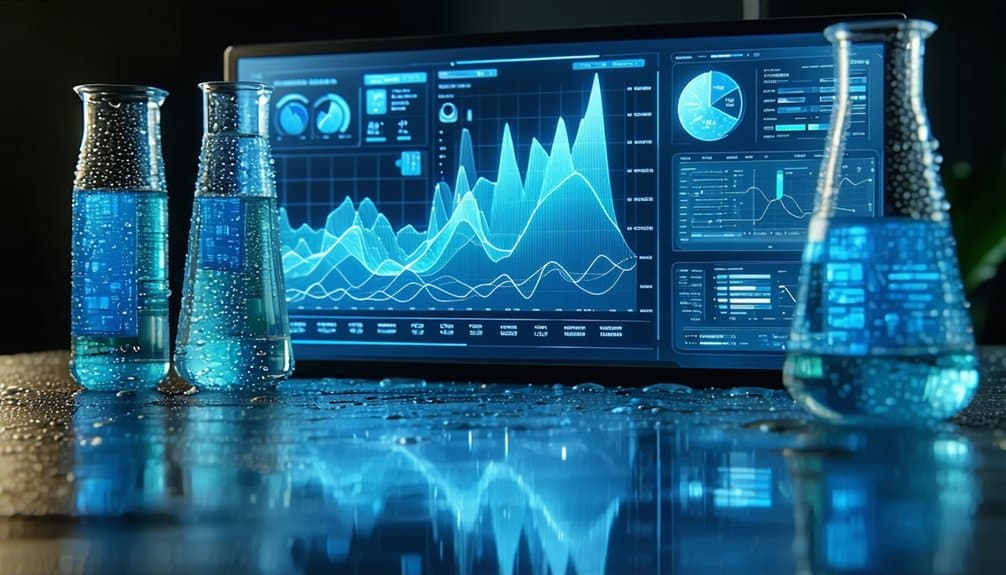
Data visualization tools play a crucial role in enhancing water management by transforming complex data into easily interpretable formats.
These tools not only highlight trends and anomalies but also facilitate informed decision-making through popular visualization techniques such as charts, maps, and dashboards.
Understanding the benefits of these tools is essential for effective water resource management.
Benefits of Data Visualization
As water management becomes increasingly complex, the advantages of data visualization tools emerge as essential components for effective decision-making.
These tools enhance understanding by transforming large datasets into intuitive graphical representations, allowing stakeholders to quickly identify patterns and trends. By presenting data visually, decision-makers can assess critical information at a glance, facilitating timely responses to water management challenges.
Additionally, data visualization fosters communication among diverse teams, ensuring that insights are accessible to non-technical stakeholders. This promotes collaborative efforts in resource management and strategic planning.
Ultimately, the integration of visualization tools streamlines data interpretation, leading to improved efficiency and better-informed decisions that support sustainable water management practices.
Popular Visualization Techniques
Effective water management relies on a variety of visualization techniques that cater to the diverse needs of stakeholders. Common tools include Geographic Information Systems (GIS), which enable spatial analysis and mapping of water resources.
Dashboards are also popular; they aggregate data and present key performance indicators in real-time for easy monitoring. Charts and graphs, such as line graphs and bar charts, facilitate the understanding of trends over time.
Heat maps provide insights into water quality variations across regions, while time series visualizations illustrate changes in water levels or usage patterns.
These techniques not only enhance comprehension but also support informed decision-making, ensuring that stakeholders can effectively address water management challenges.
Predictive Analytics in Water Resource Planning

While traditional water resource planning relies heavily on historical data and models, the integration of predictive analytics is transforming the approach by enabling more informed decision-making.
This innovative methodology allows water managers to anticipate future scenarios and optimize resource allocation effectively.
The benefits of predictive analytics in water resource planning include:
- Enhanced Forecasting: Predictive models can analyze patterns in water usage and climate, improving accuracy in demand forecasts.
- Risk Mitigation: By identifying potential shortages and excesses, organizations can implement proactive strategies to manage risks.
- Sustainable Practices: Predictive analytics supports the development of sustainable water management practices by optimizing the timing and amount of water usage.
Case Studies of Successful Data-Driven Water Management

Numerous case studies illustrate the transformative impact of data-driven water management across various regions.
In California, the implementation of advanced analytics has enabled water districts to optimize allocations, significantly reducing waste during drought conditions.
Similarly, in Singapore, smart water management systems utilize real-time data to monitor and control water quality in reservoirs, enhancing public health and reducing costs.
In Australia, a collaborative approach among stakeholders, supported by data sharing, has led to improved flood management strategies, mitigating risks to communities.
These examples demonstrate how leveraging data analytics can enhance decision-making, improve resource efficiency, and foster sustainable practices, ultimately leading to more resilient water management systems.
Each case highlights the potential for innovation in addressing complex water challenges globally.
Challenges in Water Management Data Analysis
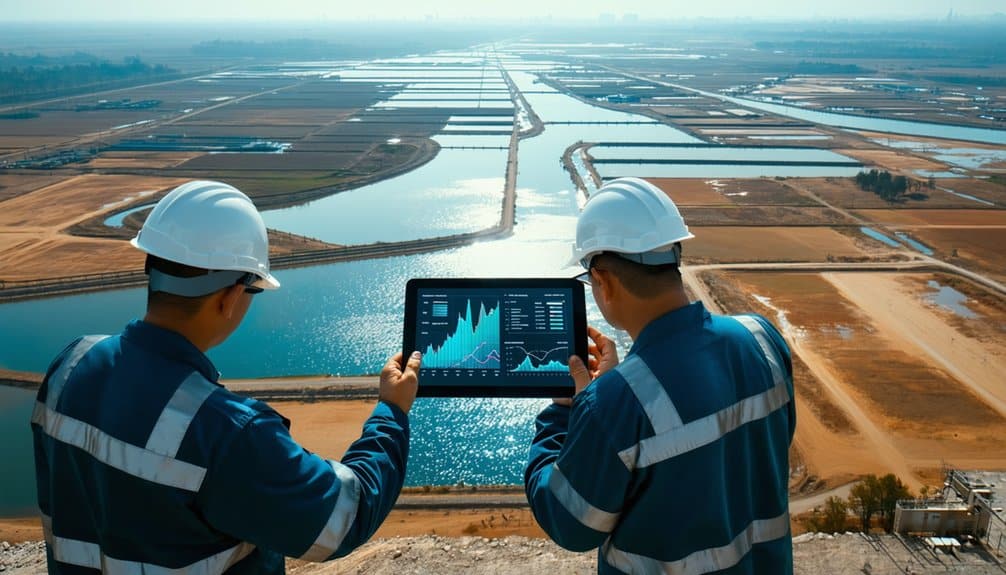
Water management data analysis faces significant challenges, primarily stemming from data quality issues and the integration of disparate systems.
Inconsistent data sources can lead to unreliable insights, while the lack of cohesive frameworks hampers effective data synthesis.
Addressing these obstacles is crucial for enhancing decision-making processes in water management.
Data Quality Issues
Significant challenges arise from data quality issues in the realm of water management analysis.
These issues can severely impede decision-making processes and compromise the effectiveness of management strategies.
Key data quality challenges include:
- Inaccurate Measurements: Erroneous sensor readings or data entry mistakes can lead to misinformed conclusions and misguided interventions.
- Inconsistent Data Formats: Variability in data collection methods and formats can hinder effective aggregation and analysis, resulting in fragmented insights.
- Missing Data: Incomplete datasets can obscure trends and lead to flawed assessments, undermining the reliability of the analysis.
Addressing these data quality issues is crucial for enhancing the accuracy and reliability of water management practices, ultimately supporting sustainable resource utilization.
Integration of Systems
Although integrating various systems in water management can enhance data analysis, it presents substantial challenges that must be navigated.
One primary issue is the lack of standardization across different platforms, leading to compatibility problems. Data formats and protocols often vary, making seamless communication difficult. Additionally, disparate systems may collect data at different frequencies or have varying levels of accuracy, complicating the synthesis of information.
Security concerns also arise, as integrating multiple systems can expose sensitive data to potential breaches. Furthermore, the financial investment required for integration can be significant, deterring organizations from pursuing such initiatives.
Addressing these challenges is crucial for leveraging the full potential of data analysis in effective water management.
Future Trends in Water Data Analytics

As the demand for sustainable water management intensifies, advancements in data analytics are poised to transform how water resources are monitored and utilized.
Future trends in water data analytics are expected to focus on three key areas:
- Predictive Analytics: Utilizing machine learning algorithms to forecast water demand and supply, allowing for proactive management strategies.
- Real-time Monitoring: Implementing IoT devices and sensors for continuous data collection, ensuring immediate response to fluctuations in water quality and availability.
- Data Integration: Combining diverse datasets from various sources to create comprehensive dashboards for better decision-making and resource allocation.
These advancements will empower stakeholders to make informed choices, leading to enhanced efficiency and sustainability in water management practices.
Conclusion
In conclusion, the integration of data analysis in water management is essential for fostering sustainable practices and informed decision-making. By utilizing advanced techniques and tools, stakeholders can effectively monitor resources, predict future needs, and enhance overall efficiency. As challenges related to urbanization and climate change persist, the continued evolution of water data analytics will play a pivotal role in ensuring resilient water management systems, ultimately safeguarding this vital resource for future generations.