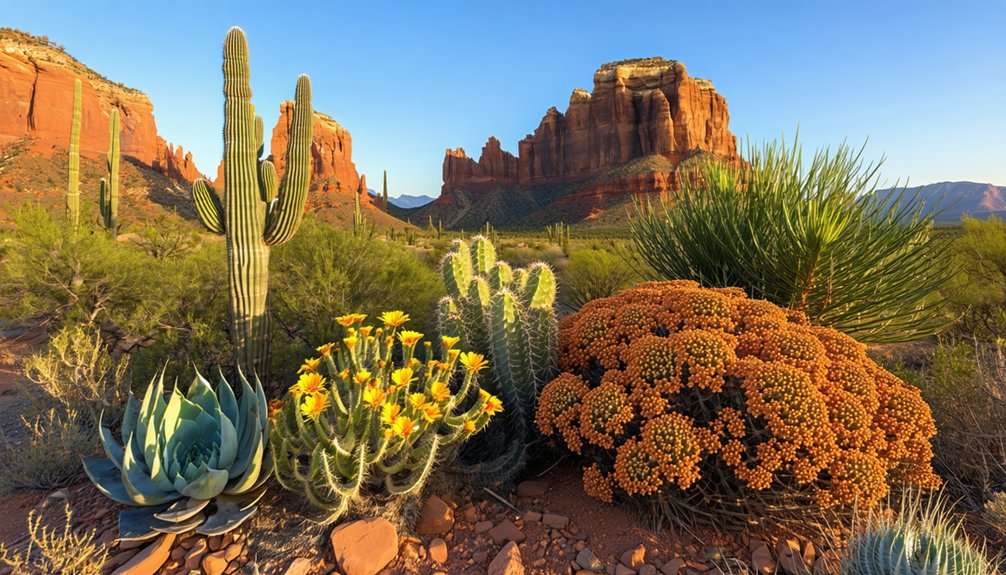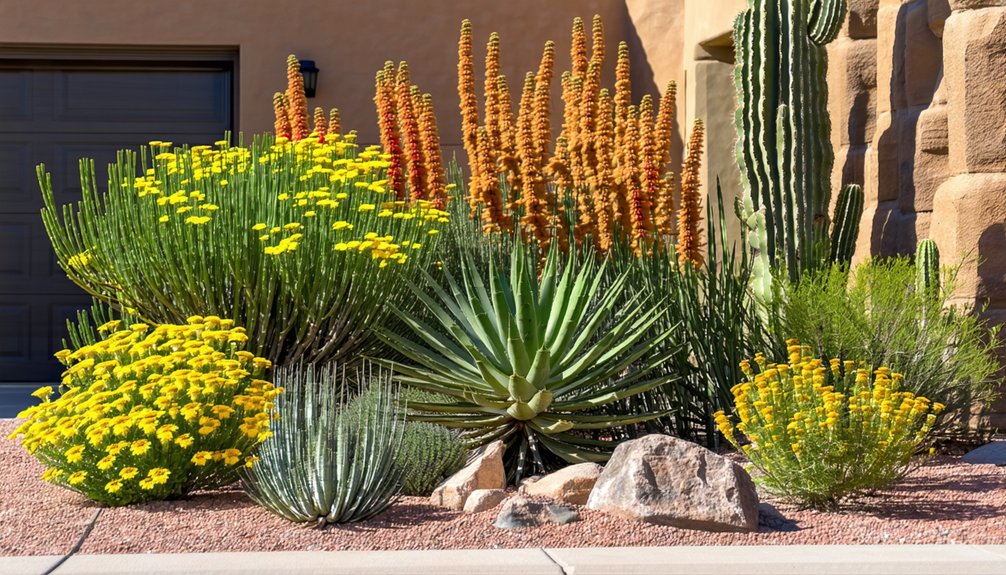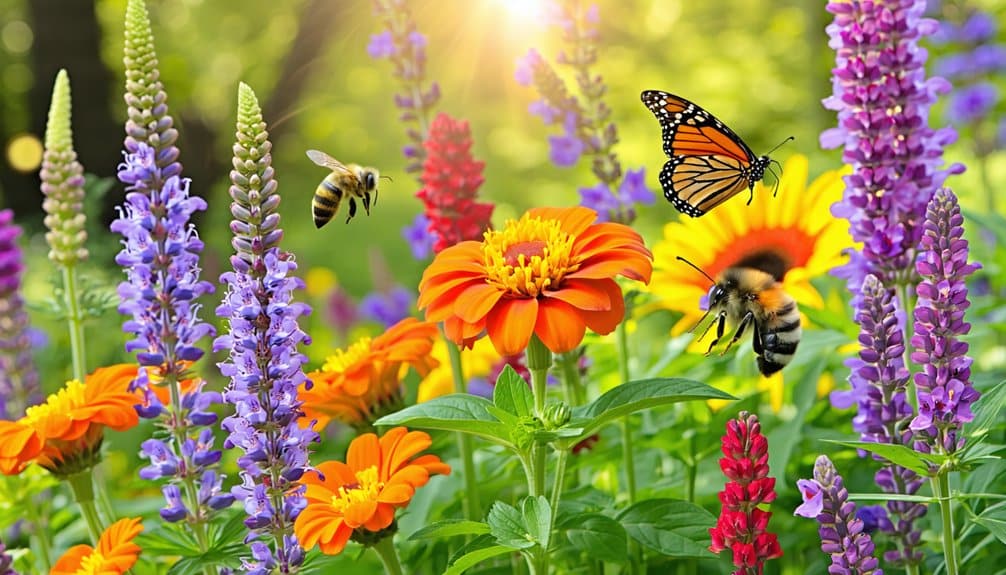
If you’re looking to enhance your Arizona garden while supporting local pollinators, you’ve got some excellent options. Plants like Desert Marigold and Arizona Lavender not only bring color but also attract essential bees and butterflies. Think about how these choices can transform your outdoor space. Curious about which plants will thrive in your garden’s unique conditions? Let’s explore the best selections for creating a vibrant, eco-friendly habitat.
Desert Marigold
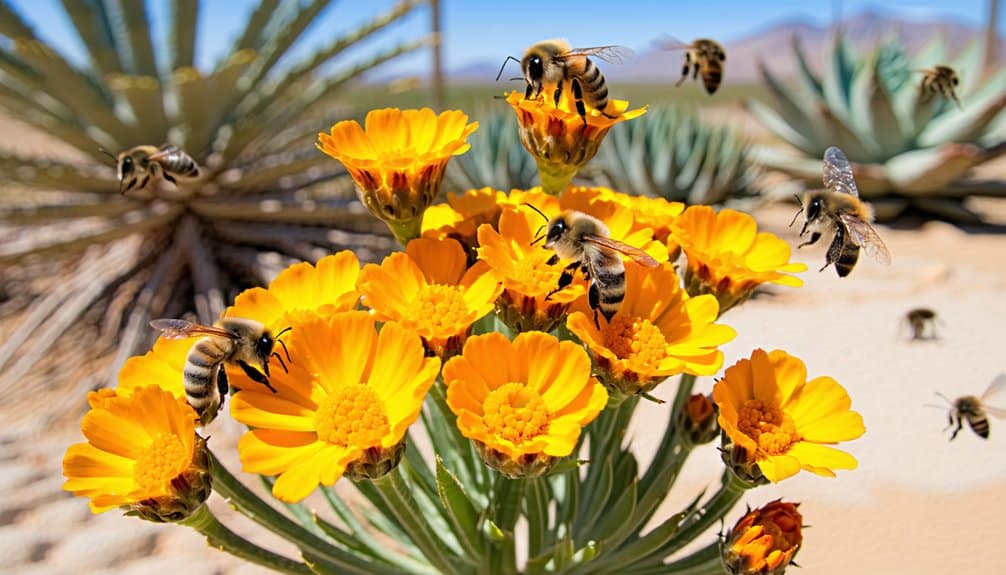
The vibrant Desert Marigold, with its sunny yellow blooms, adds a splash of color to any Arizona garden. This hardy perennial thrives in the arid climate, making it a fantastic choice for your landscape.
Not only does it brighten your space, but it also attracts essential pollinators like bees and butterflies, positioning it among the best pollinator-friendly plants.
To enhance your garden, mix Desert Marigold with other native pollinator plants Arizona offers, ensuring a diverse habitat. Remember to plant in well-drained soil and provide minimal watering, as these tips will help the marigolds flourish. Additionally, incorporating low-maintenance desert plants can further simplify your gardening efforts and create a sustainable environment for pollinators.
Arizona Lavender
Adding Arizona Lavender to your garden not only complements the vibrant blooms of Desert Marigold but also brings a soothing aroma and a splash of purple to your landscape.
This drought-tolerant plant thrives in the Arizona gardening climate, attracting bees and butterflies, which are essential for pollination. Its fragrant flowers can be used in bouquets or dried for potpourri, enhancing your home gardens’ aesthetic and sensory appeal.
Arizona Lavender requires minimal care, flourishing in well-drained soil and plenty of sunlight. By incorporating this hardy herb, you’ll create a beautiful, low-maintenance space that supports local wildlife. Additionally, it is one of the best outdoor plants for thriving in Arizona’s unique climate.
Plus, its resilience makes it a perfect choice for anyone looking to enrich their Arizona home garden while keeping maintenance easy.
Bee Balm
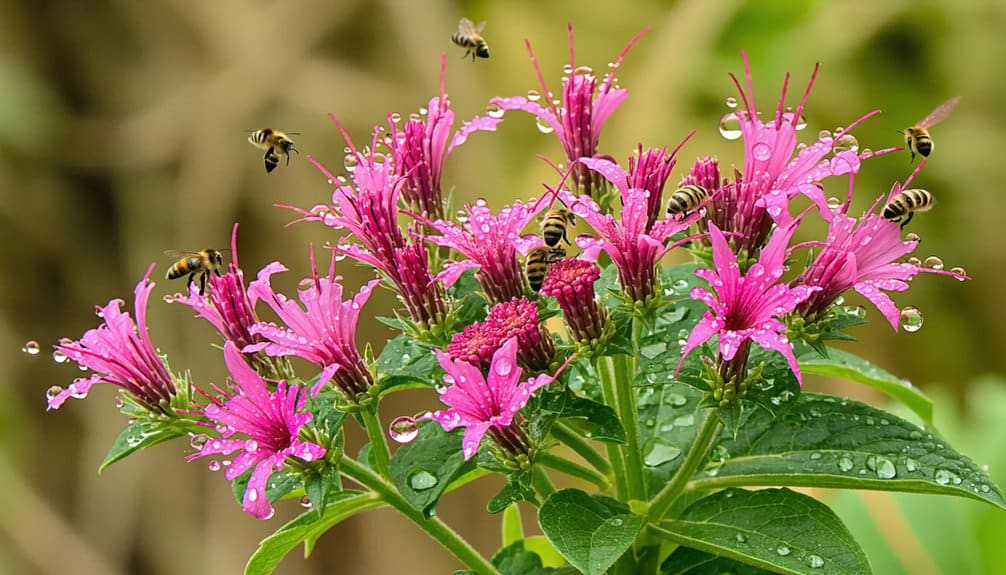
If you’re looking to attract more pollinators to your Arizona garden, consider planting Bee Balm. This vibrant perennial thrives in sunny spots and brings a splash of color with its tubular flowers.
You’ll love how it draws in bees, butterflies, and hummingbirds, making your garden a lively haven. Bee Balm prefers well-drained soil and can tolerate some drought, which is ideal for Arizona’s climate.
To keep it healthy, water it moderately, especially during dry spells. Plus, it’s a fantastic companion plant, enhancing the growth of nearby herbs and vegetables.
As an added bonus, Bee Balm’s aromatic leaves can be used in teas or as a fragrant addition to your culinary creations. Embrace this pollinator magnet to enhance your garden!
Salvia
When it comes to pollinator-friendly gardening, Salvia is a standout choice.
You’ll find a variety of Salvia species that not only thrive in Arizona’s climate but also attract bees and butterflies.
Let’s explore how these vibrant plants can enhance your garden and support local pollinators effectively.
Salvia Varieties Overview
Salvia varieties are a vibrant addition to any Arizona home garden, attracting an array of pollinators with their colorful blooms and fragrant foliage.
You’ll find several popular types, such as Salvia greggii, known for its bright red and pink flowers, perfect for drawing in hummingbirds.
Salvia farinacea, or mealycup sage, offers stunning blue spikes that create a striking contrast in your landscape.
If you’re looking for drought-tolerant options, consider Salvia leucantha, with its velvety purple blooms.
These varieties thrive in Arizona’s climate, requiring minimal care while providing maximum impact.
With their diverse colors and textures, salvias not only enhance your garden’s beauty but also support local pollinator populations, making them a must-have for any green thumb.
Attracting Pollinators Effectively
To effectively attract pollinators to your garden, consider incorporating a variety of salvia species that thrive in Arizona’s climate.
These plants, known for their vibrant colors and delightful scents, serve as a magnet for bees, butterflies, and hummingbirds. Choose species like Salvia greggii or Salvia farinacea, which bloom profusely and offer ample nectar.
Plant them in clusters to create a striking visual display that pollinators can easily locate. Additionally, ensure your salvia receives plenty of sunlight and well-drained soil to flourish.
Water them regularly but avoid overwatering, as this can harm their growth. By strategically planting salvia, you’re not just beautifying your garden; you’re also supporting essential pollinator populations that contribute to a healthy ecosystem.
Penstemon
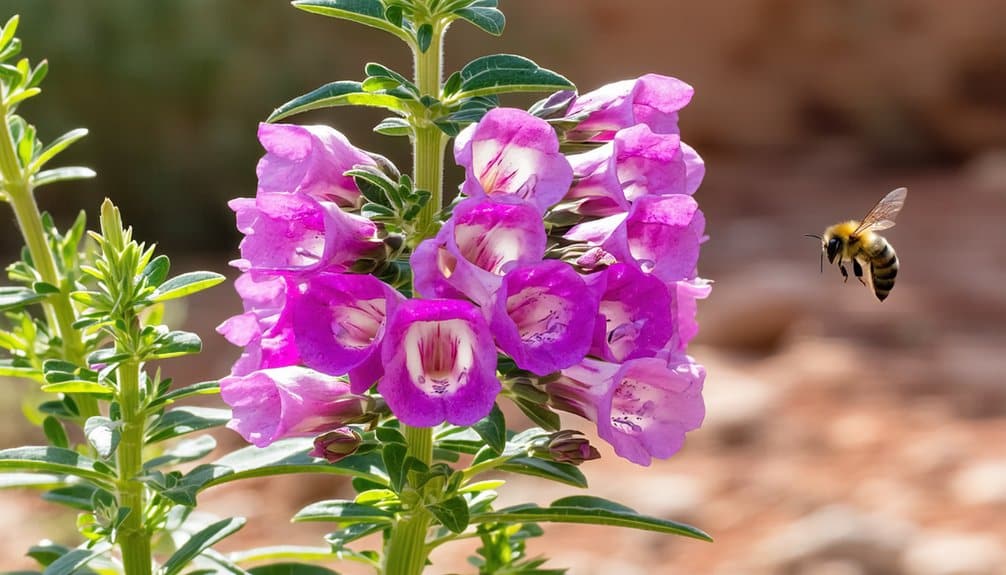
Penstemon, often known as beardtongue, is a vibrant choice for Arizona home gardens, attracting a variety of pollinators with its tubular flowers.
These perennials thrive in full sun and well-drained soil, making them perfect for your arid climate. With colors ranging from deep reds to soft pastels, they not only brighten your garden but also entice bees, butterflies, and hummingbirds.
You’ll love how they bloom in spring and summer, providing a long-lasting food source for these important creatures. To maximize their impact, group several plants together, creating a stunning display while enhancing pollination.
Just remember to water them moderately, and you’ll have a thriving garden that supports local wildlife and brings beauty to your outdoor space.
Red Yucca
Red Yucca, with its striking tall flower spikes and slender, arching leaves, is a fantastic addition to any Arizona garden.
This drought-tolerant plant thrives in the desert climate, requiring minimal water once established. Its tubular coral-red flowers attract hummingbirds, bees, and butterflies, making it a magnet for pollinators.
You’ll love how easy it’s to maintain; just provide well-drained soil and full sun for optimal growth.
Plant Red Yucca in clusters for a stunning visual impact, or use it as a focal point in your landscape. Plus, it adds a vibrant pop of color during the warmer months.
California Poppy
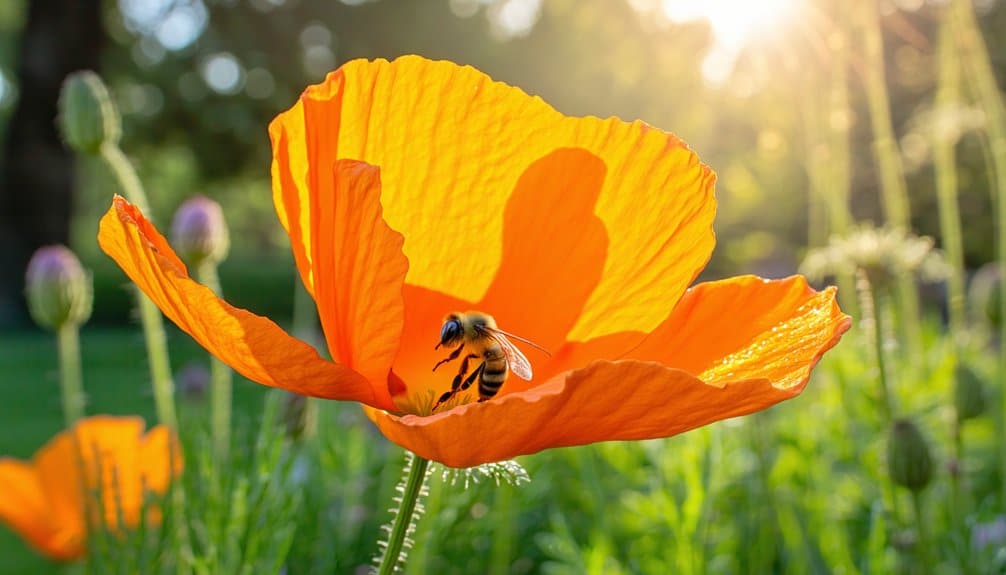
California Poppy brightens up any Arizona garden with its vibrant orange-yellow blooms that dance in the sunlight.
This hardy annual thrives in well-drained soil and loves full sun, making it a perfect fit for your garden.
It’s not just eye-catching; it’s a magnet for pollinators like bees and butterflies, ensuring your space buzzes with life.
Plus, the California Poppy is drought-tolerant, meaning you won’t have to worry about excessive watering once it’s established.
You can easily sow seeds directly into the garden in the spring or fall for a stunning display.
Just remember to give them room to spread, and watch as they transform your outdoor space into a colorful haven for both you and local wildlife.
Catmint
Catmint is a fantastic choice for your garden if you want to attract beneficial pollinators.
It’s low maintenance and thrives in Arizona’s dry conditions, making it a drought-tolerant option.
With its vibrant blooms, you’ll enjoy a beautiful garden while supporting local wildlife.
Attracts Beneficial Pollinators
While you’re planning your garden, consider incorporating catmint to attract beneficial pollinators like bees and butterflies.
This vibrant plant produces clusters of small, fragrant flowers that draw in these essential insects. As they visit your garden, they’ll help pollinate various flowers and vegetables, boosting your garden’s productivity.
Catmint’s blooms are rich in nectar, making it a favorite among pollinators. You’ll notice bees buzzing and butterflies fluttering around, creating a lively, dynamic atmosphere.
Plus, catmint’s long blooming season means you’ll enjoy these visitors from spring through fall. By adding catmint, you’re not just enhancing your garden’s beauty; you’re also supporting local ecosystems.
Low Maintenance Requirements
For gardeners looking to attract pollinators without a hefty time commitment, catmint is an excellent choice. This hardy perennial thrives in various soil types, requiring minimal care once established.
You won’t have to worry about constant pruning or meticulous watering; just give it a good start and let it flourish. Catmint’s resilience means it can handle occasional neglect, making it perfect for busy schedules.
Plus, its long blooming season provides continuous color and fragrance, ensuring your garden remains vibrant with little effort. As an added bonus, its aromatic foliage can deter pests, further reducing your maintenance tasks.
Embrace catmint in your garden, and enjoy a beautiful, low-maintenance space that invites beneficial pollinators with ease.
Drought Tolerant Option
If you’re seeking a drought-tolerant option for your Arizona garden, look no further than catmint. This resilient perennial thrives in hot, dry conditions and requires very little water once established.
With its aromatic foliage and vibrant purple blooms, catmint attracts a variety of pollinators, including bees and butterflies, making it a fantastic addition to your garden. You’ll appreciate its low maintenance needs, as it doesn’t demand frequent pruning or fertilizing.
Just plant it in well-drained soil and watch it flourish. Plus, its long blooming season ensures that your garden stays colorful throughout the summer.
Incorporating catmint into your landscape not only conserves water but also supports local wildlife, enhancing your garden’s biodiversity.
Ironwood Tree
The Ironwood tree, known for its resilience in harsh desert conditions, makes an excellent addition to your Arizona garden.
This native tree thrives in low-water environments and provides shelter for various pollinators, including bees and butterflies. Its dense, durable wood offers shade, making it a perfect spot for outdoor relaxation.
You’ll appreciate the beautiful, small flowers that bloom in spring, attracting beneficial insects. Plus, the Ironwood’s slow growth means it won’t overpower your garden layout.
Just ensure you plant it in well-drained soil and provide occasional water during extreme drought.
With its striking appearance and ecological benefits, the Ironwood tree not only enhances your garden’s beauty but also supports the local ecosystem.
Conclusion
By choosing these top pollinator-friendly plants for your Arizona home garden, you’re not just beautifying your space; you’re also creating a thriving habitat for essential wildlife. Embrace the vibrant colors and fragrant aromas of Desert Marigold, Arizona Lavender, and more, while supporting local bees and butterflies. With a little effort, you can cultivate an eco-friendly oasis that enhances biodiversity and brings joy to your outdoor environment. So, get planting and watch your garden flourish!